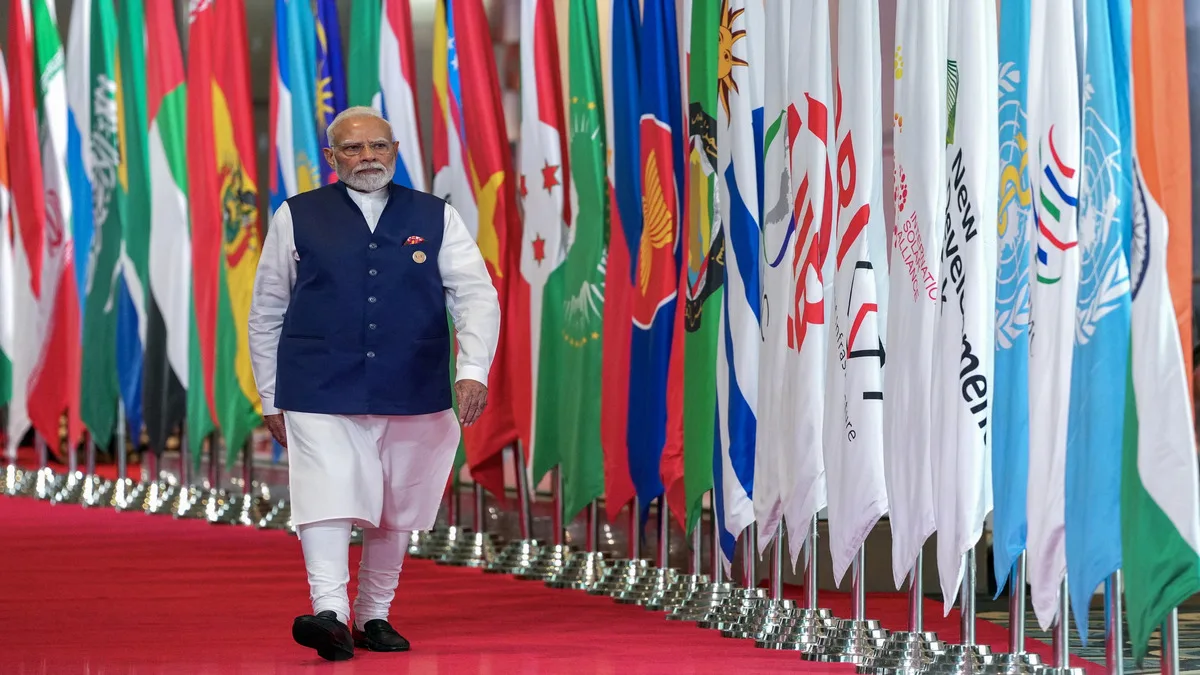
New Delhi: Prime Minister Narendra Modi on September 13, Sunday warned that the “weaponisation of technology and critical minerals” could hinder shared global progress. He called for greater inclusivity, preparedness and resilience among BRICS nations amid rising geopolitical tensions, supply-chain disruptions and emerging global challenges.
Addressing the open session on “Resilience, Innovation, Cooperation and Sustainability: Shaping the Future for Inclusive Global Growth” at the 18th BRICS Summit, PM Modi said the interconnected nature of the modern world meant that crises could no longer be contained within geographical boundaries.
From pandemics, infectious diseases & health risks to wars & supply chain disruptions, every crisis has global ramifications. To counter these, collective efforts are pivotal, thus PM Modi charted cooperative mechanisms among member-states for navigating the challenges and sealing shared prosperity. This encompasses, harnessing integrated early warnimg systems among BRICS members for detecting and counteirng disasters including infectious diseases.
Sharing opening remarks during BRICS Session on ‘Resilience, Innovation, Cooperation and Sustainability: Shaping the Future for Inclusive Global Growth.’
https://t.co/xwKGoGfBjc— Narendra Modi (@narendramodi) September 13, 2026
PM Modi calls for greater resilience amid global crises
“Today, the number of tensions in the world is constantly rising, having a significant and widespread negative impact on the lives of ordinary people”, PM Modi said. He noted that pandemics, climate disasters and supply-chain disruptions had demonstrated that “no crisis remains confined to a single region” in an interconnected world.
“Therefore, we have placed special emphasis on enhancing resilience within the BRICS group. It is equally essential to identify challenges in a timely manner, remain prepared for them, and take immediate action”, he said.
Integrated Early Warning System for resilience against diseases & disaster
As part of these efforts, PM Modi announced that BRICS countries had reached consensus on establishing an Integrated Early Warning System for the prevention of and response to infectious diseases. He also said that Early Warning Data Integration Guidelines had been formulated for disaster management, underlining the grouping’s focus on strengthening collective preparedness.
These mechanisms help to detect, track and respond to infectious diseases across member countries
Weaponisation of technology, critical minerals can hinder shared progress
One of the key messages from PM Modi’s address was his warning against the use of technology and critical minerals as instruments of geopolitical leverage. “The weaponisation of technology and critical minerals can hinder our shared progress. Therefore, we have emphasised inclusivity in the adoption of technology”, the Prime Minister said.
The remarks assume significance amid growing global competition over advanced technologies, rare earths and other critical minerals that are essential for sectors ranging from electronics and defence to renewable energy.
China has previously imposed export controls on several rare earth elements and other critical minerals amid its trade tensions with the United States. China remains a dominant player in the global rare-earth processing ecosystem, making supply-chain diversification and resilience a major concern for several economies.
India puts Global South at centre of BRICS cooperation
PM Modi also highlighted India’s efforts to make BRICS cooperation more inclusive and people-centric during its 2026 chairship. “India has advanced the spirit of friendship, partnership and cooperation through the BRICS platform”, he said, adding that India had sought to ensure that BRICS cooperation was not restricted to governments.
He stressed the participation of entrepreneurs, farmers, researchers, women, youth and ordinary citizens, arguing that their involvement would make BRICS cooperation more practical and development-oriented. PM Modi said the confidence of Global South countries in BRICS had increased because their voices were being heard and their experiences respected.
“The strength of BRICS lies in our diversity and cooperation”, he said, emphasising that countries could remain rooted in different realities while working together for the benefit of humanity.
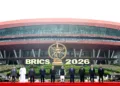
The two-day 18th BRICS Summit is being hosted by India on September 12-13 under the chairship theme “Building for Resilience, Innovation, Cooperation and Sustainability”. The final leg of the summit is focused on these four pillars, with leaders discussing ways to strengthen cooperation and promote inclusive global growth.
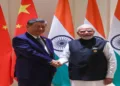
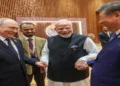
Earlier on Sunday, PM Modi joined BRICS leaders for a family photograph at Bharat Mandapam, standing alongside Russian President Vladimir Putin, Chinese President Xi Jinping and other leaders. The Prime Minister is also scheduled to hold bilateral meetings with leaders and representatives from South Africa, Kazakhstan, the Philippines, Egypt, Burundi, Uganda and Nigeria, as India seeks to deepen its engagement with key partners across Africa and Asia.