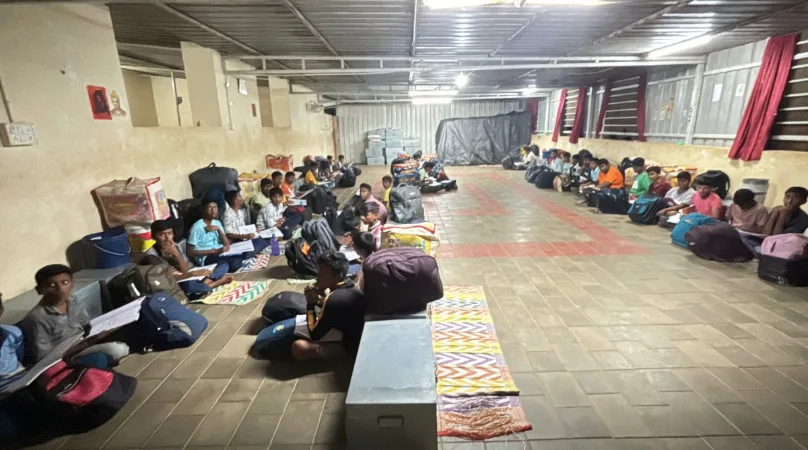
Dr BR Ambedkar Residential School, in Hassan, Karnataka
Hassan: As many as 172 students of the Dr BR Ambedkar Residential School at Shantigrama in Hassan district in Karnataka have been living in a shed-like building for the past five years, with inadequate sanitation, poor ventilation and a severe shortage of basic facilities raising serious concerns over their safety and welfare.
The students, studying from Classes 6 to 10, include 92 boys and 80 girls. The residential school, which comes under the Social Welfare Department, is reportedly operating from a temporary or unsuitable structure where students are compelled to manage their daily activities under cramped conditions.
As per reports, the building lacks adequate space and basic amenities required for a residential school. Students are reportedly forced to eat, sleep and attend classes within the same premises. In some instances, children have to sit on the floor to attend lessons.
Despite authorities being aware of the difficulties faced by the students, the prolonged stay in such conditions has triggered questions over the implementation of welfare and residential education programmes meant to provide children with a safe and conducive environment for learning.
Reportedly, the 92 boys are sharing just five toilets, while the girls are also said to be facing inadequate sanitation facilities.
The shortage becomes particularly concerning in a residential school where children stay on the premises throughout the day and night. The building is also do not have adequate ventilation and natural light.
Parents and members of the public have expressed anger over the continued accommodation of children in a cattle-shed-like structure.
School authorities and staff have reportedly said that a new building is under construction. However, the existing arrangement has continued as an alternative accommodation could not be secured.
The school is reportedly paying around Rs 1.08 lakh a month as rent for the premises where the children are currently staying. The continued expenditure on an unsuitable building has further fuelled criticism, with members of the public questioning whether the money could instead be utilised to provide better temporary accommodation until the new school building is completed.
The authorities are expected to shift the students to the new facility once construction is completed.
They have also demanded that the students be shifted to a safe alternative facility with adequate sanitation, ventilation, classroom space and other essential amenities until the permanent building is ready.
The condition of the Shantigrama residential school has therefore become a matter of concern beyond the question of infrastructure.
