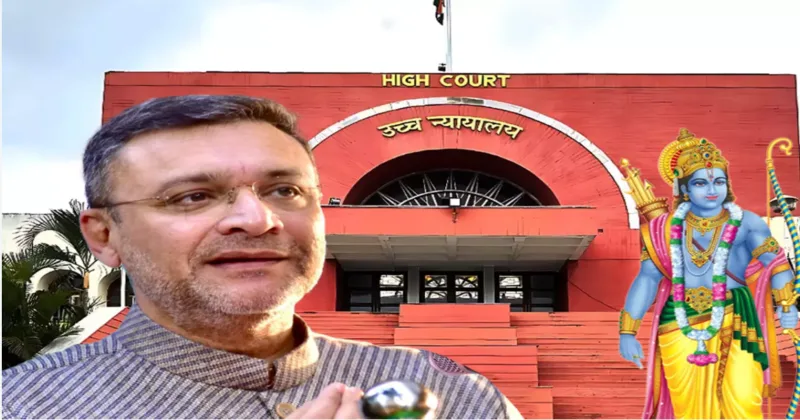
The Bombay High Court has refused to quash criminal proceedings against AIMIM MLA Akbaruddin Owaisi over a speech which, according to the Court, prima facie contained statements intended to mock Bhagwan Shri Ram and His mother.
The proceedings arise from offences under Sections 295A and 298 of the Indian Penal Code. Owaisi argued that the speech was delivered in the context of the Allahabad High Court’s Ram Janmabhoomi judgment and that the statements were neither deliberate nor malicious. He also raised a limitation objection, contending that cognisance had been taken years after the speech.
Justice R.M. Joshi rejected both grounds.
On limitation, the Court held that the relevant date under Section 468 CrPC is the date of filing of the complaint or initiation of prosecution, not the later date on which the Magistrate takes cognisance. Since the complaint had been lodged within the prescribed period, the proceedings were not barred.
The more significant part of the judgment concerns the nature of the speech itself. The Court deliberately refrained from reproducing the impugned words, saying that doing so would give them “unwanted publicity”. Yet, after examining the text and sequence of the speech, it held that the statements prima facie indicated an intention to mock Lord Shriram and His mother.
The Court stressed that Section 295A does not punish every insult to religion. It applies only where the act is deliberate and malicious. Careless or unwitting remarks do not meet that threshold.
In Owaisi’s case, however, the Court found prima facie that the statement was not made helter-skelter. It described it as appearing to be “planned and pre-determined” and a “measured statement”. The Court also noted that an elected legislator is expected to exercise greater responsibility while addressing the public.
Significantly, the judgment records that the remarks did not advance any legal argument concerning the Ram Janmabhoomi litigation. In the Court’s prima facie view, they instead took the form of mockery capable of wounding the religious feelings of believers.
Justice Joshi also made a broader constitutional point. Bharat’s constitutional structure promotes tolerance, liberty and fraternity, but tolerance cannot be misunderstood as a licence to intentionally hurt another person’s religious feelings.
The Court also expressed concern over the prosecution’s submission that the speech continued to remain available on YouTube despite cognisance having been taken, and hoped that the Government would take appropriate steps.
At the same time, the judgment does not declare Owaisi guilty. It expressly clarifies that these observations are prima facie and that the trial court must decide the case independently on evidence.
What the order makes clear is narrower but significant: constitutional right of free speech under Article 19(1)-a is not absolute and does not erase the statutory protection against deliberate and malicious attack on religious faith.
