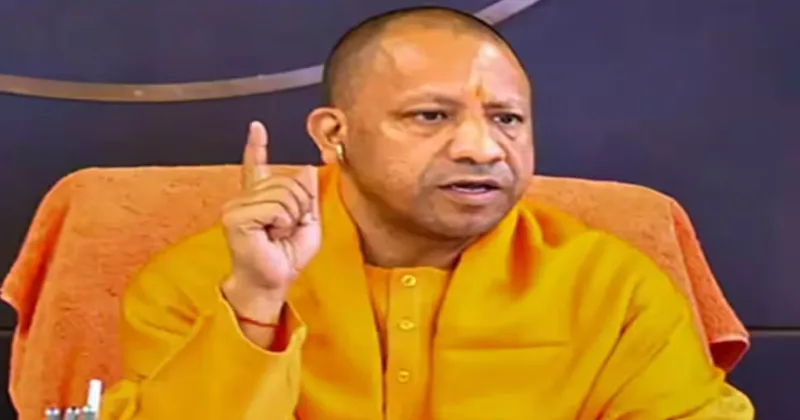
In the Taittiriya Upanishad, the Vedic seer counsel Matru Devo Bhava, Pitru Devo Bhava, let the mother be your god, let the father be your god. For millennia this maxim has shaped the Indian household, where caring for parents in their twilight years was never treated as charity but as dharma, an inseparable duty woven into the fabric of family life. On August 25, 2026, the Uttar Pradesh Cabinet, chaired by Chief Minister Yogi Adityanath, took a modern legislative step to safeguard that very dharma, approving amendments that give the state’s senior citizens sharper legal protection against neglect and mistreatment.
Cabinet Decision: New Rules for Senior Citizens
The Cabinet cleared amendments to the Uttar Pradesh Parents and Senior Citizens Maintenance and Welfare Rules, 2014, inserting three new provisions, Rules 22(A), 22(B) and 22(C), after the existing Rule 22 in Chapter Six of the rulebook. The amendment follows a recommendation contained in the Thirteenth Report of the Seventh State Law Commission, which had examined gaps in the existing framework for elderly protection and suggested strengthening the rules governing maintenance obligations.
According to the Cabinet note, the revised rules are meant to encourage senior citizens to live with dignity and to reduce the atrocities and ill-treatment many face at the hands of their own families. Crucially, the amendment will, going forward, empower an elderly parent to seek the eviction of children or unwilling relatives from the parent’s own property if those relatives fail to provide maintenance or subject them to abuse. The Cabinet has also authorised the Chief Minister to take further decisions, in consultation with the relevant departments, as the scheme is rolled out, a provision that allows the government flexibility to refine implementation without returning repeatedly to the full Cabinet.
From a 2007 Central Law to a 2026 State Rule
The amendment builds on the Maintenance and Welfare of Parents and Senior Citizens Act, 2007, the central legislation that first made it a legal obligation for children and legal heirs to maintain their ageing parents and empowered tribunals to order maintenance and, in some cases, eviction to protect an elderly person’s life and property. Uttar Pradesh notified its own rules under this Act in 2014. The 2026 amendment sharpens the enforcement mechanism within the state, turning a legal entitlement that has often moved slowly through the courts into a swifter, more accessible remedy for the elderly.
Rooted in Sanatan Values: What Ancient India Already Knew
Long before any statute book codified the duty to maintain one’s parents, Indian civilisation had already placed that duty at the centre of its moral architecture. The Ramayana’s Shravan Kumar, who carried his blind parents on a pilgrimage across the land in woven baskets balanced on his shoulders, remains the most important symbol of filial devotion in Indian storytelling. The Manusmriti lists reverence for one’s mother, father and teacher among the highest observances, while the ashrama system prescribed a structured life-cycle in which the householder was duty-bound to support ageing parents before he himself entered Vanaprastha, the forest-dwelling stage of gradual withdrawal, in old age. The joint family, for centuries the basic social unit across Bharat, was itself an informal but powerful welfare system, it ensured that no elder was left without shelter, food or companionship in the way modern nuclear households sometimes struggle to guarantee.
It is this civilisational memory that Chief Minister Yogi Adityanath has repeatedly said in his public messaging on the subject. Marking World Elder Abuse Awareness Day earlier this year, he wrote an open letter expressing concern over the rising number of old-age homes and what he described as a weakening culture of caring for elderly family members within Indian households. He drew on the story of Lord Ganesha, who chose to circle his parents Shiva and Parvati rather than travel the world to win a divine contest, reading the episode as a reminder that reverence for parents outweighs any external achievement. On that occasion he also announced a monthly pension for elderly citizens and destitute women, framing it as a means to let them live with dignity and financial independence.
Why the Yogi Government is Prioritising the Elderly
The August 25Cabinet meeting did not address senior citizens in isolation. In the same sitting, the Cabinet approved the Lokmata Ahilyabai Matru Shakti Yojana, granting free lifelong travel on Uttar Pradesh State Road Transport Corporation buses to women aged 60 and above, a scheme expected to benefit more than a crore woman across the state for religious, medical, social and family travel. This sits alongside the state’s existing Old Age Pension Scheme, which already reaches lakhs of elderly women through direct benefit transfer, and a recent supplementary budget allocation running into crores of rupees for the National Old Age Pension Scheme within the state’s Social Welfare Department.
Taken together, these measures reflect a governing philosophy the BJP has long described through the idiom of Antyodaya, welfare that reaches the last and most vulnerable person first, combined with an explicit civilisational framing in which policy is presented not merely as entitlement but as a restoration of Sanatan duty. For a government that routinely draws on Vedic and epic references in its public communication, protecting the elderly is portrayed less as a bureaucratic reform and more as the state stepping in to reinforce a family duty that Indian tradition has always regarded as sacred.
With India’s elderly population set to grow steadily over the coming decades, the significance of rules like these will only increase. The intent behind Rules 22(A) to 22(C) is unambiguous, even if their success will ultimately depend on how swiftly district-level authorities act on complaints. In tying a modern statutory remedy to a duty that Indian civilisation has honoured since the age of the Upanishads, Uttar Pradesh’s Cabinet has signalled that an elderly parent’s home must remain, above all, a place of dignity and not neglect.