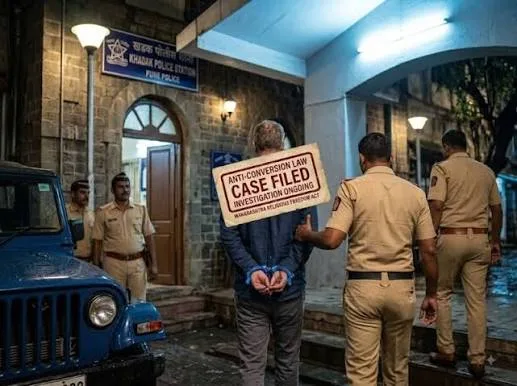
Pune Police have registered a case against a British citizen following allegations that he was involved in religious preaching and attempting to encourage people to convert to another religion at a church in Guruwar Peth.
The case was registered at the Khadak Police Station after a complaint was received alleging that the foreign national was using religious sermons as a means to encourage people to change their faith.
The complaint was reportedly made following allegations raised by Hindutva organisations, which claimed that the British national had been delivering sermons at the church during his stay in Pune.
Police have begun an investigation into the allegations and are examining the circumstances surrounding the religious gatherings and the activities of the accused.
Accused was in Pune on tourist visa
According to the information cited in the complaint, the British national had entered India on a tourist visa and had been staying in Pune for several days.
The complaint alleges that despite being in the country on a tourist visa, he was involved in religious preaching at the church.
The visa-related aspect is significant because foreign nationals are subject to conditions attached to the category of visa under which they enter India. Activities such as missionary work or religious preaching may require an appropriate visa or permission rather than a standard tourist visa.
Police are examining the accused’s visa documents and the nature of his activities in Pune as part of the investigation.
Allegations of religious conversion
The central allegation in the case is that the sermons were being used as a means to encourage people to convert to another religion.
However, the allegations are yet to be established through the investigation.
Police are expected to examine what was said during the sermons, who attended the gatherings, whether any individual was approached or induced to change their religion and whether there was any evidence of an actual or attempted conversion.
The investigation will also determine whether the activities attributed to the accused fall within the provisions of Maharashtra’s new religious freedom legislation.
Case under new Maharashtra law
The case has been registered under the newly implemented Maharashtra Religious Freedom Act, which was recently enacted by the state.
The legislation is intended to regulate religious conversions and address conversions allegedly carried out through means such as force, fraud, coercion, inducement or other prohibited methods.
The law has been politically contentious, with supporters arguing that stronger safeguards are required against unlawful conversions, while critics have raised concerns over personal liberty, privacy and the potential impact on minority communities.
The Pune case is therefore significant as it comes soon after the implementation of the new legislation and involves a foreign national.
Police begin detailed probe
Following the complaint, officers from Khadak Police Station conducted a preliminary inquiry before registering the case.
Investigators are now examining the allegations, the accused’s immigration and visa status, details of his stay in Pune and the circumstances under which he was delivering sermons.
Police will also have to establish whether the alleged preaching amounted to an offence under the new state law or whether any other legal provisions relating to foreign nationals and visa conditions were violated.
At present, the allegations against the British citizen remain under investigation.
The registration of a case does not by itself establish that a religious conversion took place or that the accused is guilty of violating the law.
The next stage of the investigation is expected to focus on statements from complainants and witnesses, details of the church gatherings and any material or documentary evidence linked to the alleged activities.