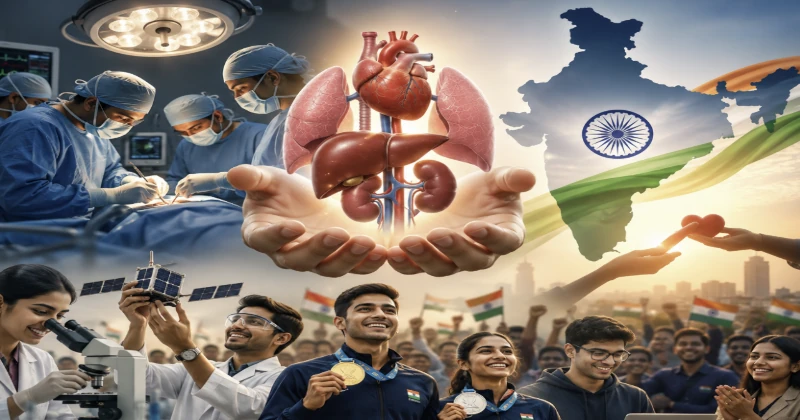
New Delhi: India has scripted a landmark chapter in its healthcare journey by performing 20,138 organ transplants in 2025, crossing the 20,000 annual transplant milestone for the first time. The achievement not only marks a 6.5 per cent increase over 2024 but also underscores the country’s rapidly expanding organ donation ecosystem, improved transplant infrastructure and growing public awareness.
According to the National Organ and Tissue Transplant Organisation (NOTTO) Annual Report, the number of organ transplants has increased more than fourfold over the past decade from 4,990 in 2013 to 20,138 in 2025 reflecting one of the fastest-growing transplant programmes in the world.
The achievement comes as India has also been recognised as the world’s No. 1 country in living donor organ transplants and the third-largest globally in total organ transplants, behind only the United States and China, according to the Global Observatory on Donation and Transplantation’s 2026 report.
🇮🇳 A landmark achievement for healthcare!
Ranked No. 1 globally in living donor organ transplants, India continues to strengthen its organ donation ecosystem and save more lives.
For the first time, 20,138 organ transplants were performed in a single year, crossing the 20,000… pic.twitter.com/fBJUZN3DNx
— Ministry of Health (@MoHFW_INDIA) August 4, 2026
Crossing the 20,000-transplant mark represents a significant milestone for India’s healthcare system, demonstrating the growing reach of advanced medical care across the country.
The record performance was announced on the occasion of the 16th Indian Organ Donation Day, highlighting the steady expansion of organ donation and transplant services nationwide. The report also revealed that more than five lakh Aadhaar-verified organ donation pledges have been registered since the launch of the national digital pledge portal in 2023, indicating rising public participation in organ donation.
Among all regions, Delhi-NCR recorded the highest number of organ transplants in 2025, performing 4,564 procedures. It was followed by:
- Tamil Nadu: 2,796 transplants
- Maharashtra: 2,136
- Telangana: 1,523
- Kerala: 1,489
Tamil Nadu once again emerged as the national leader in deceased organ donation, registering 266 deceased donors, followed by Maharashtra (205), Telangana (198), Karnataka (154) and Kerala (152).
Despite record-breaking transplant numbers, the government acknowledged that deceased organ donation continues to be India’s biggest challenge. The number of deceased donor transplants has risen significantly from 837 in 2013 to 3,526 in 2025 but remains well below the country’s growing demand for organs.
Minister of State for Health Anupriya Patel said that a substantial gap still exists between the demand for organs and their availability. “Addressing this gap remains a national priority,” she said. Experts believe that improving public awareness, strengthening hospital infrastructure and streamlining organ retrieval systems are critical to increasing deceased organ donation.
To strengthen the country’s transplant ecosystem, the Centre has launched several initiatives aimed at making organ donation more transparent and accessible. These include:
- Jug Jug Jiyo Abhiyaan, a year-long awareness campaign promoting organ donation.
- e-Pratyaropan, a digital platform for donor registration, wait-list management and organ allocation.
- NOTTO Mobile App to improve accessibility.
- New Brain Stem Death Certification and Swap Transplantation Guidelines to streamline the transplant process.
The government has also implemented the “One Nation, One Policy” reforms, removing domicile requirements, upper age limits and registration fees for patients seeking deceased donor organs, making the system more equitable nationwide.
The report also highlights the rapid expansion of transplant facilities across the AIIMS network. Several AIIMS institutions have now begun offering specialised transplant services:
- New AIIMS institutions are performing kidney transplants.
- AIIMS Bhopal has launched heart transplantation.
- AIIMS Jodhpur, Bhubaneswar, Patna and Rishikesh have initiated liver transplant programmes.
The expansion is expected to improve access to advanced transplant care beyond metropolitan centres. The report notes that India records nearly 1.73 lakh road traffic fatalities every year, presenting significant potential to increase deceased organ donation through timely identification of eligible donors, improved hospital coordination and efficient organ retrieval systems.
Health experts believe that stronger public awareness campaigns and better implementation of brain stem death certification protocols could substantially narrow the gap between organ demand and availability.