Balochistan: A nightmare for the Pakistani Army
September 13, 2026
  • Read Ecopy
  • Circulation
  • Advertise
  • Careers
  • About Us
  • Contact Us
Android AppiPhone AppArattai
Organiser
  • ‌
  • Bharat
    • Assam
    • Bihar
    • Chhattisgarh
    • Jharkhand
    • Maharashtra
    • View All States
  • World
    • Asia
    • Europe
    • North America
    • South America
    • Africa
    • Australia
  • Editorial
  • International
  • Opinion
  • RSS @ 100
  • More
    • World Hindu Congress 2026
    • Op Sindoor
    • Analysis
    • Sports
    • Defence
    • Politics
    • Business
    • Economy
    • Culture
    • Special Report
    • Sci & Tech
    • Entertainment
    • G20
    • Azadi Ka Amrit Mahotsav
    • Vocal4Local
    • Web Stories
    • Education
    • Employment
    • Books
    • Interviews
    • Travel
    • Law
    • Health
    • Obituary
  • Subscribe
    • Subscribe Print Edition
    • Subscribe Ecopy
    • Read Ecopy
  • ‌
  • Bharat
    • Assam
    • Bihar
    • Chhattisgarh
    • Jharkhand
    • Maharashtra
    • View All States
  • World
    • Asia
    • Europe
    • North America
    • South America
    • Africa
    • Australia
  • Editorial
  • International
  • Opinion
  • RSS @ 100
  • More
    • World Hindu Congress 2026
    • Op Sindoor
    • Analysis
    • Sports
    • Defence
    • Politics
    • Business
    • Economy
    • Culture
    • Special Report
    • Sci & Tech
    • Entertainment
    • G20
    • Azadi Ka Amrit Mahotsav
    • Vocal4Local
    • Web Stories
    • Education
    • Employment
    • Books
    • Interviews
    • Travel
    • Law
    • Health
    • Obituary
  • Subscribe
    • Subscribe Print Edition
    • Subscribe Ecopy
    • Read Ecopy
Organiser
  • Home
  • Bharat
  • World
  • Operation Sindoor
  • Editorial
  • Analysis
  • Opinion
  • Culture
  • Defence
  • International Edition
  • RSS @ 100
  • Magazine
  • Read Ecopy
Home World

Balochistan & Enthno-Nationalist Armed Resistance: A nightmare for the Pakistani Army

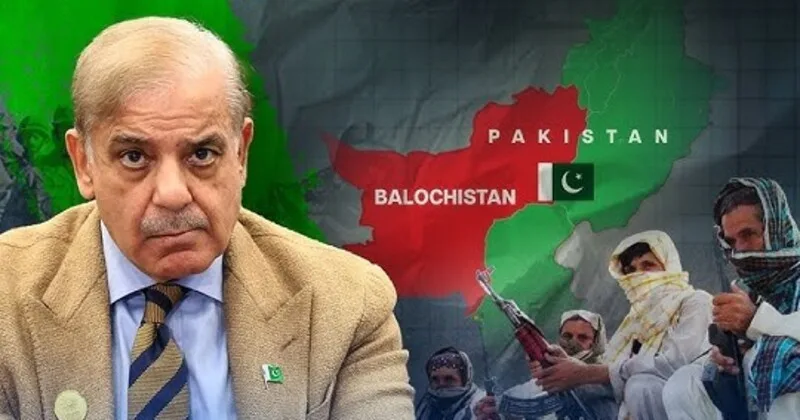
At the core of the ethno-nationalist armed resistance is the deep-rooted feeling of oppression among the Baloch people. The Pakistani deep state has always labelled this resistance as the handiwork of foreign intelligence agencies. But the truth is that the forceful occupation, suppression, denial of basic amenities and looting of vast natural resources by Pakistan has fuelled the call for Baloch nationalism

Manish RaiManish Rai
Aug 3, 2026, 09:40 pm IST
inWorld, South Asia, Analysis, Asia
Follow on Google News
Facebook
Twitter
WhatsAppTelegramEmail

Balochistan is currently experiencing one of the most severe violence outbreaks of the year. In the past few months, Pakistani security forces have suffered heavy casualties due to coordinated rebel attacks. The Pakistani army’s General Headquarters (GHQ) was compelled to initiate operations that were classified as “large-scale and intelligence-based.” The security forces and law enforcement agencies of Pakistan jointly proclaimed the commencement of Operation Shaban as a response to a fatal Baloch rebel attack on a police post at the Mangi Dam pumping station in Ziarat on July 6.

In Balochistan, the Pakistani army simultaneously initiated Operation Al-Azm. It is evident from these well-coordinated attacks by Baloch rebels that the Pakistani Army units in the province are extremely vulnerable and at the mercy of rebels. With these extensive assaults, the Baloch fighters once again showcased their capacity to coordinate intricate attacks, as well as their reach and capability. However, this is despite the fact that nearly all of the federal and state security and intelligence agencies of Pakistan have a substantial presence in Balochistan. All branches of the Pakistan military, including the Army, Air Force, Navy, and Coast Guard, have a presence in Balochistan, with the Army being the most significant.

Based in Quetta, the Pakistan Army XII Corps is accountable for the province and is led by a three-star general who concurrently functions as the commander of the Southern Command. Four facilities in POB are run by the Pakistan Air Force (PAF). The primary base is Samungli in Quetta and is home to the 31st Fighter Wing. The Pakistan Navy also operates four naval bases in POB. The deep-water port of Gwadar, located in western Balochistan, serves as the primary base and is the second-largest port in Pakistan, after Karachi. The port also hosts the Pakistan Coast Guard’s 3rd Battalion.

The three lesser naval bases are situated in Pasni, Ormara, and Jiwani. Furthermore, the Pakistani intelligence apparatus maintains an extensive deployment. In addition to undertaking operations, the Inter-Service Intelligence Directorate (ISI) is accountable for strategic intelligence and maintains a substantial presence in Quetta. To monitor the western frontier and the shipping lanes of the Gulf of Oman, the Joint Signals Intelligence Bureau (JISB) of the ISI maintains stations for collecting signal intelligence in Saindak and Gwadar.

Every service possesses military intelligence assets, collectively referred to as MI, in addition to the ISI, which are used to fulfill tactical requirements. The Pakistani establishment, despite the deployment of a significant number of forces, always struggles to maintain any sort of control over major parts of the restive province.

The Pakistan military establishment, which makes all significant policy decisions for the country, is deeply embarrassed following the recent attacks. As a measure to preserve its reputation, it has announced military operations. However, each operation launched by GHQ in Balochistan inevitably fails, regardless of the number.

Also Read: Massive Attack barred from Singapore for Palestinian flag display; Conflict should not disrupt multicultural city
There are several reasons why the Pakistani Army always experiences a disaster when attempting to conduct an operation in Balochistan:

Vast geography: Balochistan is a large area with a scattered population, which is a major disadvantage for the Pakistani government. The government cannot provide foolproof security, while nationalist armed groups can easily launch guerrilla attacks and hide in the vast geography of the province. Tracking down a band of guerrilla fighters in the area, which is almost half the size of Pakistan, is next to impossible.

Porous border: The borders of POB with Iran and Afghanistan are poorly guarded and porous. It is now easier for Baloch rebels to conduct cross-border movements of both men and materials. In addition, Pakistani authorities are unable to establish a collaborative strategy with their neighbours to impede the movement of Baloch fighters across the frontier due to their strained relationship.

Committing large force: A mobilization of large numbers of forces is necessary to effectively monitor and dominate Balochistan. Currently, Pakistan is unable to afford to allocate that level of force. On numerous fronts, the army is bogged down. Pakistan is unable to relocate its forces from the Line of Control (LOC) and the International Border with India, and the Afghan Taliban’s escalated tensions render it impossible to redirect them from the Durand Line. Additionally, in the Khyber-Pakhtunkhwa (KPK) province, the Pakistani Taliban, AKA TTP, has heavily engaged Pakistani security forces. Consequently, the Pakistani Army’s high command is experiencing difficulty in bolstering its troop strength in Balochistan.

Growing capabilities of rebels: Baloch armed groups have significantly enhanced their capabilities in all aspects. Over the years, Baloch combatants have made substantial improvements to their communication capabilities and armaments. Unquestionably, the rebels’ resilience and longevity are assets, as they have acquired the ability to adjust and respond to the diverse counterinsurgency strategies employed by the Pakistani government. The Baloch armed groups are capable of delivering a devastating blow to the Pakistani army on the ground by employing guerrilla tactics such as ambushes, IED blasts, sniper fire and suicide attacks.

No support from the local population: Despite having vast natural wealth, much of the population of Balochistan lives below the poverty line; this has created a deep sense of resentment among the locals towards the Pakistani state. A major section of the Baloch society considers the Pakistani deep state as looters who are exploiting their land and using it as a colony. With such a strong anti-Pakistan feeling prevalent in Baloch society, it is next to impossible for the Army to gather credible intelligence about the Baloch Sarmachars from the locals. Any military operation is destined to fail without accurate ground information.

At the core of the ethno-nationalist armed resistance is the deep-rooted feeling of oppression among the Baloch people. The Pakistani deep state has always labelled this resistance as the handiwork of foreign intelligence agencies. But the truth is that the forceful occupation, suppression, denial of basic amenities and looting of vast natural resources by Pakistan has fuelled the call for Baloch nationalism. With limited or no access to education, jobs, electricity, roads and clean water.

A common Baloch fails to understand why he is forced to live in abject poverty. While Islamabad is benefiting from the natural resources of his homeland. The Baloch movement seems to have spread deeper into Baloch society. Anti-state sentiments have gripped the entire province. It’s a hard truth that Balochistan has already slipped from Pakistan’s hands, and it’s only a matter of time before Islamabad will witness a second division of the so-called country.


Topics: Baloch RebelsOppressionPakistanPakistan ArmyBalochistan
Manish Rai
Manish Rai
The writer is a Political Analyst for West Asia and Af-Pak Region. [Read more]
Share
Tweet
SendShareSend
✮ Subscribe Organiser YouTube Channel. ✮
✮ Join Organiser's WhatsApp channel for Nationalist views beyond the news. ✮
Previous News

Tamil Nadu: Supreme Court refuses to stay HC order on Thiruparankundram Deepam; TVK govt faces legal setback

Next News

DRDO calls MSMEs to build swarm drones; The game-changing tech to consolidate India’s capabilities in next-gen warfare

Related News

‘Samuel Could Never Do This’: Mother Rejects Blasphemy Allegations Against Son in Lahore

Pakistan Blasphemy Case: Mother of Christian man Samuel Arif claims false implication, seeks justice

UN Experts Flag Balochistan ‘Pattern’ of Alleged Disappearances and Extrajudicial Killings

Balochistan Under UN Lens: Experts raise alarm over alleged disappearances, torture and killings

The Map of India shown in Afghanistan Cricket Board's promotional video

Afghanistan cricket promo irks occupying Pakistan; Kabul highlights PoJK, Gilgit-Baltistan as Indian territories

PM Modi calls for united global action to dismantle entire terror ecosystem, pushing SCO to reject double standards on terrorism

Dismantling the Global Terror Ecosystem: PM Modi pushes SCO towards coordinated counter-terrorism action

Former Prime Minister Imran Khan & Army Chief Asim Munir

Pakistan: Imran Khan’s sister files fresh contempt plea over denied prison visit & telephone conversation with sons

Representative Image

Pakistan: In TTP attack, 2 Army officers among 10 security personnel killed in Ziarat area of Balochistan

Load More

Latest News

Exterior of the Lokayukta Building

Karnataka Lokayukta records 1,248 cases in four years, 887 linked to bribery

RSS Akhil Bharatiya Karyakarini Sadasya Dr Manmohan Vaidya at a Pramukh Jan Samvad Sangosthi organised by Kashi Mahanagar on the occasion of the RSS Centenary Year,

Entire society must unite with a sense of oneness; This Is the spirit of Sangh Work: Dr Manmohan Vaidya

‘Samuel Could Never Do This’: Mother Rejects Blasphemy Allegations Against Son in Lahore

Pakistan Blasphemy Case: Mother of Christian man Samuel Arif claims false implication, seeks justice

Prime Minister Narendra Modi, along with Chinese President Xi Jinping, Russian President Vladimir Putin and other world leaders, poses for a picture at a joint tree plantation initiative during the BRICS Summit

BRICS Summit 2026: India as the voice of Global South, shared responsibilities & scripting inclusive world order

Chinese President Xi Jinping and Prime Minister Narendra Modi

BRICS Summit 2026: PM Modi hold talks with President Xi; Stresses border peace & tranquility as key to India-China ties

Tamil Nadu: Hindu Munnani flags TVK govt’s restrictions on Vinayaka pandals, barring women, children from processions

Lashkar-e-Toiba founder Hafiz Saeed. (File image)

J&K Terror Case: Hafiz Saeed gets second NBW; NIA says he operates from Pakistan

Pakistan’s push for a place in the expanding BRICS bloc faces a difficult diplomatic road ahead, despite backing from key partners.

Pakistan knocking BRICS Door: Why Islamabad’s 2023 membership bid remains elusive despite Chinese and Russian support

BRICS Bazaar

BRICS Bazaar: Global traditions and cultural diplomacy take center stage at New Delhi’s National Crafts Museum

(From Left to Right): Russian President Vladimir Putin, PM Modi & Chinese President Xi Jinping

BRICS New Delhi Declaration | Key Takeaways: Cross-border payment, counter-terrorism to tech ties & supply resilience

Load More
  • Privacy
  • Terms
  • Cookie Policy
  • Refund and Cancellation
  • Delivery and Shipping

© Bharat Prakashan (Delhi) Limited.
Tech-enabled by Ananthapuri Technologies

  • Home
  • Search Organiser
  • Bharat
    • Assam
    • Bihar
    • Chhattisgarh
    • Jharkhand
    • Maharashtra
    • View All States
  • World
    • Asia
    • Africa
    • North America
    • South America
    • Europe
    • Australia
  • Editorial
  • Operation Sindoor
  • Opinion
  • Analysis
  • Defence
  • Culture
  • Sports
  • Business
  • RSS @ 100
  • Entertainment
  • More ..
    • Sci & Tech
    • Vocal4Local
    • Special Report
    • Education
    • Employment
    • Books
    • Interviews
    • Travel
    • Health
    • Politics
    • Law
    • Economy
    • Obituary
  • Subscribe Magazine
  • Read Ecopy
  • Advertise
  • Circulation
  • Careers
  • About Us
  • Contact Us
  • Policies & Terms
    • Privacy Policy
    • Cookie Policy
    • Refund and Cancellation
    • Terms of Use

© Bharat Prakashan (Delhi) Limited.
Tech-enabled by Ananthapuri Technologies