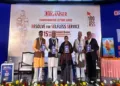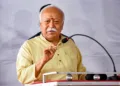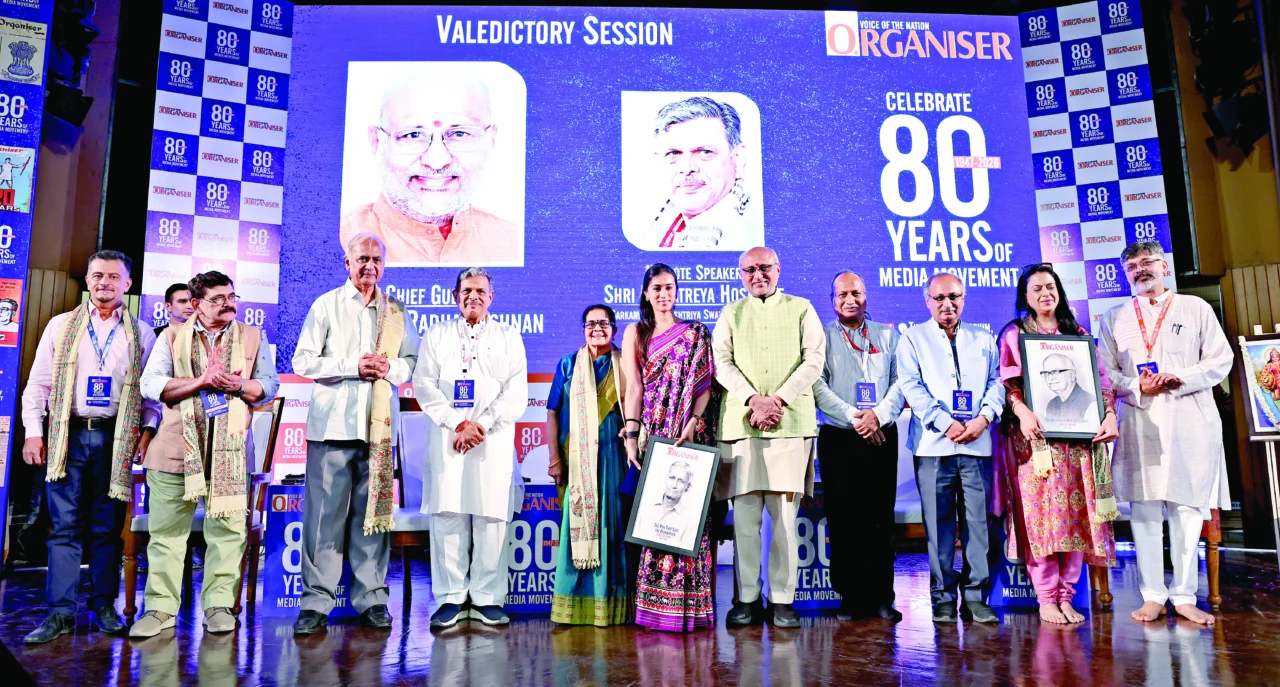
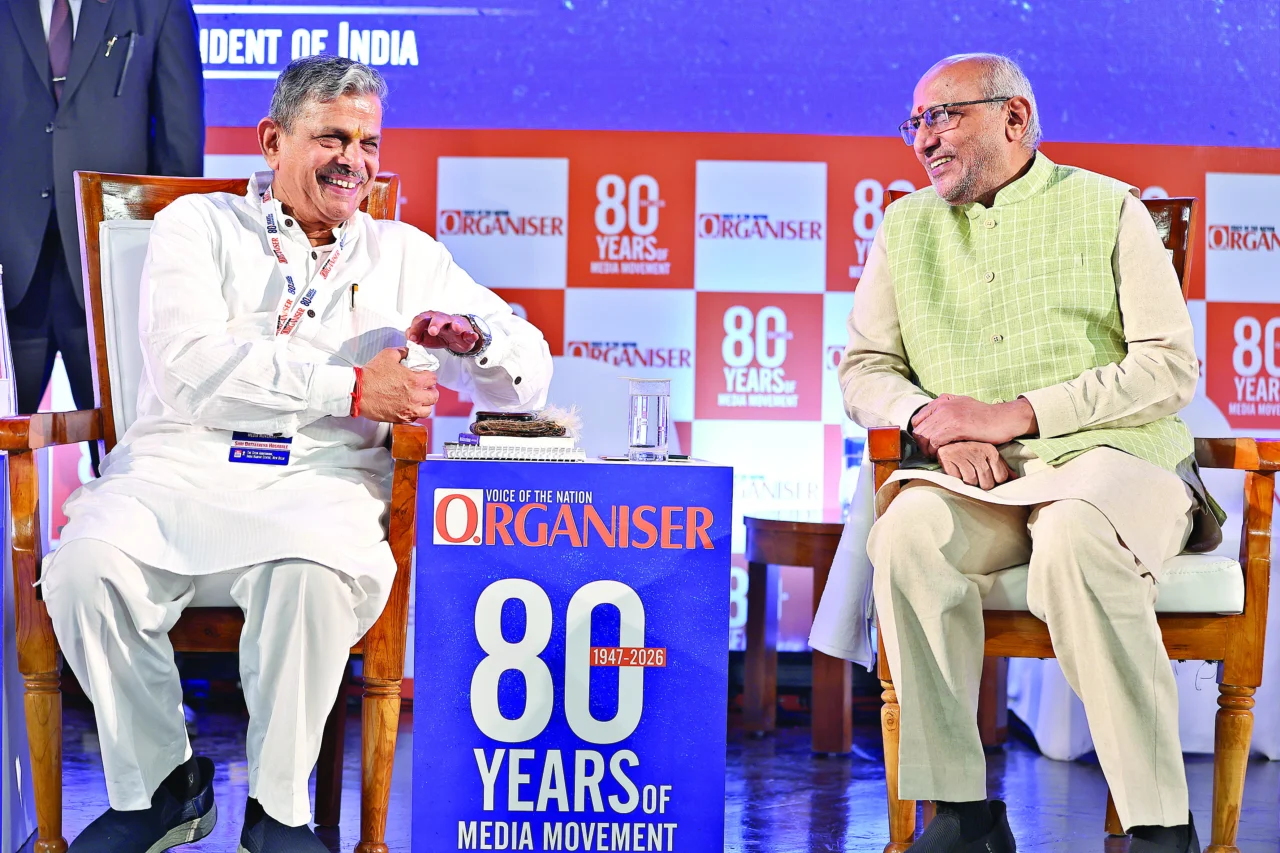
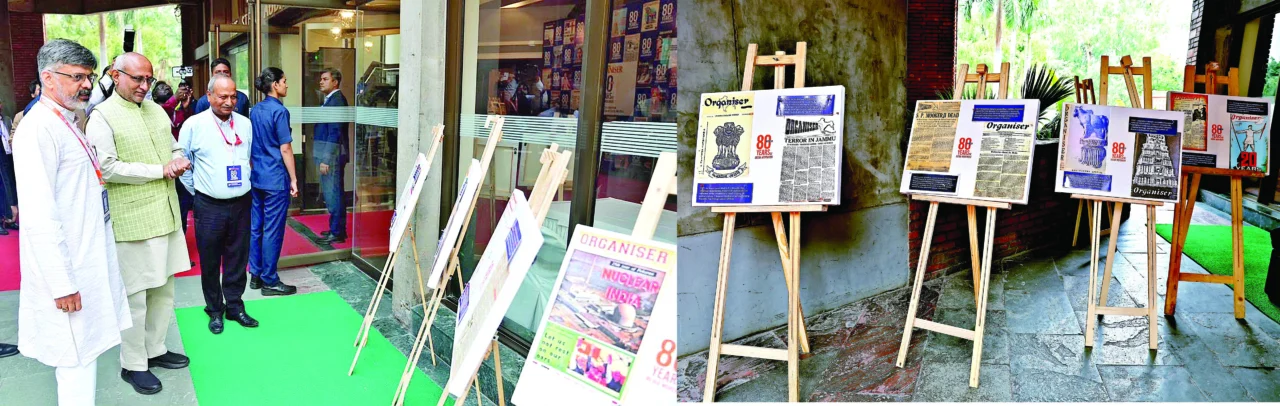
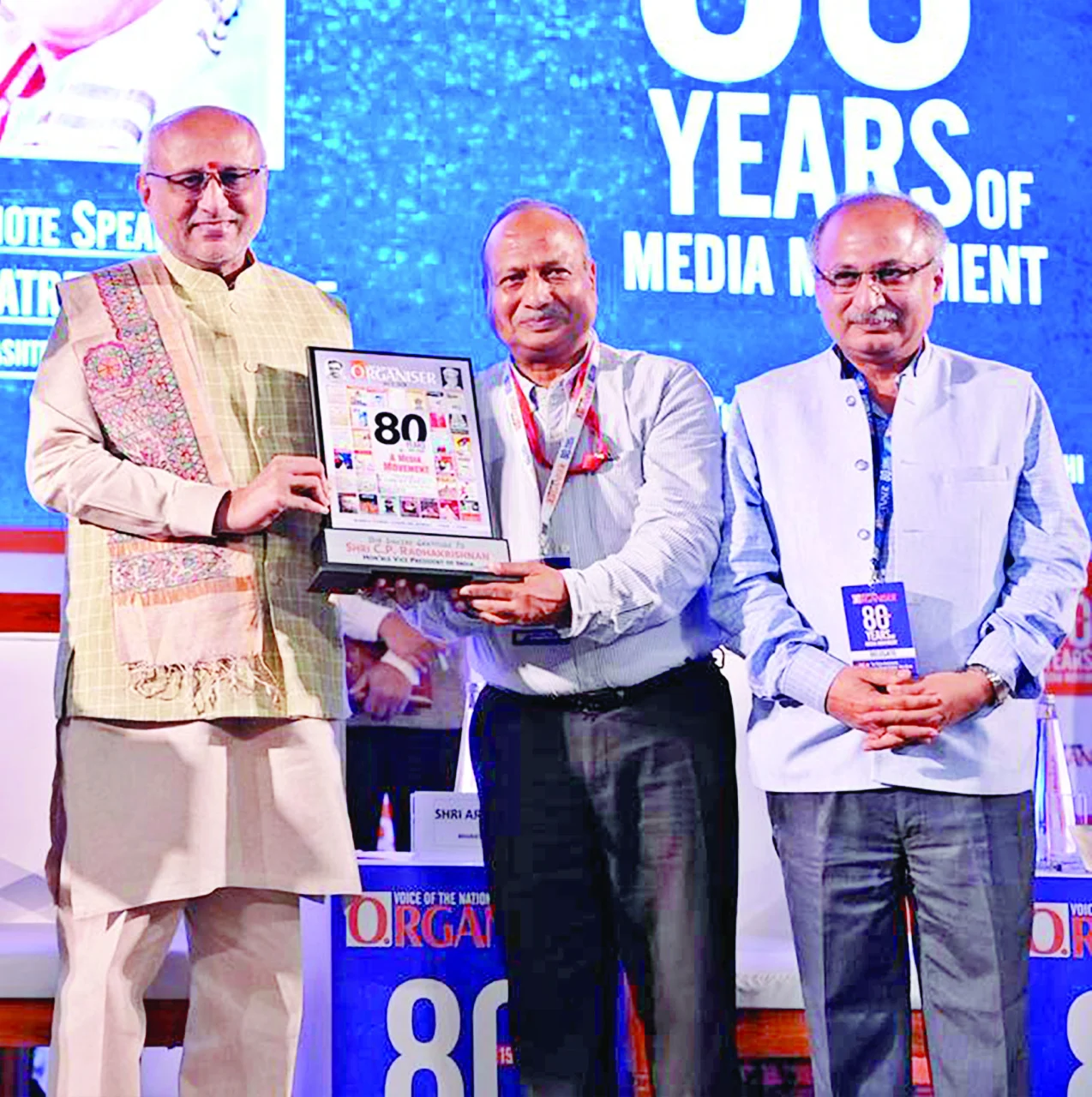
Organiser gave voice to the suffering of refugees during the Partition and highlighted the plight of minorities in East and West Pakistan. In 1949 it faced censorship for reporting on the condition of Hindus in Pakistan and challenged the restrictions in the Supreme Court, describing the case as a landmark in the evolution of press freedom in independent Bharat, said Vice President of Bharat and Chief Guest of the event C. P. Radhakrishnan, on the occasion of Organiser’s 80th anniversary celebrations, commemorating 80 Years of the Media Movement, held on July 3, 2026, at the India Habitat Centre.
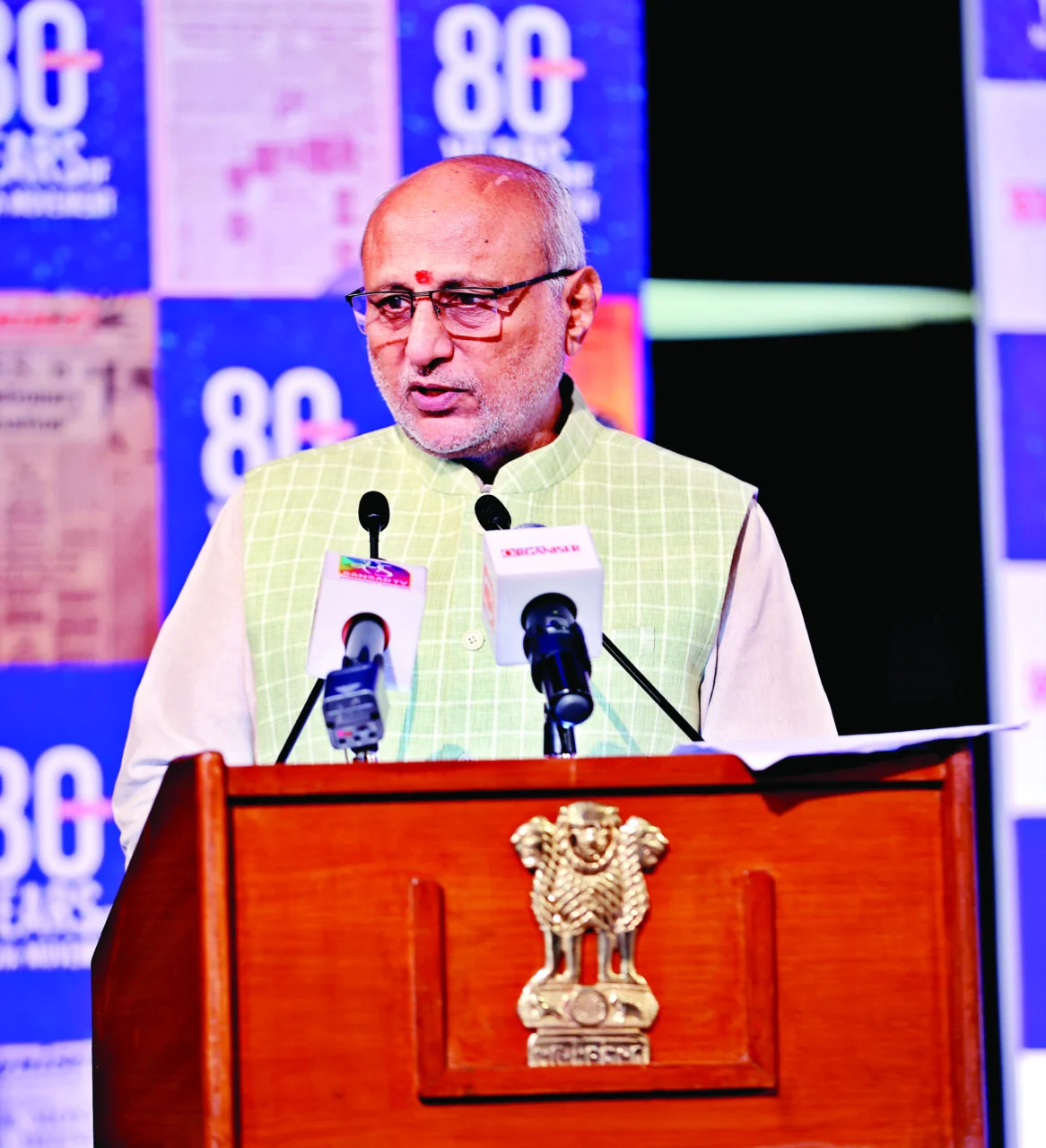
Congratulating Organiser, Bharat Prakashan, its readers, contributors and well-wishers on completing 80 years, Vice President described the anniversary as more than a milestone. Referring to the weekly’s launch shortly before Independence, he remarked that Organiser had begun as “a small light” whose enduring journey demonstrated that sincere efforts undertaken in the national interest ultimately bears fruit. He said the publication symbolised continuity, resilience and sustained commitment to public discourse across generations.
Recalling his student days, Radhakrishnan shared that he first came to know of Organiser through a Tamil publication that frequently reproduced its reports. After obtaining its address and subscribing to it, he became a regular reader. He also recounted how many RSS publications once carried a single advertisement from Mangalore Ganesh Beedi, describing it as an example of support motivated by national commitment rather than
commercial considerations.
He observed that Organiser, founded on July 3, 1947, emerged during one of the most turbulent phases of Bharat’s history. Unlike many publications, he noted, it was not established by an industrial house or a wealthy individual but drew its strength from society’s collective participation. Calling it “the voice of the nation’s soul,” he said the publication had consistently pursued national interest without personal or institutional self-interest.
He said that neither he nor RSS Sarkaryavah Dattatreya Hosabale deserved special thanks for attending the event, asserting that both were only performing their national duty. Instead, he said, recognition should go to the editorial team and colleagues who had sustained Organiser’s mission over the past eight decades.
Pointing out that the weekly had consistently participated in national debates on unity, integrity, security, culture and governance, Radhakrishnan cited its coverage of Jammu and Kashmir, the Praja Parishad movement, the wars with China and Pakistan, deaths of Dr Syama Prasad Mookerjee, Lal Bahadur Shastri and Deendayal Upadhyaya, as well as its engagement with the Swadeshi movement, the Ram Janmabhoomi Yajna and other significant national issues. He remarked that Organiser stood by what it believed to be the truth even when success appeared unlikely.
Highlighting its role during the Emergency, he said Organiser and its sister publication The Motherland became rallying points for those defending constitutional democracy. Recalling the arrest of KR Malkani, whom he described as the first journalist detained after the Emergency was declared, he said the publications exemplified the courage required for meaningful press freedom.
The Vice President also acknowledged the contributions of successive Editors, including KR Malkani, LK Advani, VP Bhatia, Seshadri Chari, R Balashankar and the present Editor Prafulla Ketkar, stating that each had strengthened the weekly’s distinct nationalist editorial identity. He added that eminent educationists, economists, diplomats, scholars and thinkers had enriched its pages, making it an important forum for intellectual engagement.
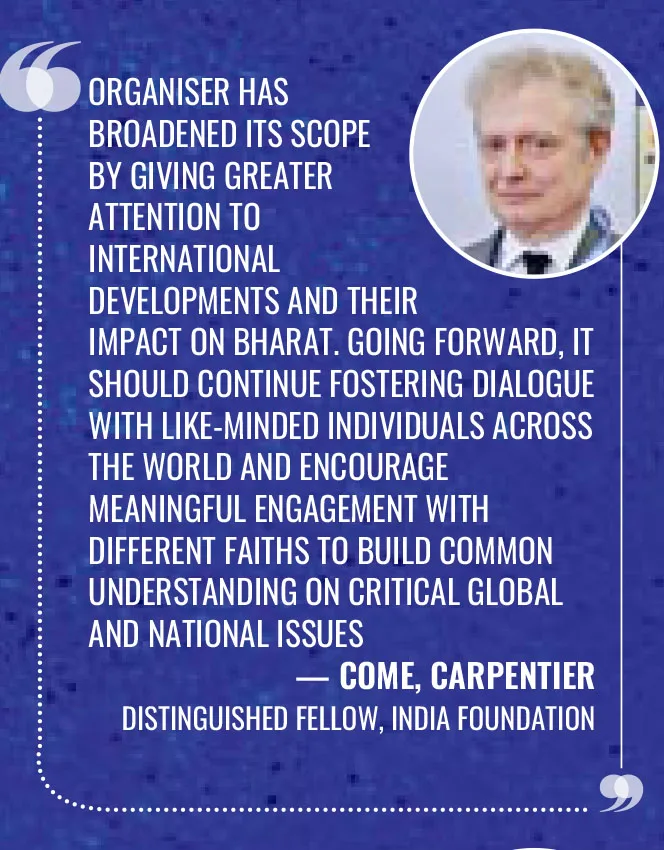
He noted that Organiser’s readership extended from legislators, policymakers and academics in Bharat to readers in the United Kingdom, the United States, Canada and more than 50 other countries, helping present a Bharatiya perspective internationally. He further observed that the publication had contributed to debates on subjects including Uniform Civil Code, education, culture, history, national security and the Ram Mandir Yajna while increasingly engaging with global issues through Bharat’s civilisational perspective.
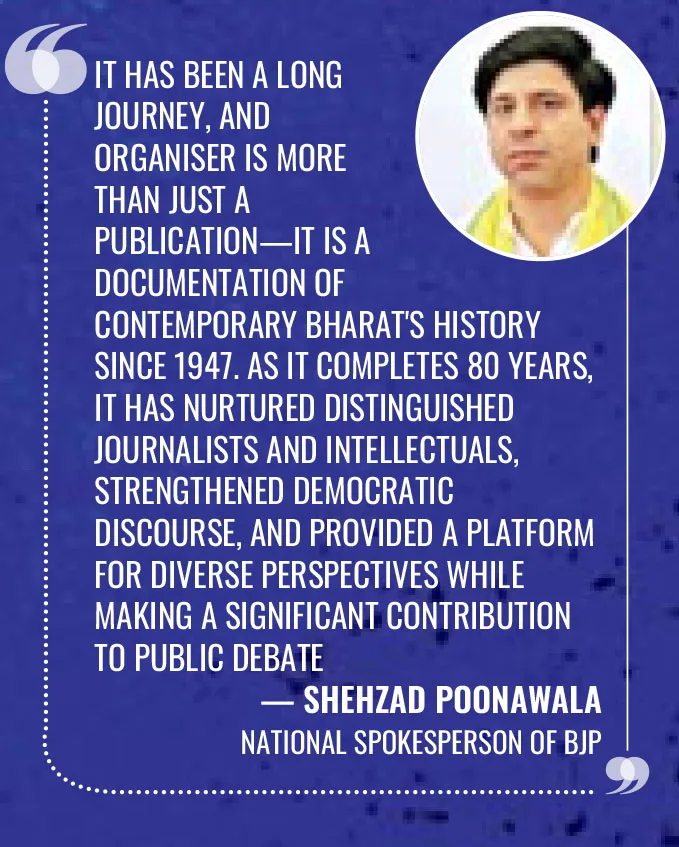
Describing Organiser’s archives as one of its greatest contributions, Radhakrishnan said its eight decades of documentation constituted an important record of Bharat’s political, social and intellectual history. Referring to the commemorative volume released during the event, he said it offered an important window into the evolution of Hindutva discourse in independent Bharat.
Concluding his address, the Vice President emphasised that journalism must remain committed to truth, integrity, credibility and the highest professional standards. He said democracy flourishes when the press informs citizens, asks difficult questions and encourages informed public debate while remaining rooted in facts.
Describing Organiser as “not only a journal but a great historical recorder of independent Bharat,” he extended his best wishes for its continued success in the years ahead.
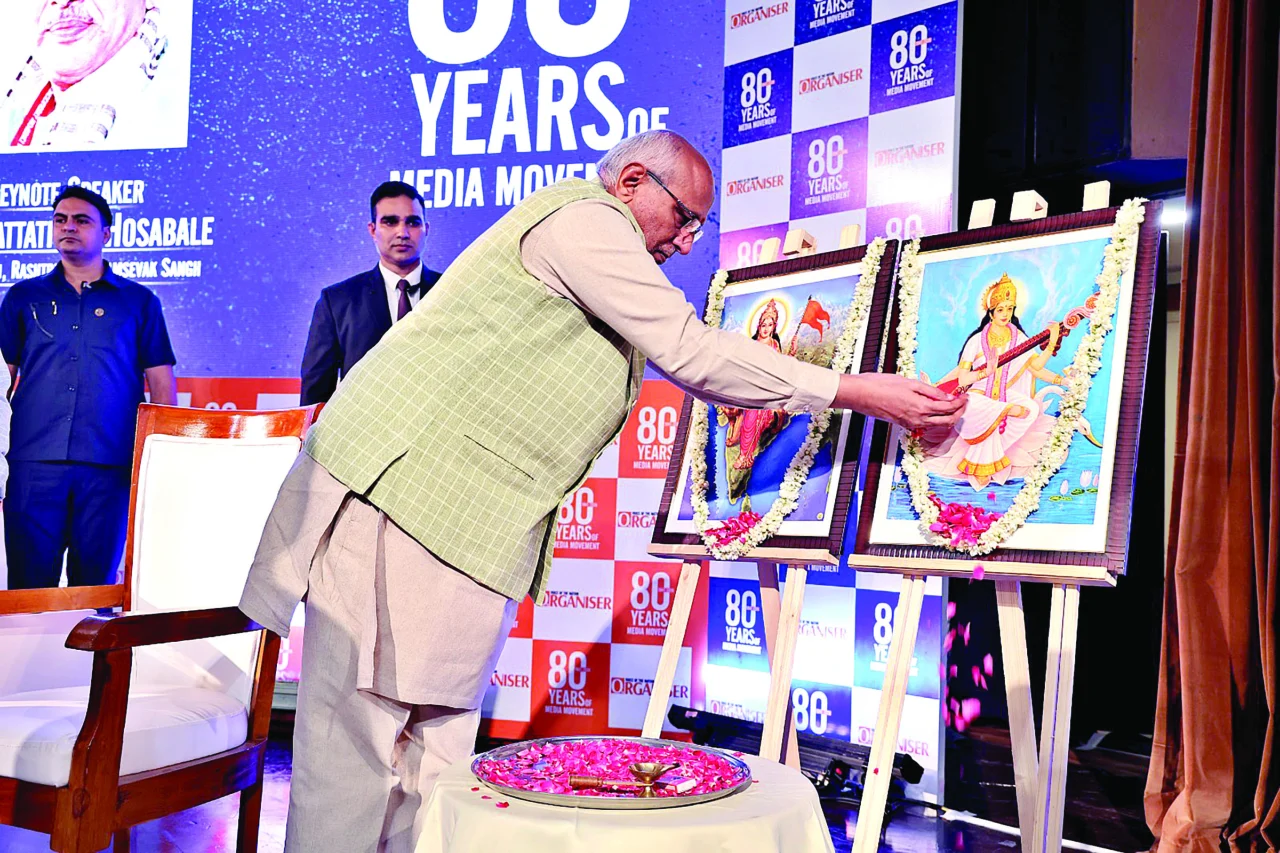
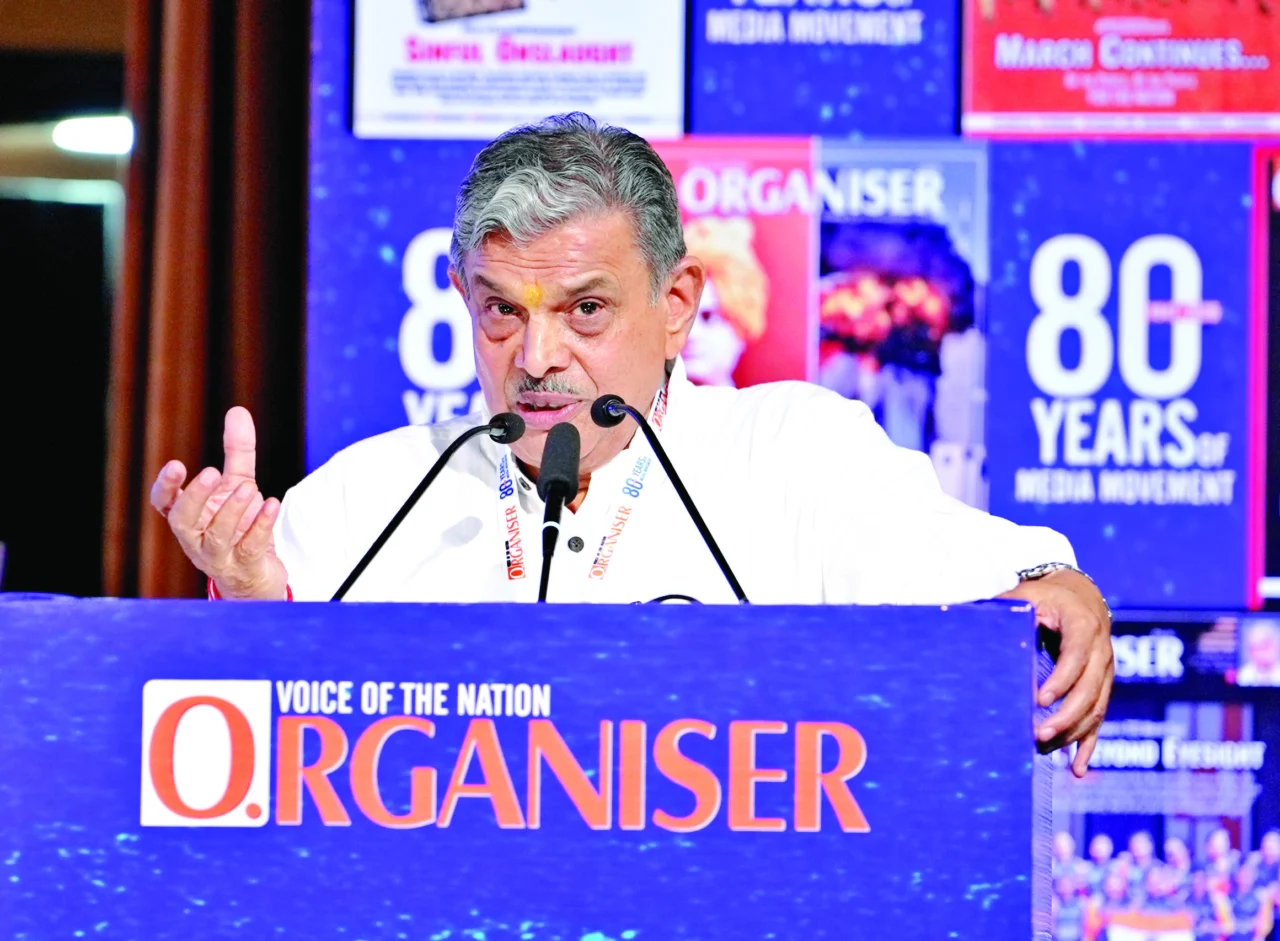
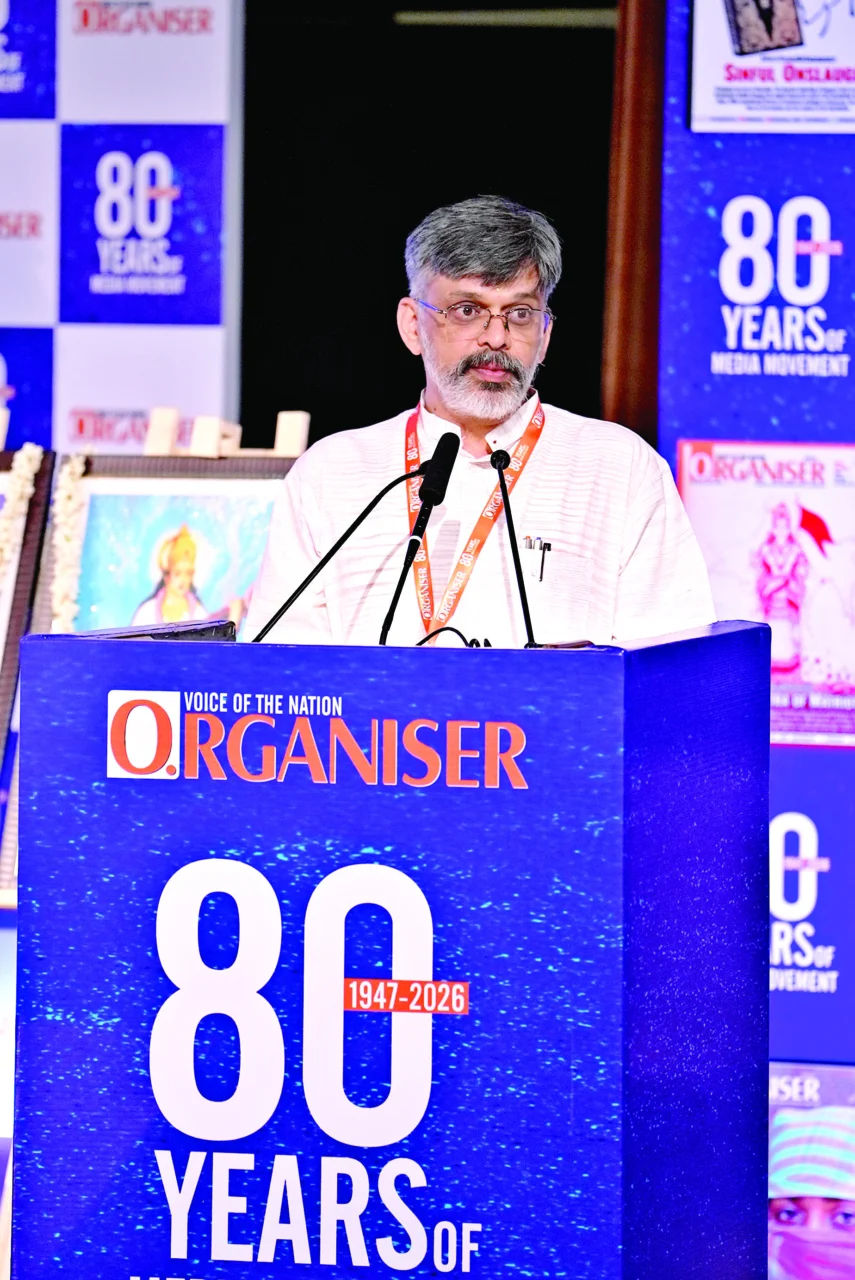
Dattatreya Hosabale, Sarkaryavah of the Rashtriya Swayamsevak Sangh (RSS), congratulated Organiser, its editorial team and publishers on completing 80 years of service to the nation, describing the occasion as a “Red- Letter Day” in the publication’s journey.
Recalling his student days in Bengaluru during the early 1970s, Hosabale shared that Organiser played an important role in shaping his ideological understanding. During the period of the JP Movement and the Emergency, he said, activists regularly read publications such as Blitz, Organiser and Everyman’s Weekly to engage in debates on nationalism, socialism, Communism and public policy. While Communist activists often carried Blitz, he and his colleagues carried Organiser, whose articles helped them formulate arguments, develop their ideas and respond to ideological debates on university campuses. He remarked that the weekly served as “a distant but very affectionate teacher” and helped shape the thinking of many young swayamsevaks.
Describing Organiser as more than a weekly newspaper, Hosabale Ji characterised it as a thought movement and an integral part of the nationalist movement. He said the publication has upheld principles and ethics in journalism, projected nationalist thought, defended press freedom and consistently articulated the voice of the nation’s culture and Dharmic values.
Paying tribute to former Editor KR Malkani, Hosabale ji said his life and the journey of Organiser were inseparable. He described Malkani as a thought leader and a steadfast advocate of ethical public life and press freedom, recalling that he was among the first to be arrested during the Emergency and later documented the experience in his book Midnight Knock.
Hosabaleji also highlighted the publication’s distinguished editorial and literary legacy, mentioning contributors and editors such as LK Advani, MV Kamath, Seshadri Chari, S Gurumurthy and several others whose columns enriched public discourse. He noted that Organiser had nurtured generations of writers, journalists and columnists, many of whom later joined leading mainstream media organisations.
He further recalled that under Malkani’s leadership, Organiser consistently pursued issues of national importance, including the deaths of Dr Syama Prasad Mookerjee, Lal Bahadur Shastri and Deendayal Upadhyaya, ensuring that they remained subjects of public discussion. He added that the weekly also carried significant interviews with leaders such as Jayaprakash Narayan and Lal Bahadur Shastri, while its sustained reporting and research on national security issues — including Chinese aggression, Pakistan’s actions and illegal infiltration from Bangladesh — provided valuable documentation and informed public opinion through detailed ground reports.
Hosabaleji said that during the Emergency, Organiser and its sister publication The Motherland faced severe restrictions, with Motherland eventually ceasing publication while KR Malkani was imprisoned. He observed that Organiser was among the most frequently quoted English periodicals in Parliament because it represented a major nationalist viewpoint. He added that its perspectives were closely followed not only in political, media and administrative circles but also by members of the diplomatic community seeking to understand an alternative national perspective.
He noted that Organiser had adapted to changing times through its digital presence while retaining its relevance in public life and democratic discourse. Emphasising the broader role of journalism, Hosabale argued that the media should not merely disseminate news but also educate society, shape informed opinion and articulate the public voice. While acknowledging that media organisations today require professional management and sustainable business models, he maintained that journalism should not become solely profit-driven but must continue to serve a larger public purpose.
Reflecting on Organiser’s journey, he remarked that sustaining a news weekly for eight decades with commitment to idealism and ideology, despite limited financial resources and the challenges posed by 24×7 electronic media, was a significant achievement. Congratulating the present and former editorial teams, he credited them with keeping the publication relevant through ideological clarity, commitment to principles and meaningful journalism.
Hosabaleji said the weekly had remained the voice of society rather than a publicity platform for the Government, describing this balance as one of its notable strengths.
Calling Organiser a crusader for press freedom, a sentinel of national interest, a vanguard of national security and “the voice of the nation’s soul,” he said the publication had made a significant contribution to the nationalist thought movement. He also urged it to continue nurturing young writers, journalists and columnists, encourage new ideas, introduce innovative features and remain accessible to emerging generations of readers.
Concluding his address, Hosabaleji congratulated the Organiser team on its 80-year journey and wished the publication greater success, expressing hope that it would continue to play a meaningful role in national progress and reconstruction.
Prafulla Ketkar, Editor of Organiser, described the occasion as an emotional milestone marking the weekly’s 80-year journey. Recalling the decision to commemorate the anniversary on July 3, he said the idea evolved into bringing together former Editors, writers and contributors associated with Organiser over the decades.
Tracing the publication’s origins, Ketkar noted that Bharat Prakashan Delhi Limited was established in 1946 with 14,000 shareholders contributing between Rs 2 and Rs 5 each to launch a news weekly. He observed that starting a media house rooted in a clear ideological vision at a time when Independence and Partition were imminent was a challenging venture. Despite the odds, he said, Organiser completed eight decades while remaining true to its tagline, “Voice of the Nation.”
Reviewing its editorial journey, he stated that the weekly consistently highlighted issues concerning national unity, integrity, and Bharat’s cultural and civilisational continuity. He recalled its coverage of the plight of Hindus in East and West Pakistan after Partition, the Praja Parishad movement, the wars with China and Pakistan, and the deaths of Dr Syama Prasad Mookerjee and Deendayal Upadhyaya, describing them as defining issues championed by the publication.
He also referred to The Motherland, Organiser’s sister publication edited by KR Malkani, noting that Malkani was the first Editor arrested during the Emergency after warning of its imposition. Although The Motherland could not be revived, he added that many national issues were debated and shaped from the Jhandewalan office, contributing to the country’s public discourse.
Reflecting on the 80th Foundation Day, he said, the celebrations were intended to honour the publication’s stalwarts, express gratitude for their contributions, and seek guidance for the future. While acknowledging that media, technology and issues have evolved, he asserted that Organiser’s commitment to preserving and promoting the vision of a “Tejomaya Hindu Rashtra,” as articulated in its first ever edition, remains unchanged.
He expressed gratitude to the Vice President of Bharat for attending the event and thanked RSS functionaries, Directors of Bharat Prakashan, former Editors, the families of past Editors, writers, contributors and the Organiser editorial team for their support.
Concluding his address, Ketkar voiced confidence that the publication would continue to uphold its spirit as the “Voice of the Nation.”
Legacy Lives Through Its People
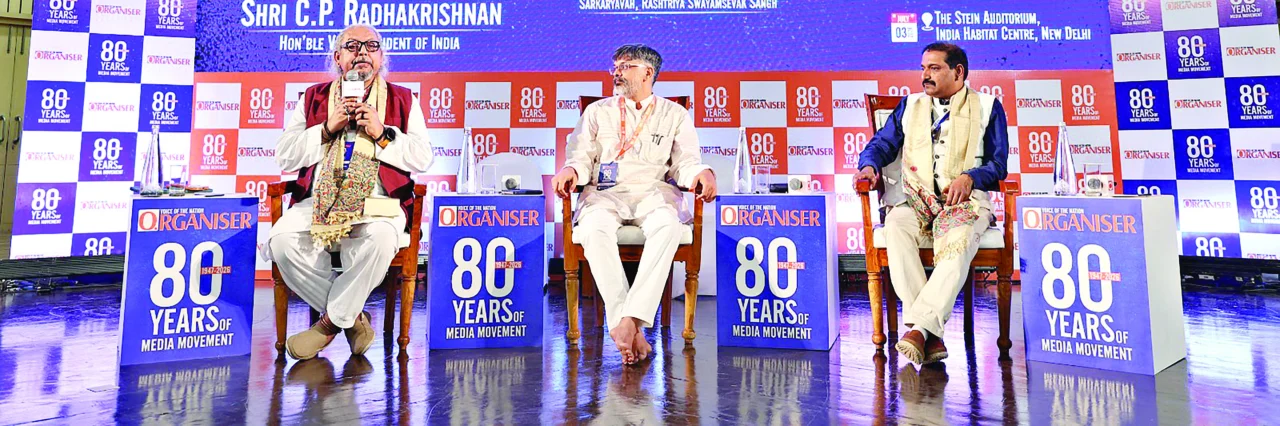
The session titled ‘Editor’s take : My Days With Organiser’ was moderated by Prafulla Ketkar, Editor, Organiser and featured former Editors of Organiser Seshadri Chari and R Balashankar. The discussion traced personal journeys within Organiser, early editorial learning experiences, the modernisation efforts, the transition towards digital accessibility, the challenges of sustaining young journalistic talent, and the publication’s influence in political discourse.
Prafulla Ketkar noted that one of the major challenges for any serving Editor is engaging with the legacy of predecessors. He added that the 80-year celebration of Organiser was designed to bring together all those associated with the publication, acknowledging the contributions of former editors including AR Nair, KR Malkani, VP Bhatia and LK Advani, each of whom left behind rich experiences and anecdotes.
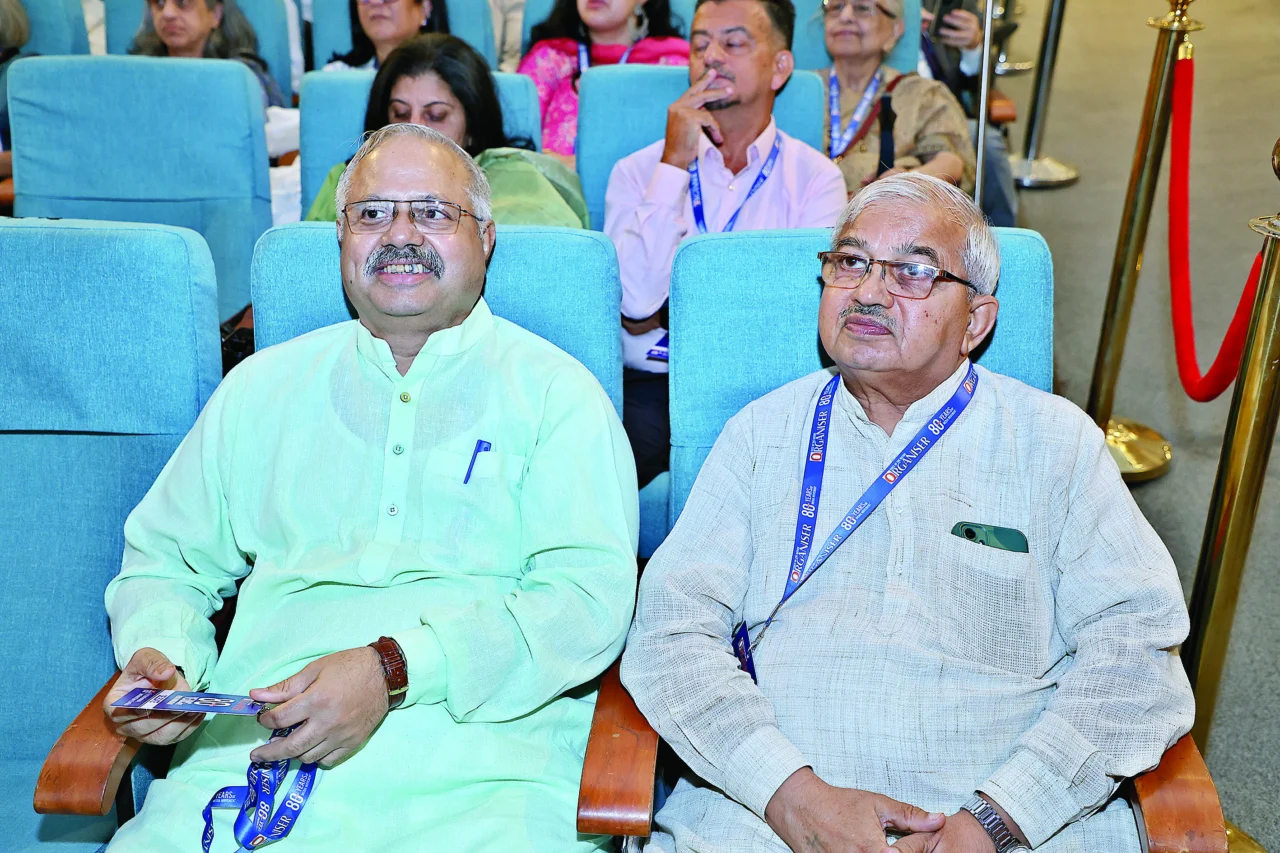
Seshadri Chari explained that during a preparatory discussion he had suggested that, rather than only holding a commemorative event, a session should be organised where those associated with Organiser over the years could share their experiences. He stated that since only two former Editors were still living, it was decided that both would speak. Describing himself as an “accidental Editor,” Seshadriji said he never intended to take up the role. He recalled being a regular reader of Organiser while living in Mumbai (then Bombay) and, though Tamil was his mother tongue, he was able to read, write and speak Marathi due to growing up in Mumbai. He was associated with Marathi journal Vivek.
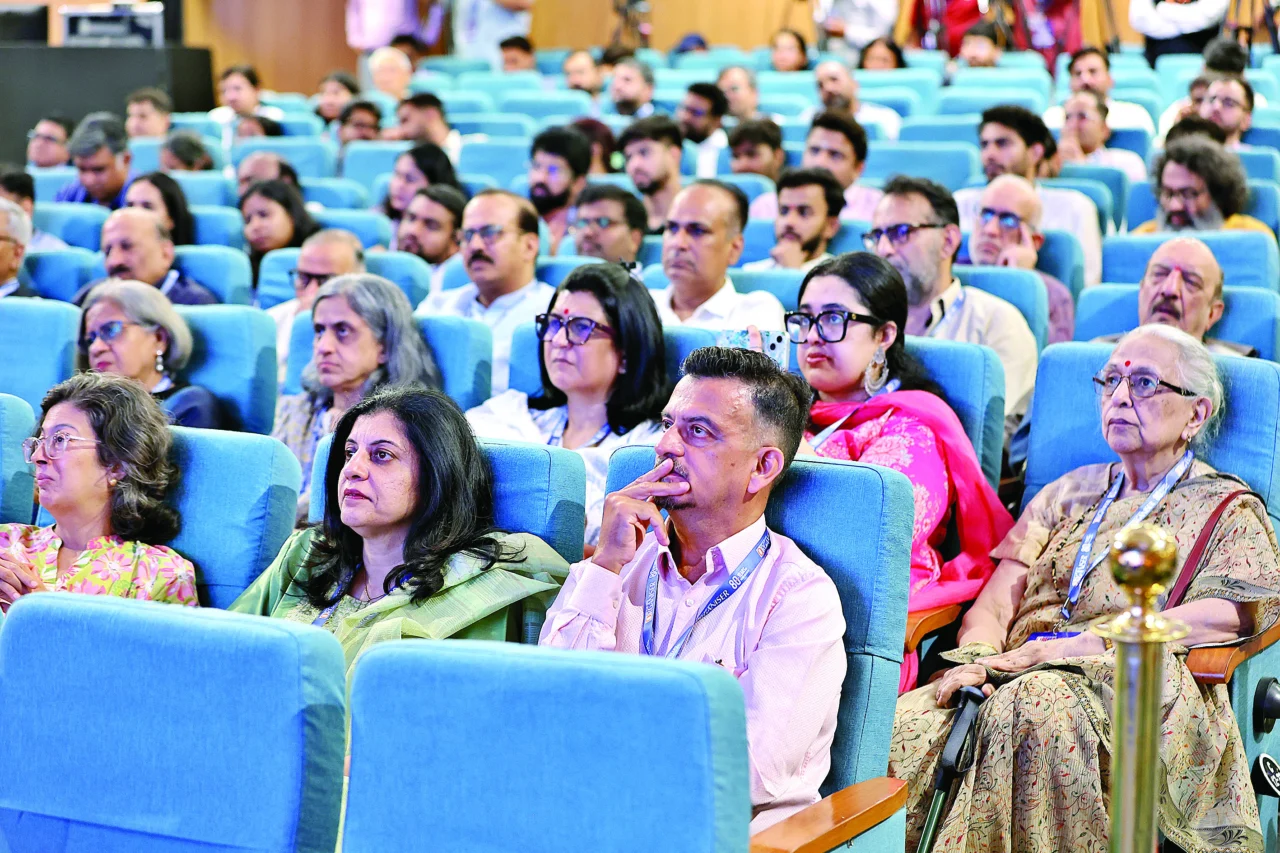
Seshadriji further recounted that they felt a cosmopolitan city like Mumbai needed an English publication, and since Organiser was not easily available there, an English edition of Vivek was started, which he began editing while serving as an RSS Pracharak. After a few issues, he was called to the RSS office at Navyug Niwas, where Bhaurao Deoras and Chaman Lal were present. Assuming he would be reprimanded for starting the publication, he volunteered that they were shutting it down, but instead Bhaurao Deoras appreciated the work, praised his English, and suggested that he come to Delhi for work. He said that although a transfer was discussed, it did not materialise due to Bhaurao Deoras’ passing.
Seshadriji stated that later, during the Ram Janmabhoomi movement, he participated as a Kar Sevak and was again called to Delhi. At the RSS office, he met Rajju Bhaiya, Sudarshan ji, Sheshadriji and the then Editor VP Bhatia. He reported that Rajju Bhaiya informed him he would have to work with Organiser, which he initially assumed meant distribution work. However, Sudarshanji told him that Bhatiaji’s health was failing and that he would have to take over as Editor, which came as a shock since he had little experience in English writing.
He described receiving seven or eight large files from Bhatiaji, who explained they contained material for upcoming issues. Seshadriji said he initially told Sudarshan ji that he had expected only distribution work and had never imagined becoming an Editor, but was reassured that he would learn over time. He added that he was given time to return to Mumbai to inform colleagues and collect belongings, as he owned only two sets of clothes.
Seshadriji stated that he arrived in Delhi on August 1, 1992, and requested that his name appear as Editor only from the Vijayadashami issue, so VP Bhatia’s name continued temporarily in the masthead. He recalled receiving a postcard from Bapurao Lele, who said he would receive him at the railway station. Upon arrival in heavy rain, he was taken first to a Maharashtrian school near Jhandewalan, where a programme to pay tribute to Bal Gangadhar Tilak was being held, with Vasant Sathe as chief guest. Unexpectedly, he was introduced as the chief guest at the event before even reaching the Organiser office.
Seshadriji said that after the programme, Vasant Sathe accompanied them to Jhandewalan, and they conversed in Marathi, during which Sathe spoke about Nashik and his early association with the RSS before 1948–49. Seshadriji described this as part of his first day as Editor, remarking that just as Bharat once had an “accidental Prime Minister,” Organiser had an “accidental Editor.”
Seshadriji further reflected that over time he gained many experiences and began exploring the history of Organiser, learning from senior workers about its origins and early operations, including its initial functioning from the premises of Dawn, its printing at Latif Press, and later at Hindustan Press after the ban was lifted.
Seshadriji stated that one of his first steps as Editor was meeting former Editors. He visited KR Malkani, who explained editorial practices such as writing editorials, managing printing, and handling institutional challenges, and read his first editorial, calling it “very good.” Seshadriji said he understood there was deeper meaning to the compliment and recalled Malkani’s illustration that what is original is not good and what is good is not original. He also recounted Malkani’s instruction that the dictionary should be kept on the Editor’s table — not for looking up difficult words, but to ensure that words requiring dictionary consultation are not used.
He added that Malkani asked where he was staying and later dropped him at Jhandewalan, after which Rajju Bhaiya remarked that it was the first time Malkani had returned there since leaving Organiser. Seshadriji said he considered facilitating that meeting a small contribution. He concluded by describing the early practical arrangements of his editorship, stating that Rajju Bhaiya instructed the manager Satyadev Batra to provide him Rs 100 for travel, as his food was arranged at Jhandewalan, along with a bicycle for commuting. He noted that he began his tenure with a bicycle and Rs 100, though the manager later increased it to Rs 200.
Finally, Seshadriji mentioned that in 2004, when he returned to the BJP and Balashankarji succeeded him as Editor, administrative formalities revealed that there was no personal file or appointment letter for him, and since he had never drawn a salary, retrospective documentation was complicated. He stated that it was jokingly concluded that officially he had neither been appointed nor resigned, and therefore in a sense he remained the Editor.
Prafulla Ketkar reiterated that since Seshadri Chari had never been formally appointed and had never formally resigned, he continues to be the Editor in a broader sense. He added that Organiser has often been referred to as “Malkani ji’s paper,” noting that this legacy has transcended formal designations. He then invited R Balashankar to reflect on his years with Organiser, observing that unlike Chari and himself — who often describe themselves as “accidental journalists” — R Balashankar had prior professional journalism experience before serving in the ministry under Murli Manohar Joshi and later joining Organiser.
Responding, Balashankar described the evening as one of the most memorable events associated with Organiser and commended Prafulla Ketkar for organising it, noting that such a large-scale celebration was unprecedented in the publication’s history given its traditionally modest resources. He further remarked that Prafulla Ketkar had achieved two long-pending objectives: transforming the newspaper from a tabloid into a more reader-friendly magazine format, and taking Organiser online to increase accessibility.
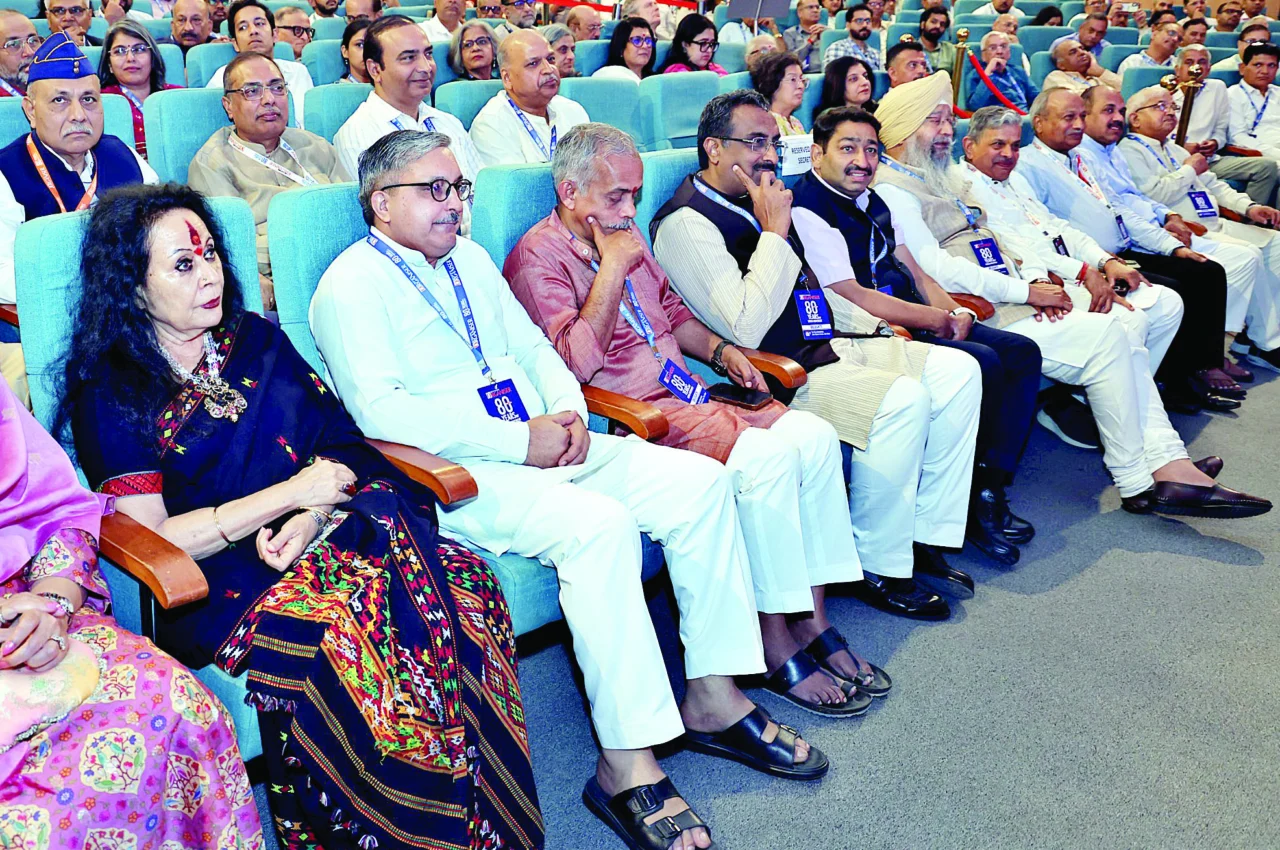
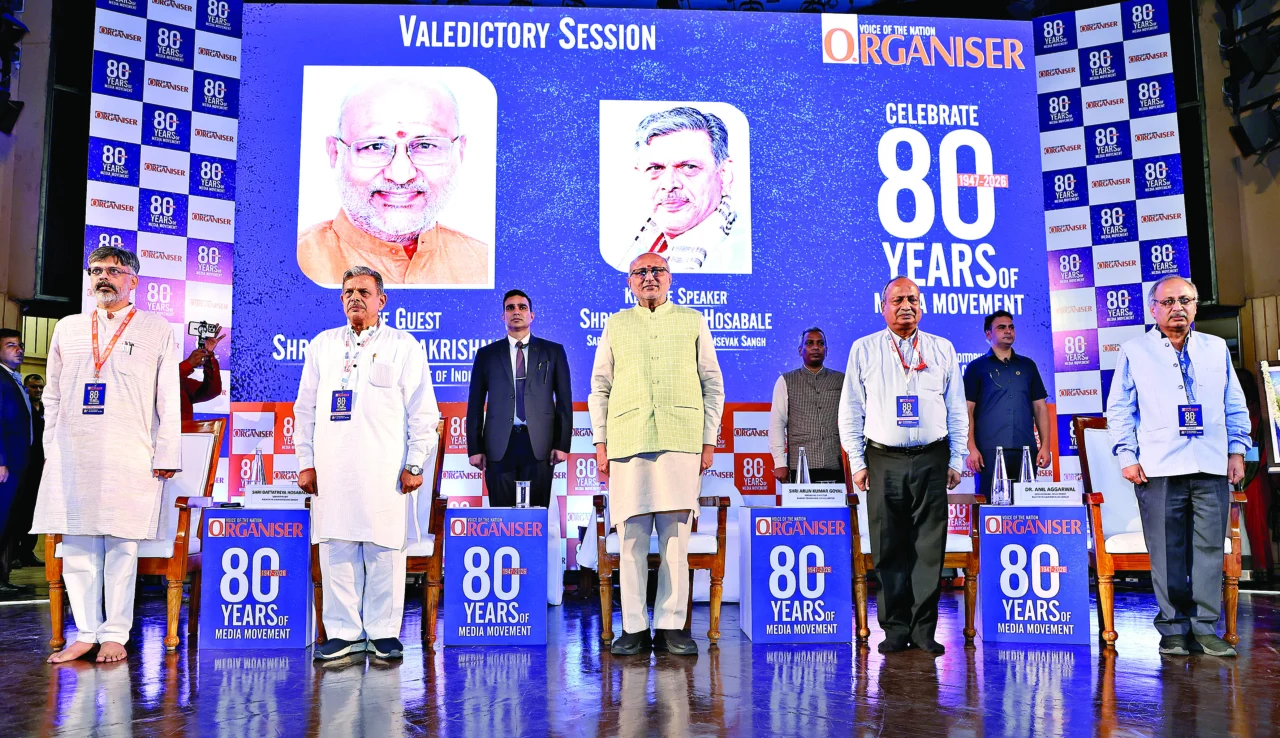
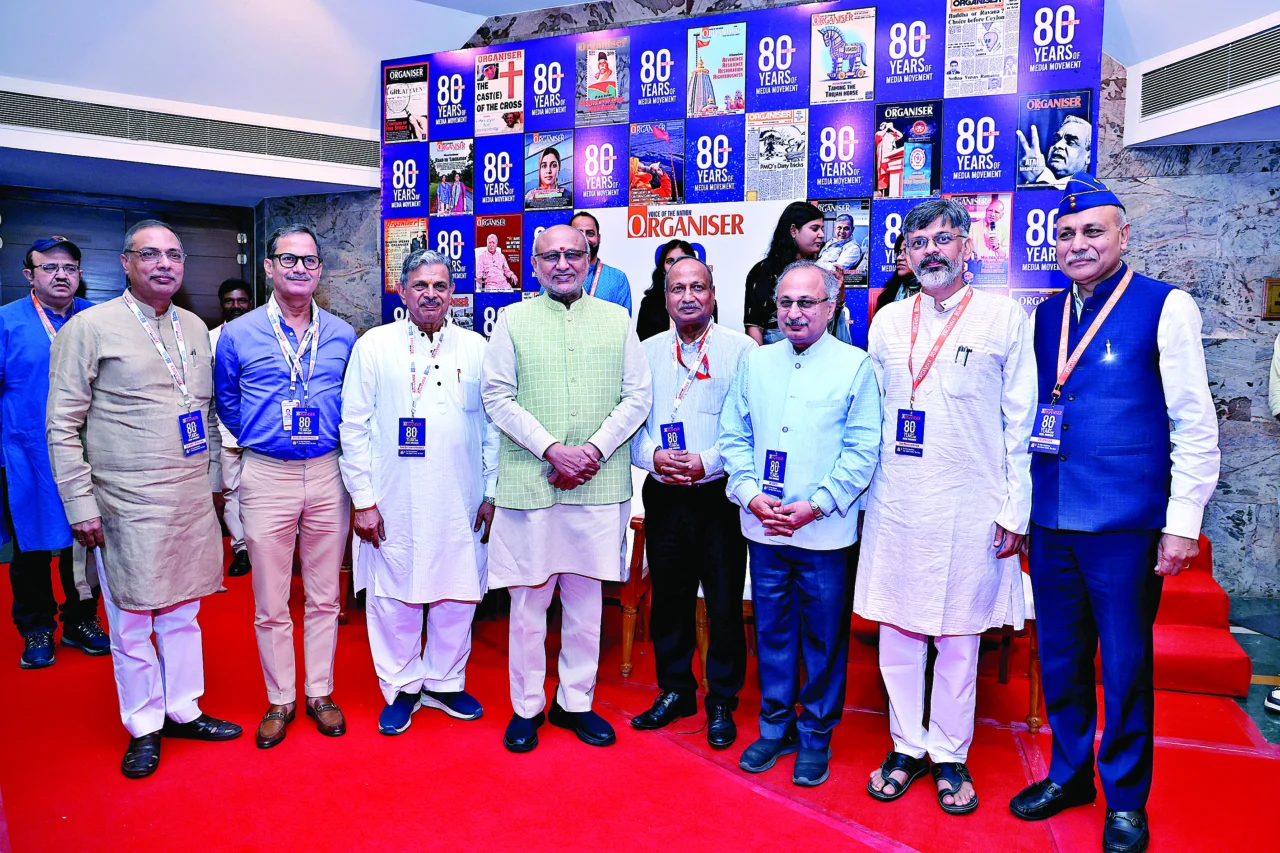
J Nandakumar, National Convener, Prajna Pravah, Ram Madhav, President- India Foundation, Ashok Kumar, Vice Chancellor – Motilal Nehru Sports University Iqbal Singh Lalpura, former Chairman, National Commission for Minorities, Dattatreya Hosabale, RSS Sarkaryavah, Arun Kumar Goyal, MD, BPDL at the event
He observed that the current editorial period is among the most challenging in Organiser’s history, contrasting it with earlier years in opposition when narrative building and criticism of the Government were comparatively easier. He noted that under earlier editors such as KR Malkani, editorials were often uncompromising, whereas today every editorial decision requires greater deliberation.
Reflecting on his own tenure, he said it coincided with the Manmohan Singh Government, a period marked by political controversies, scandals, and debates around political authority, the Nehru-Gandhi family, and ideological questions, which provided substantial material for editorial content and cover stories.
He recalled that before joining Organiser, he had worked in professional journalism and later served as an adviser to Murli Manohar Joshi, but described Organiser as more than a publication for him, calling it an emotion, an inspiration, and a source of ideological understanding. He said that during his student years, senior RSS pracharaks such as Parameswaran ji emphasised that reading Organiser was essential to understanding the organisation, and he remembered eagerly awaiting each issue by post, sometimes questioning postal delays with fellow readers.
He added that when The Motherland began publication, he subscribed from the first issue, and noted that Editors like KR Malkani were regarded as icons for both journalism students and swayamsevaks due to their fearless writing and strong command of English. He said it was often believed that even Indira Gandhi read Malkani’s editorials closely, despite disliking them, and that Organiser was frequently associated with major political developments such as the Emergency and internal conflicts within the Janata Party.
R Balashankar further stated that when he joined Organiser, he arrived with several ideas for modernisation, but Malkaniji advised caution, suggesting that changes should be introduced gradually due to limited resources and institutional constraints. Following this, he said, the publication introduced special issues on national themes and leaders which also helped strengthen its financial position.
He noted that senior leaders frequently visited the office unannounced, engaging in discussions over tea and offering guidance. He recalled that upon formally taking charge as Editor, he was blessed by senior leaders and seated in the Editor’s chair as a symbolic gesture of responsibility. He emphasised that he enjoyed full editorial freedom throughout his tenure, with financial constraints being the primary limitation.
He also expressed that he had hoped to turn Organiser into a platform for young journalists, but low salaries made this difficult, and the plan to convert it into a magazine format remained unfulfilled during his tenure. He further mentioned that he requested KR Malkani to resume his political column, to which Malkani responded kabhi-kabhi, though he occasionally contributed articles, including pieces on cinema.
He noted Organiser’s influence in political discourse, recalling journalist Manini Chatterjee’s column “View from the Right,” which, according to her, attracted calls from the Prime Minister’s Office when it did not appear, as the Prime Minister regularly read it. He concluded that such instances reflected the publication’s significant impact during the UPA years, when its critical writings on the government and leadership were widely noticed at the highest levels.
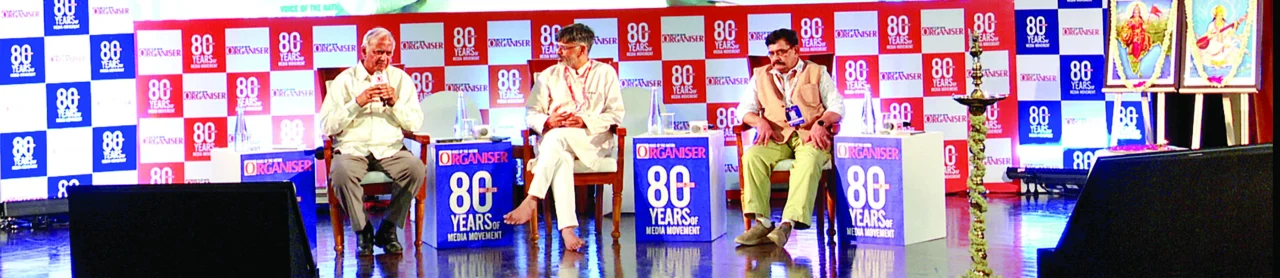
The inaugural session featured Prafulla Ketkar, Editor, Organiser, who moderated the discussion on the theme of ‘Freedom of Speech: The Debate since Independence’, along with Kanchan Gupta, Senior Advisor, Ministry of Information & Broadcasting, Govt of Bharat and Prof KG Suresh, Senior Journalist and Director of India Habitat Centre. The conversation traced Organiser’s historical role from the freedom movement and Emergency period to contemporary debates on free speech, constitutional provisions, and media responsibility in the digital age. Excerpts:
Prafulla Ketkar: Organiser’s early issues showed clarity on Bharat as a civilisational Rashtra alongside Partition trauma. KR Malkani’s writings and cartoons highlighted refugee suffering and policy critique. The First Amendment introduced “reasonable restrictions” and “friendly relations with foreign states,” linked to the Nehru-Liaquat context. Today, similar debates continue on CAA, media freedom, and speech limits. How do you see this evolution?
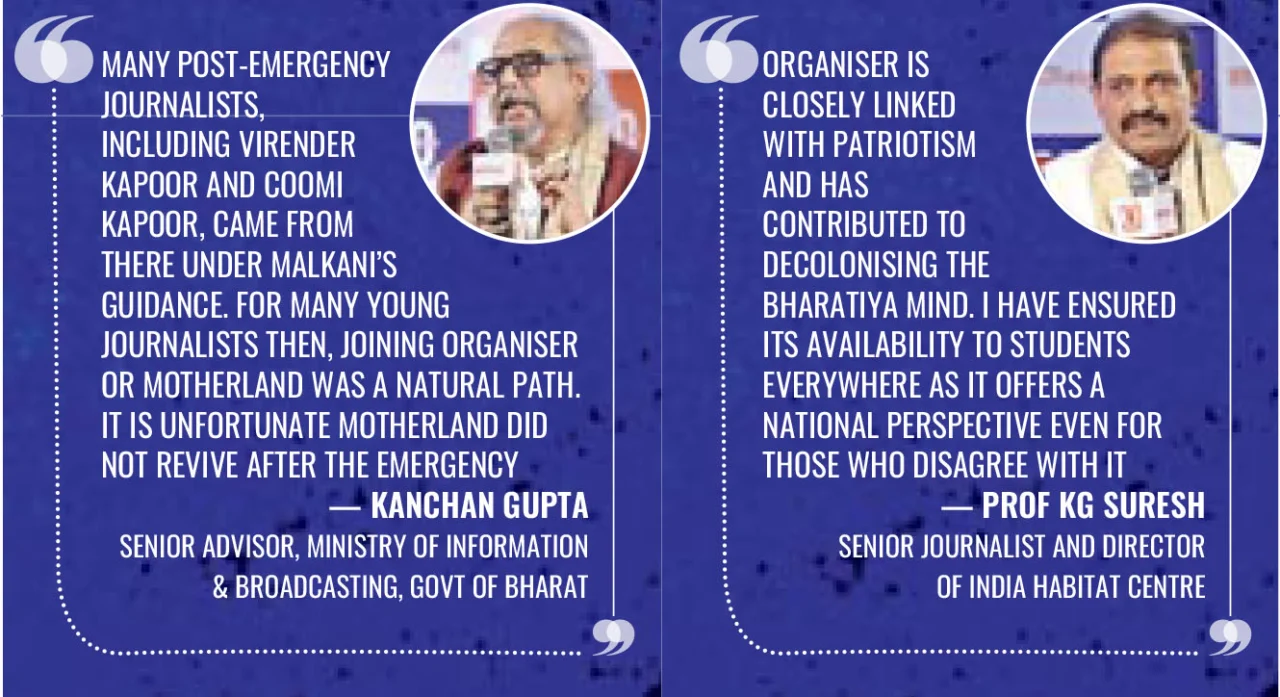
KG Suresh: Organiser is closely linked with patriotism and has contributed to decolonising the Bharatiya mind. I have ensured its availability to students everywhere as it offers a national perspective even for those who disagree with it. It has consistently countered anti-Bharat and anti-Hindu narratives; the JNU dossiers are one example. It has also resisted suppression of dissent, along with the wider nationalist press during the Emergency, which deserves recognition.
Free speech is not absolute; the key issue is whether restrictions serve national interest or government interest. The “friendly relations with foreign states” clause needs scrutiny, as media should not be restricted by the government’s view of other countries. The Kulbhushan Jadhav case shows how selective interpretation can create problems when foreign actors cite Bharatiya media reports. This debate should extend to universities and institutions. We must revisit why such constitutional provisions were introduced, and also re-examine Emergency censorship and early free speech jurisprudence, which remain under-discussed.
Prafulla Ketkar: During the Emergency, Organiser published its front page in black. KR Malkani also used a stronger form of protest — after submitting issues for censorship, he printed pages exactly as censored, marking blank spaces as “Censor’s Caesar.” That conveyed the message more strongly than words. There is a thin line between Government interest and national interest. Even cartoons against Chief Ministers have led to arrests. How should the line for “reasonable restrictions” be drawn?
Kanchan Gupta: This is a long-standing debate. In an electoral democracy, criticising the Government is legitimate since it is accountable. But unsubstantiated allegations harm both Government and country. The key distinction is between being anti-Government and anti-nation. Bharat already has laws on obscenity, public order, etc., which are sufficient. No additional restrictions on free speech are needed.
Nehru’s intent behind the First Amendment, I believe, went beyond public order. Along with the Liaquat Pact and foreign relations clause, China was a key factor. After establishing relations with the new Chinese regime in 1950, Nehru strongly supported it internationally, including at the UN, even as opposition came from both the Left and nationalist Congress groups. This dimension of the First Amendment has not been properly examined and may relate to later issues in Bharat’s China policy. What commitments were made then, and were they reflected in any undisclosed Congress–CPC understanding? We do not know.
During the Emergency, Organiser played a strong role, and KR Malkani was imprisoned. He often recalled his exchanges with the Shahi Imam, who once told him jokingly that although he criticised him, he should not make him look bad every time. Along with Organiser, The Motherland also shaped pre-Emergency discourse. Many post-Emergency journalists, including Virender Kapoor and Coomi Kapoor, came from there under Malkani’s guidance. For many young journalists then, joining Organiser or The Motherland was a natural path. It is unfortunate The Motherland did not revive after the Emergency.
Court orders must be respected, but Malkani showed how to work within constraints and still make a stronger point than adversaries. That remains an important lesson. These stories should reach younger generations. Organiser’s first editorial should be widely reprinted as it addresses a core question: “Who are we?” As VS Naipaul said while releasing his Hindi books, he spent his life asking “Who am I?”, a question many Bharatiyas also face. Similar themes appear in American political scientist Samuel P Huntington’s work on identity. The key lesson linking the First Amendment, Emergency, and 80 years of Organiser is the need to answer confidently: Who are we?
Prafulla Ketkar: Post-Emergency, Bharat’s institutions changed significantly — the executive, judiciary and media relationship evolved, Directive Principles gained emphasis, socialism continued, and later economic liberalisation transformed the media with globalisation, private TV, and breaking news culture. Earlier journalism was nation-building oriented, and KR Malkani had even warned of Emergency before 1975. But post-1990s, with electronic media and competition, “breaking news” became dominant. How do we balance free speech with constitutional responsibility?
KG Suresh: Two developments reshaped Bharatiya media after liberalisation: ownership changes and technological revolution. We are also marking 200 years of Udant Martand (1826), founded by Jugal Kishore Shukla, with its motto Hindustaniyon ke hit hetu. Earlier newspapers — from Ambedkar’s Mooknayak and Prabuddha Bharat to Tilak and Makhanlal Chaturvedi — were mission-driven: freedom, social reform, and civilisational awakening. With corporatisation, editorial authority declined and journalism became business-driven. Many readers today don’t even know newspaper editors. A media owner once said selling newspapers is like selling soap. Industrial houses then used media either for business interests or influence, with profit replacing public purpose.
Technology brought the second shift. Digital platforms enabled citizen journalism and decentralised content, and “new media” overtook print and TV as “traditional media.” But this democratisation is limited. Algorithms and servers are largely outside Bharat’s control. Despite efforts like Koo and Zoho, Bharat has not built digital ecosystems comparable to countries like China. This raises data sovereignty concerns, as large amounts of data are stored abroad, and even government offices still use Gmail over official domains. The issue is not control but regulation. Post-Emergency control is unacceptable, but regulation is necessary. Existing laws like the IT Act help but are insufficient.
Three responses are needed: First, constitutional regulation. Second, widespread media and digital literacy to tackle the “infodemic,” where misinformation is widespread — from children to seniors consuming uncontrolled information. During the farmers’ protests, proxy handles amplified separatist narratives, showing the need for vigilance. Media literacy must be part of education. Third, Bharat needs strong global media platforms. Countries like Russia (RT), China, France (France 24), and the US (CNN) project narratives globally, while Bharat still largely views the world through a Western prism. Even today, Bharatiya media uses terms like “Middle East” for West Asia and reports Gilgit-Baltistan and Muzaffarabad as foreign, despite Parliament affirming Jammu & Kashmir as integral to Bharat. As Bharat moves towards Viksit Bharat 2047, it must build platforms to project Bharat’s perspective globally for both diaspora and international audiences.
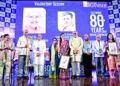
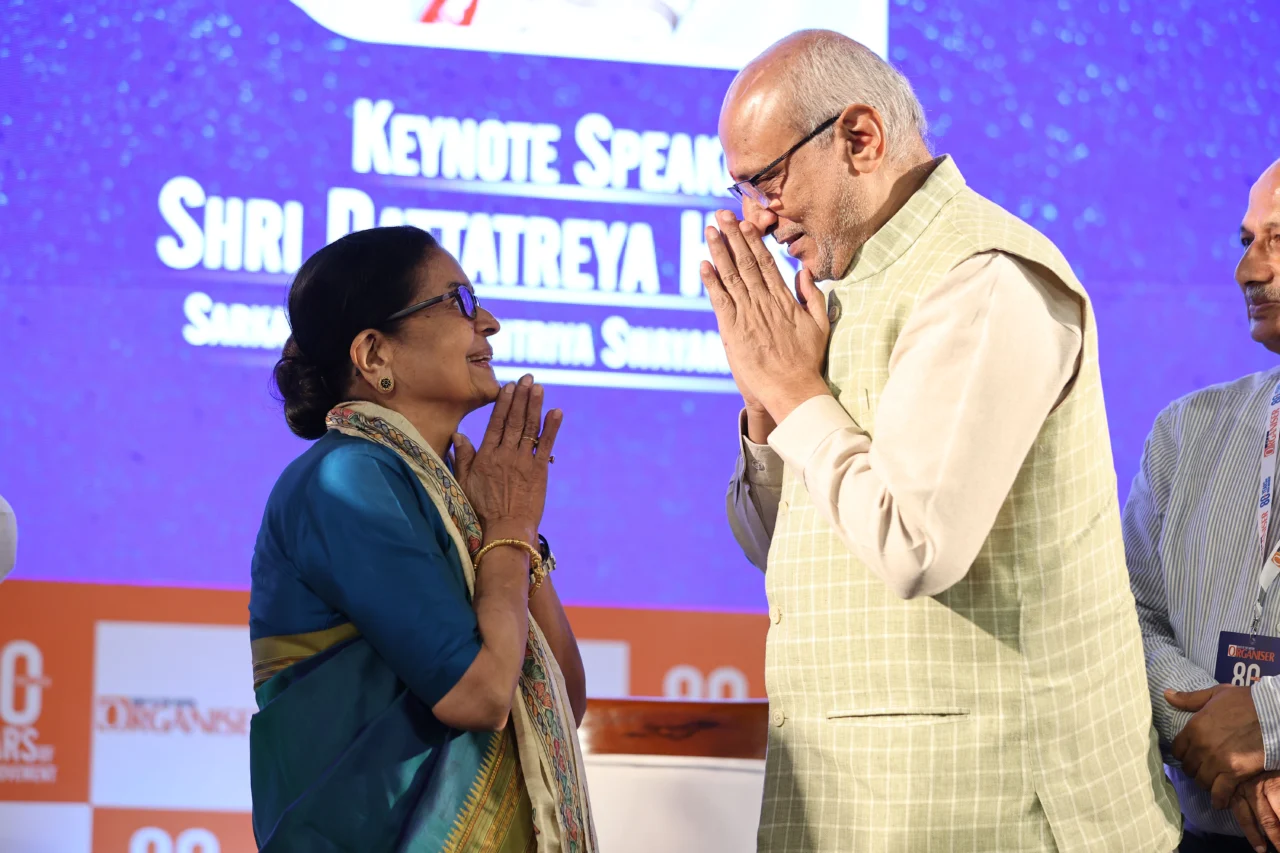
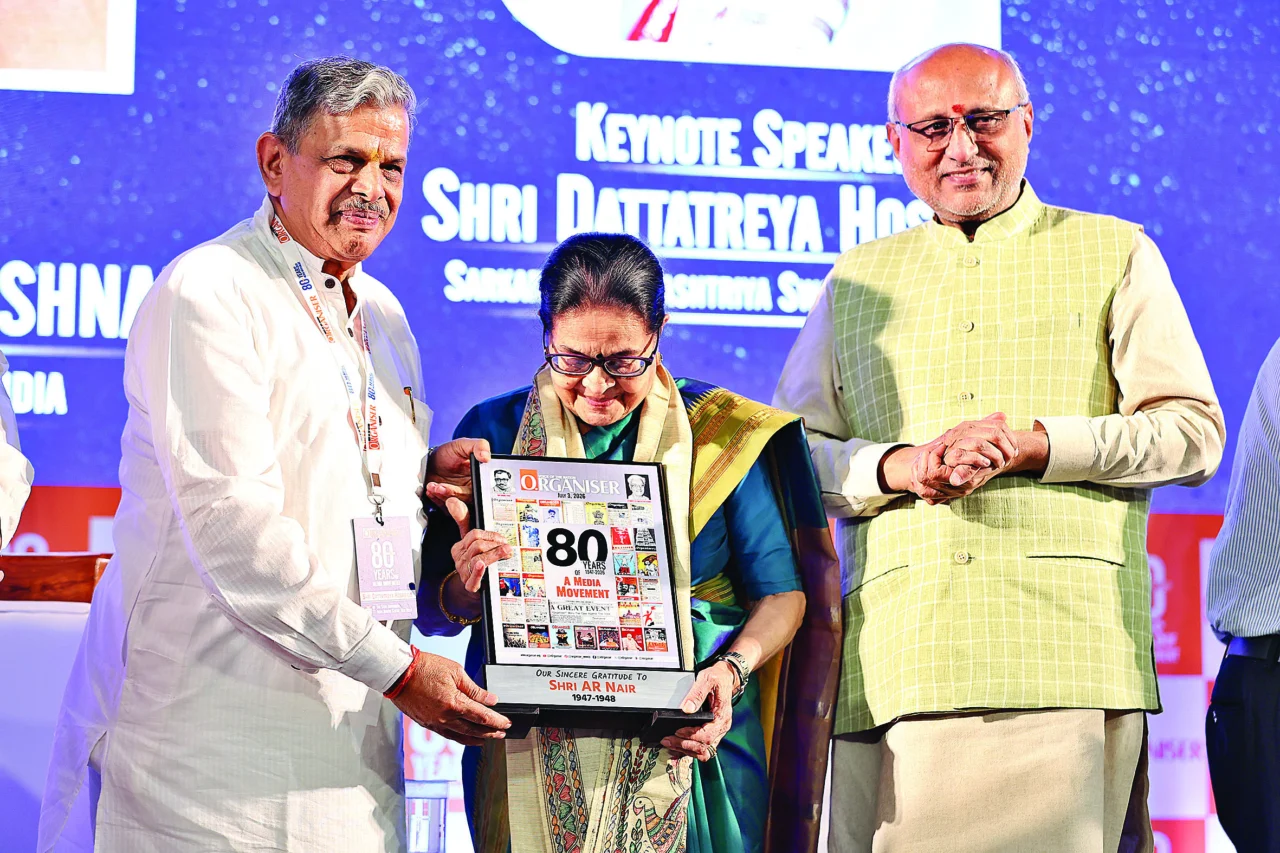
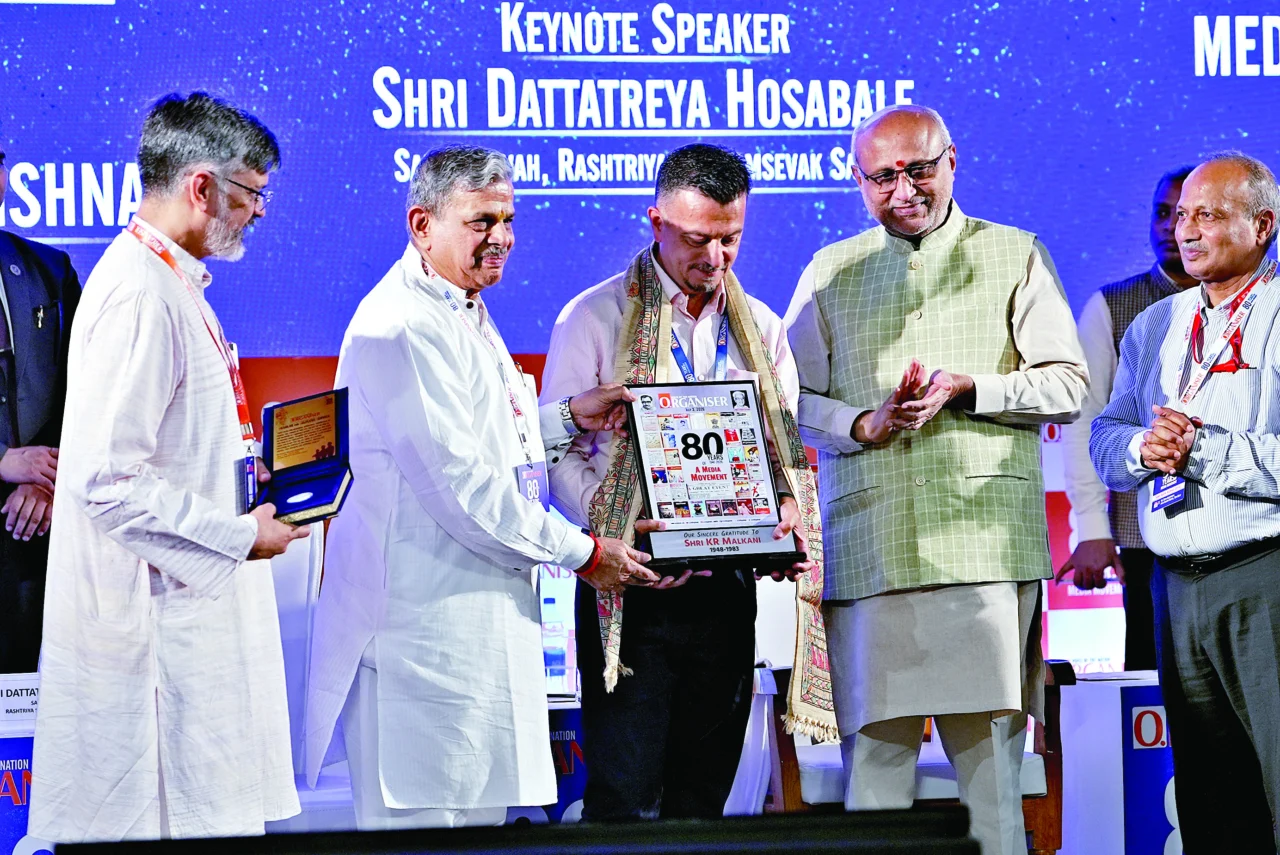
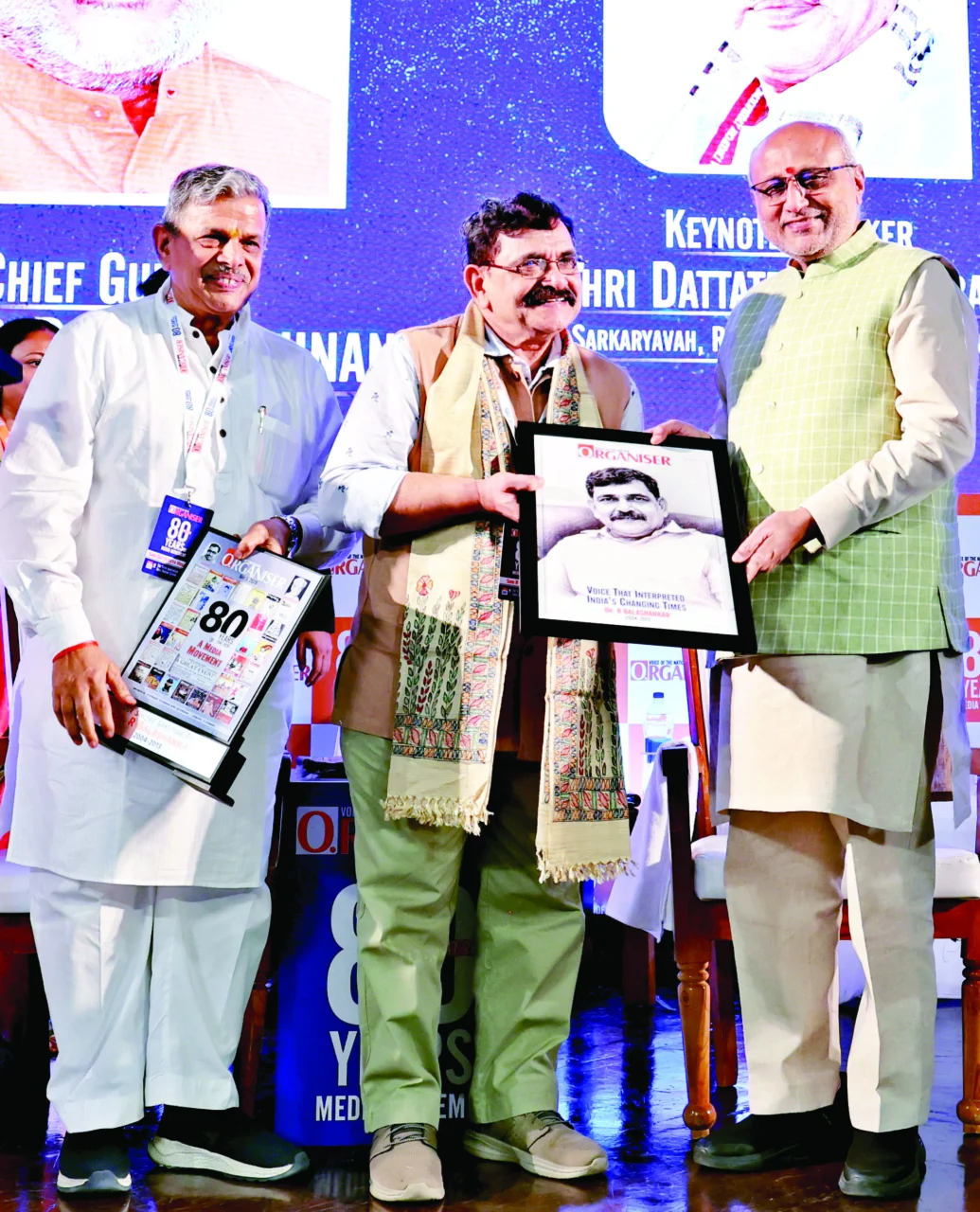
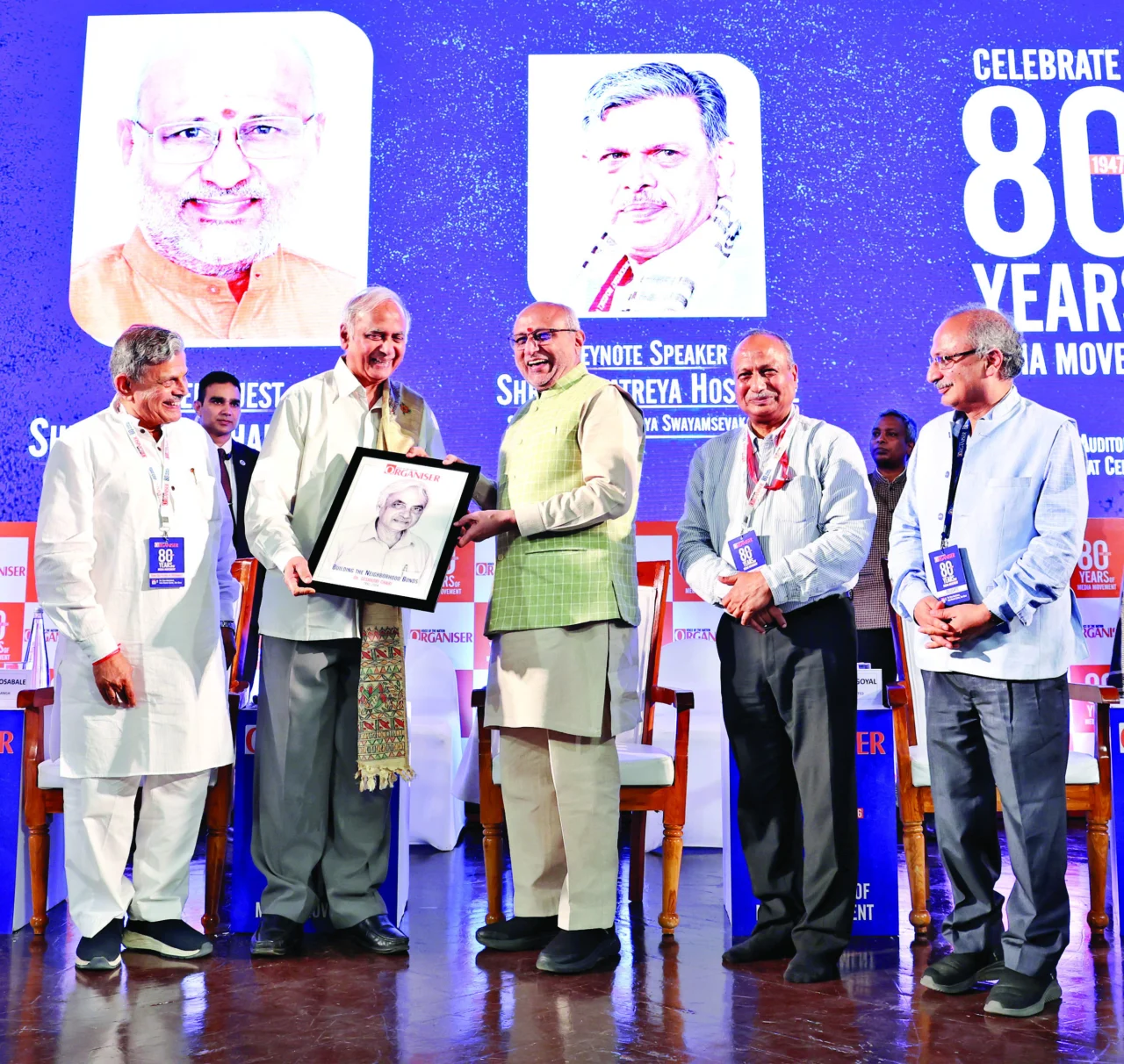
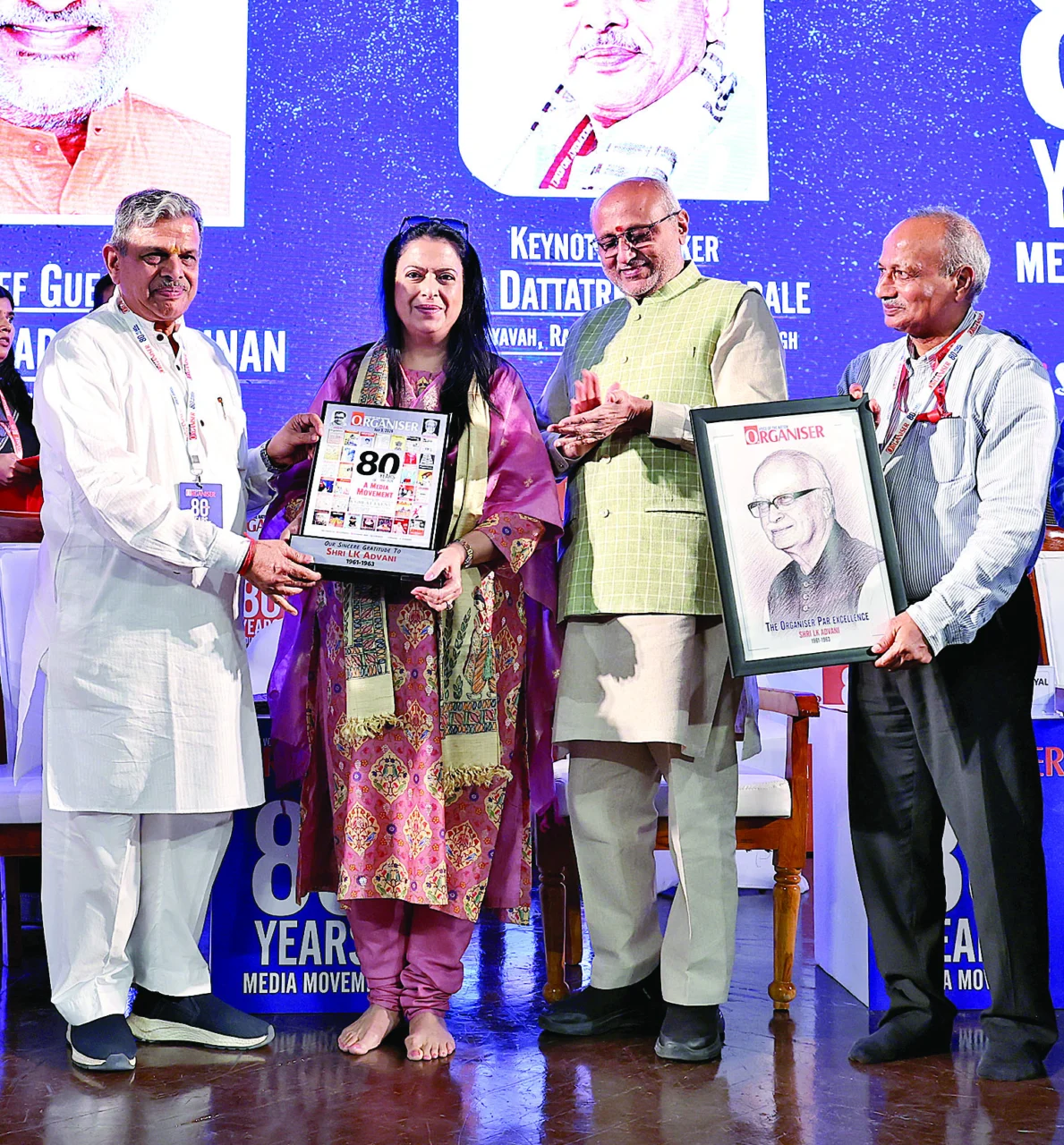
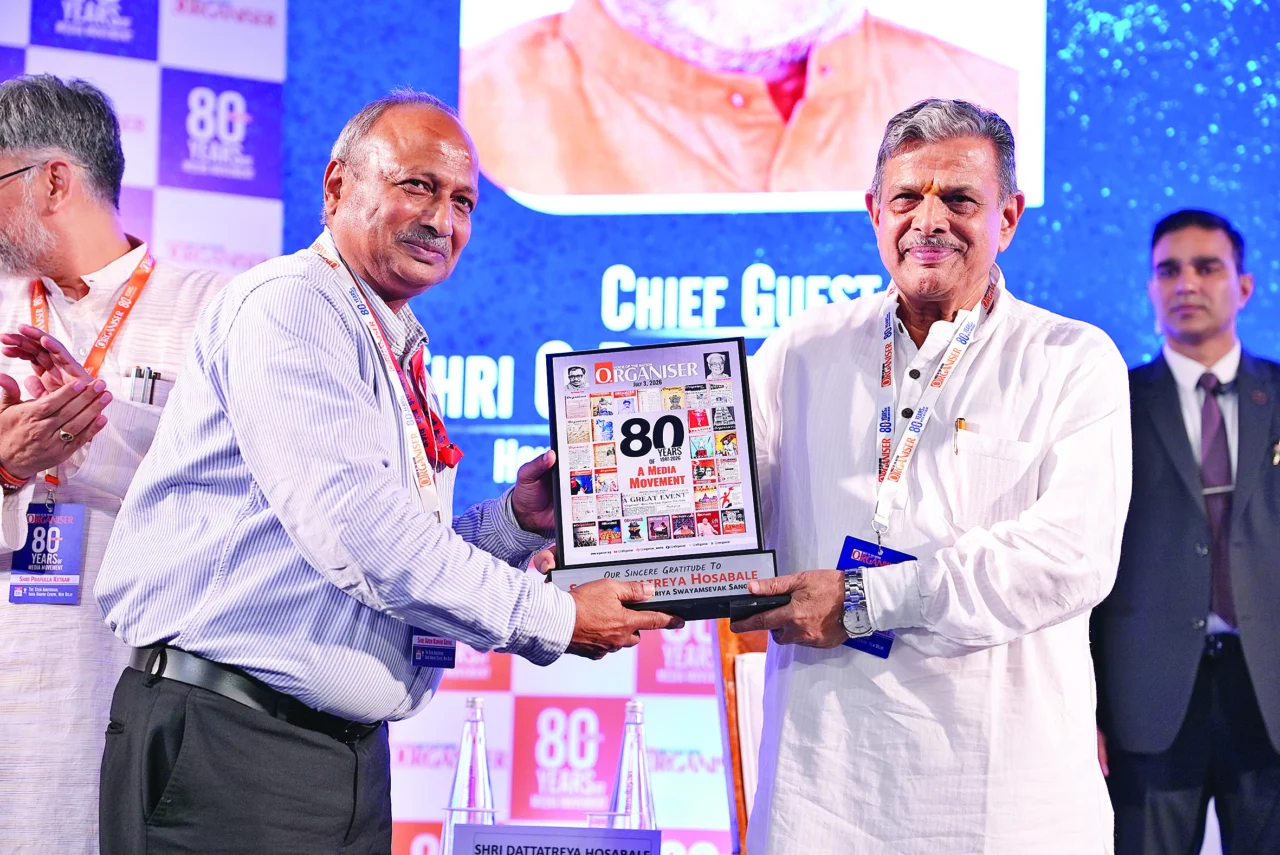
A special highlight of the 80th Foundation Day celebrations was the felicitation of Organiser’s former Editors and their families by the Hon’ble Vice President of Bharat, C. P. Radhakrishnan, and RSS Sarkaryavah Dattatreya Hosabale. They were presented with commemorative mementoes in recognition of their invaluable contributions to the weekly’s eight-decade journey and their role in shaping nationalist journalism.
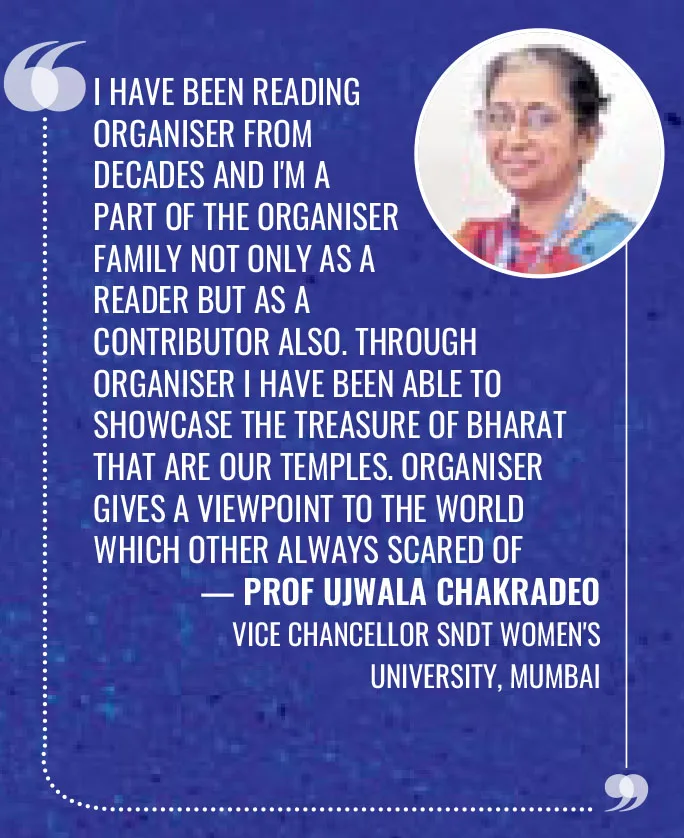
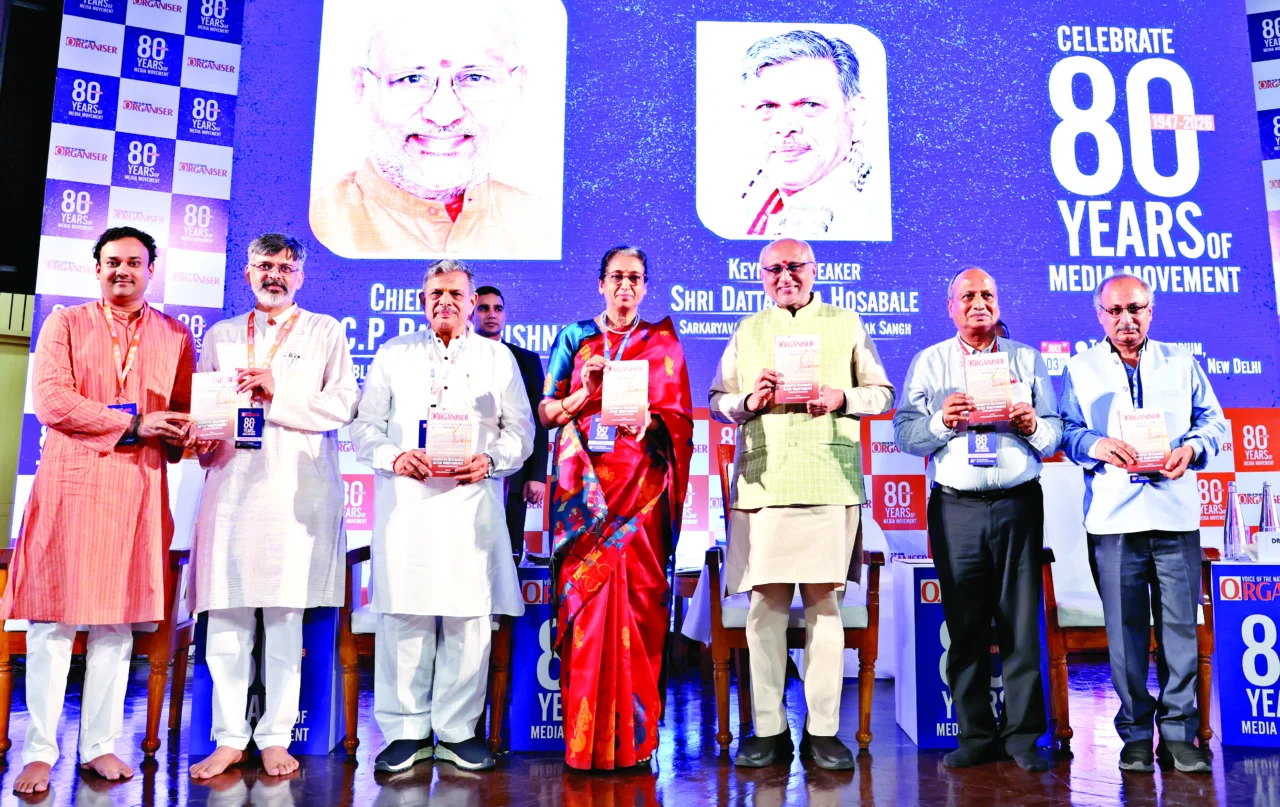
The occasion also witnessed the release of two significant books: ‘Hindutva Discourse after Independence’, edited by Prafulla Ketkar and Prof Gautam Choubey of the University of Delhi, and ‘Temples Beyond Bharat’, authored by
Prof Ujwala Chakradeo, Vice-Chancellor of SNDT Women’s University, Mumbai.