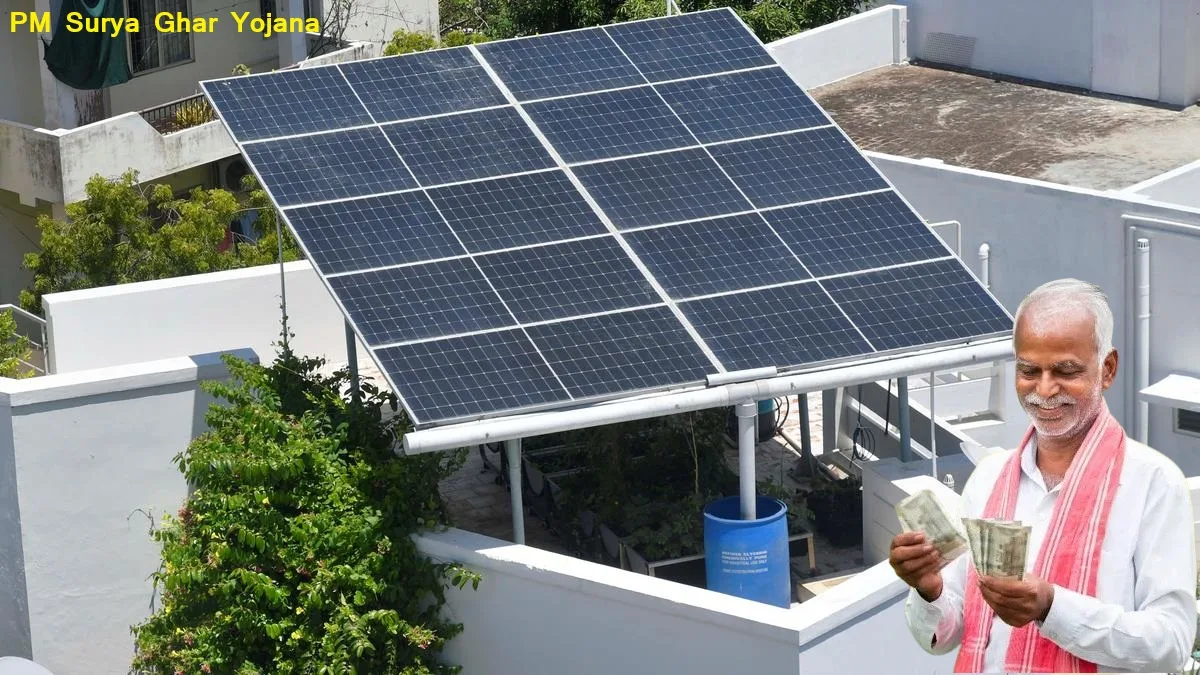
The Centre on Wednesday informed Parliament that nearly 18.94 lakh households across the country have reported receiving zero electricity bills after installing rooftop solar systems under the PM Surya Ghar: Muft Bijli Yojana, highlighting the growing impact of the flagship renewable energy programme aimed at promoting clean energy adoption and reducing household electricity costs.
In a written reply in the Lok Sabha, the Ministry of New and Renewable Energy (MNRE) said the data had been compiled based on reports submitted by electricity distribution companies (DISCOMs). The ministry clarified that the benefit of a zero electricity bill depends on the amount of electricity consumed by a household during a billing cycle and the extent to which that consumption is met through self-generated solar power.
The latest figures indicate that the scheme is steadily helping households lower their dependence on conventional grid electricity while contributing to India’s broader renewable energy and energy transition goals.
Nearly 19 Lakh Consumers Report Zero Bills
According to the ministry, 18,94,287 households have reported receiving zero electricity bills after installing rooftop solar systems under the scheme.
Officials explained that rooftop solar panels generate electricity during the day, allowing households to consume their own power and export surplus electricity to the grid through net metering. Depending on a household’s electricity usage and solar generation during the billing period, consumers can significantly reduce or completely eliminate their electricity bills.
The ministry noted that the figures reported by DISCOMs reflect actual billing outcomes and may vary from one billing cycle to another based on seasonal electricity consumption and solar power generation.
Maharashtra and Gujarat Lead the Country
Among the states, Maharashtra emerged as the largest beneficiary under the scheme, with 4,17,707 consumers reporting zero electricity bills.
Gujarat closely followed with more than 4.16 lakh beneficiaries, reflecting the state’s strong rooftop solar ecosystem and early adoption of distributed renewable energy systems.
Other states reporting a significant number of households with zero electricity bills include:
Kerala: 1,91,882 beneficiaries
Uttar Pradesh: More than 1.75 lakh beneficiaries
Rajasthan: More than 1.68 lakh beneficiaries
Madhya Pradesh: Over 1.10 lakh beneficiaries
Odisha: Around 37,678 beneficiaries
Chhattisgarh: 16,472 beneficiaries
The ministry indicated that several other states are also witnessing steady growth in rooftop solar adoption as awareness and implementation improve.
Over 40 Lakh Rooftop Solar Systems Installed
The government informed Parliament that, as of July 24, 2026, a total of 40,07,355 rooftop solar systems had been installed under the PM Surya Ghar scheme.
These installations have benefited 48,21,986 households across the country, making it one of the largest rooftop solar initiatives undertaken anywhere in the world.
The ministry also revealed that more than 35.97 lakh installations fall under the above 3 kWp capacity category, accounting for the largest share of rooftop solar systems installed under the programme.
Larger capacity systems enable households to generate more electricity, increasing the likelihood of substantially reducing or eliminating monthly electricity bills.
Installation Pace Accelerates Sharply
The ministry highlighted a significant improvement in the pace of implementation since the scheme was launched.
According to the government, it initially took several months to complete rooftop solar installations for the first one lakh households under the programme.
However, implementation has accelerated dramatically, with the same milestone of one lakh installations now being achieved in approximately seven days.
Officials said this reflects improved coordination between the Centre, state governments, DISCOMs, registered vendors and financial institutions, as well as increased consumer awareness and streamlined approval processes.
The acceleration is expected to help the government meet its ambitious target of installing rooftop solar systems in one crore households by the end of FY 2026-27.
Government Introduces Multiple Reforms
To speed up implementation and remove procedural bottlenecks, the Ministry of New and Renewable Energy has introduced a series of policy and administrative reforms.
Among the key measures announced are the waiver of technical feasibility requirements in certain cases, allowing eligible consumers to proceed with installations more quickly.
The ministry has also enabled automatic electricity load enhancement up to 10 kW, reducing delays associated with obtaining separate approvals from distribution companies.
Another major reform is the integration of net-metering agreements into the National Portal, making the application and approval process more seamless for consumers.
The government has further facilitated collateral-free concessional loans, enabling households to finance rooftop solar systems without facing significant financial barriers.
To strengthen implementation on the ground, the ministry has expanded the registration of approved vendors while enhancing coordination with state DISCOMs to ensure timely installation, inspection and commissioning of rooftop solar systems.
Regular Monitoring and Consumer Support
The ministry said implementation of the PM Surya Ghar scheme is being closely monitored through regular review mechanisms.
Regional review meetings are being conducted with state governments and distribution companies to identify operational challenges and resolve implementation bottlenecks.
In addition, awareness campaigns are being organised to educate consumers about the financial and environmental benefits of rooftop solar systems and encourage greater participation in the scheme.
The government has also established a dedicated grievance redressal mechanism to address consumer complaints and ensure timely resolution of issues related to installations, subsidies and net-metering approvals.
Officials said these initiatives are helping improve service delivery while maintaining the rapid pace of implementation witnessed over the past year.
Supporting India’s Clean Energy Transition
The PM Surya Ghar: Muft Bijli Yojana is a key component of India’s broader strategy to expand renewable energy capacity, reduce dependence on fossil fuels and empower households to become producers as well as consumers of electricity.
By promoting rooftop solar systems, the scheme is expected to lower household electricity expenses, reduce carbon emissions and ease pressure on the conventional power grid.
The initiative also aligns with India’s commitments to increase the share of non-fossil fuel energy sources and accelerate the country’s transition towards clean and sustainable energy.
With over 40 lakh rooftop solar installations completed, 48 lakh households benefiting, and nearly 19 lakh consumers already reporting zero electricity bills, the scheme has emerged as one of the government’s flagship renewable energy programmes. As implementation continues to accelerate, the Centre remains focused on achieving its target of bringing rooftop solar power to one crore households by the end of FY 2026-27, further strengthening India’s clean energy ecosystem and expanding access to affordable electricity.