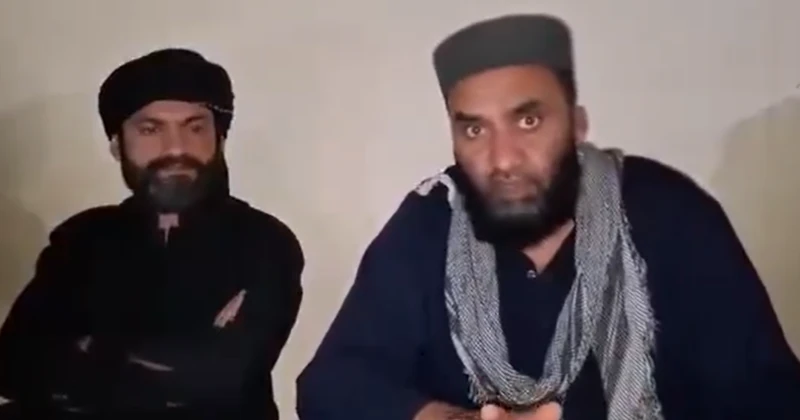
Joint Awami Action Committee (JAAC) leader Sardar Umar Nazir Kashmiri accuses Pakistani security forces of killing 31 civilians
Rawalakot (PoJK): Pakistan’s handling of the unrest in Pakistan-occupied J&K (PoJK) has come under renewed scrutiny after senior Joint Awami Action Committee (JAAC) leader Sardar Umar Nazir Kashmiri accused Pakistani security forces of killing 31 civilians in less than 48 hours during the June 5 crackdown, alleging that more than 80 civilians have lost their lives since the protests began.
Addressing a massive sit-in at Rawalakot, Umar Nazir launched a blistering attack on Islamabad’s security establishment, accusing it of using lethal force against civilians demanding their rights. Declaring that the movement would not be crushed through violence, he asserted that the people of PoJK would continue their struggle until those responsible for the killings are brought to justice.
“We will continue to raise our voice until justice is delivered. Those responsible for the killings must be exposed and held accountable,” Umar Nazir said while addressing protesters.
Calls for international probe before Elections
The Joint Awami Action Committee demanded an independent international investigation into the June 5 killings before any elections are held in Pakistan-occupied Kashmir, arguing that a democratic process cannot be credible without accountability for the alleged bloodshed.
Citing a recent United Nations human rights report, the AAC urged Pakistani authorities to implement its recommendations and identify those responsible for the civilian deaths. Protest leaders maintained that elections conducted without an impartial investigation would lack legitimacy.
PoJK under Siege
According to protest organisers, large parts of Pakistan-occupied J&K continue to remain under heavy security deployment, with curfew-like restrictions, movement controls and widespread intimidation since the June 5 violence.
Demonstrators described the region as being under a “siege,” alleging that normal life has been severely disrupted as security forces maintain a tight grip over several towns.
The protests are part of a broader movement that initially emerged over soaring prices and governance failures but intensified after the June 5 crackdown, during which activists allege Pakistani security personnel opened fire on demonstrators, resulting in multiple civilian casualties.
Rejecting what he described as attempts to silence the movement through force, Umar Nazir made it clear that public resistance in PoJK would continue. He stressed that justice for those allegedly killed remains the foremost demand of the people and warned that the movement would not end until accountability is ensured.
