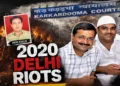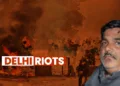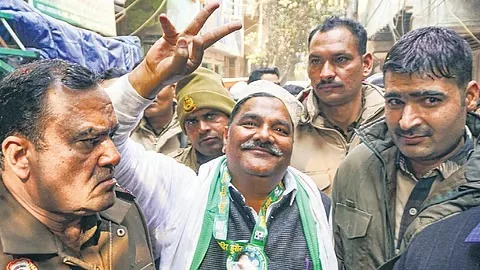
The conviction of former AAP councillor Tahir Hussain in the murder of Intelligence Bureau officer Ankit Sharma has once again brought the spotlight back on the competing narratives that emerged after the 2020 Delhi riots. While the violence left 53 people dead, hundreds injured and several neighbourhoods devastated, the legal proceedings that followed were accompanied by an equally intense battle over public perception. Politicians, journalists, activists and public personalities used social media platforms, television debates and public statements to shape competing narratives around the investigation and those accused in the riots.
In the years following the riots, several influential voices questioned the police investigation, challenged the evidence presented against Tahir Hussain, alleged institutional bias, and argued that he was being unfairly targeted because of his religious identity. Others criticised media coverage, accused television channels of promoting a predetermined narrative, and maintained that Hussain himself was a victim of the circumstances surrounding the Delhi violence. These statements collectively formed a parallel public discourse alongside the ongoing judicial process.
The debate surrounding Tahir Hussain extended beyond legal proceedings and became part of a broader political and ideological contest over the interpretation of the Delhi riots. Public figures repeatedly raised questions about police action, investigative agencies, media reporting and accountability, while supporters presented alternative explanations regarding Hussain’s alleged role during the violence. The emergence of these competing narratives ensured that the case remained at the centre of national political and media discussions for several years.
Against this backdrop, the Delhi court’s conviction of Tahir Hussain in the murder case of IB officer Ankit Sharma has renewed attention towards the statements made by several prominent personalities who had defended him, questioned the investigation, or portrayed him as a victim during different stages of the legal process.
This report documents 15 instances in which Bollywood actors, journalists and politicians publicly defended Tahir Hussain, questioned the case against him, or portrayed him as a victim following the 2020 Delhi riots.
Among those featured are Vishal Dadlani, Rana Ayyub, Javed Akhtar, Amanatullah Khan and Ajaz Ashraf, each of whom made statements supporting Hussain, questioned the police investigation, or challenged the action taken against him. The report examines claims that Hussain was being targeted because of his religious identity, allegations of bias in the investigation, and assertions disputing the evidence presented against him.
It further traces how a counter-narrative emerged around Hussain after the riots, with public figures alleging religious discrimination, invoking “majority privilege,” and portraying him as a victim. The report also includes Amanatullah Khan’s claim that Hussain was being punished for being Muslim and Ajaz Ashraf’s description of him as “arguably the biggest victim of the Delhi riots.”
The report concludes with the conviction of Tahir Hussain by a Delhi court on July 13, 2026, in the murder of Intelligence Bureau officer Ankit Sharma, bringing renewed attention to the public statements and narratives that had defended Hussain or questioned the case against him in the years following the riots.
Delhi Riots 2020
The Northeast Delhi riots, which began on February 23, 2020, continued for several days, resulting in the deaths of 53 people and injuries to more than 500 others. The violence witnessed incidents of killings, arson, stone-pelting and extensive damage to homes, shops and places of worship. Intelligence Bureau officer Ankit Sharma was killed on February 25, and his body was recovered from a drain in Chand Bagh the following day.
The riots led to the registration of multiple criminal cases, along with a separate case under the Unlawful Activities (Prevention) Act (UAPA) alleging a larger conspiracy behind the violence. Among those named as accused were former AAP councillor Tahir Hussain, Umar Khalid, Sharjeel Imam, Khalid Saifi, Gulfisha Fatima, Meeran Haider, Shifa-ur-Rehman, Safoora Zargar and Asif Iqbal Tanha. The legal proceedings in these cases have followed different trajectories, with some accused securing bail while others have continued to face trial or remain in judicial custody.
1. Vishal Dadlani Questions Case Against Tahir Hussain, Calls for Release of Police Call Records
Bollywood singer and music composer Vishal Dadlani publicly defended former AAP councillor Tahir Hussain and questioned the narrative surrounding the allegations against him in connection with the Delhi riots.
In a public statement issued on March 7, 2020, Dadlani said, “Let’s be very clear. Tahir Hussain is the guy that ‘they’ are trying to blame for rioting and violence. Many of you have also bought that narrative. BUT… ask yourself… why would HE call the Police 5 times? Let the public hear those calls!! That’ll clarify a LOT!”
Through his statement, Dadlani called for the release of the police call records made by Tahir Hussain, arguing that making those calls public would help clarify the circumstances surrounding the case.
2. Congress Leader Imran Masood Questions Verdict Against Tahir Hussain, Alleges Bias Over Identity
Congress leader Imran Masood questioned the outcome of the case against Tahir Hussain and alleged that Hussain’s identity had influenced the proceedings following his conviction in the murder of Intelligence Bureau officer Ankit Sharma.
Speaking on July 14, 2026, Masood said, “Look, what evidence has been collected, what happened and what did not happen, I will not comment on that because the matter is before the court. But the big thing is that his name is Tahir. If his name had been Kapil, he too would have been acquitted.”
While declining to comment on the evidence, stating that the matter was before the court, Masood alleged that Hussain’s name had played a decisive role in the outcome of the case.
3. Rana Ayyub Questions Tahir Hussain’s Arrest, Alleges Selective Accountability After Delhi Riots
Journalist Rana Ayyub questioned the arrest of Tahir Hussain and alleged selective accountability in the aftermath of the Delhi riots.
In a statement issued on March 6, 2020, Ayyub wrote, “Tahir Hussain arrested. Kapil Mishra gets plus security, Anurag Thakur is free, no one seeking accountability from Amit Shah, Modi is being celebrated. We call this majority privilege.”
She also wrote, “Why are we not seeking accountability of Home Minister Amit Shah. Fifty three lives lost in the Delhi carnage. Will heads roll?”
Through these statements, Ayyub questioned the action taken against Tahir Hussain while raising questions about accountability for other political leaders in connection with the violence.
4. Javed Akhtar Questions Delhi Police Action Against Tahir Hussain Following Delhi Riots
Lyricist and screenwriter Javed Akhtar questioned the Delhi Police’s action against Tahir Hussain in the aftermath of the Delhi riots.
In a statement issued on February 27, 2020, Akhtar wrote, “So many killed, so many injured, so many house burned, so many shops looted so many people turned destitutes but police has sealed only one house and looking for his owner. Incidentally his name is Tahir. Hats off to the consistency of the Delhi police.”
Through his statement, Akhtar questioned the police action focusing on Tahir Hussain while referring to the broader violence and destruction caused during the riots.
5. Sakshi Joshi Says Police Confirmation Supports Tahir Hussain’s Claim of Seeking Help
Journalist Sakshi Joshi stated that a police confirmation supported Tahir Hussain’s claim that he had repeatedly sought assistance during the Delhi riots.
In a statement issued on March 3, 2020, Joshi wrote, “So what #TahirHussain claimed that he called cops and they rescued him was true! Police is accepting his claim!”
Through her statement, Joshi asserted that the police’s acknowledgement supported Tahir Hussain’s claim that he had called the police for help and was subsequently rescued.
6. Swara Bhasker Calls for Verification of Video Linked to Tahir Hussain Investigation
Actor Swara Bhasker called for the verification of a video related to the investigation into Tahir Hussain’s alleged role in the Delhi riots.
In a statement issued on February 27, 2020, Bhasker wrote, “Investigation on #TahirHussain’s role should admit this video as well.. @AltNews have you seen this? Is it verified?”
Through her statement, Bhasker urged that the video be considered in the investigation after its authenticity was verified.
7. AAP Leader Amanatullah Khan Defends Tahir Hussain, Alleges He Is Being Targeted for His Religious Identity
Aam Aadmi Party (AAP) leader Amanatullah Khan publicly defended former councillor Tahir Hussain and alleged that action against him was driven by his religious identity in the aftermath of the Delhi riots.
In a statement issued on March 7, 2020, Khan said, “Today, Tahir Hussain is being punished simply because he is a Muslim. Perhaps being a Muslim is the biggest crime in India today. It is also possible that, in the coming time, it may be claimed that Tahir Hussain was responsible for the Delhi violence.”
Through his statement, Khan alleged that Tahir Hussain was being punished because of his religious identity and expressed the view that Hussain could subsequently be held responsible for the Delhi riots.
8. Mohammed Zubair Shares Alt News Fact Check on Tahir Hussain’s Video Appeal
Alt News co-founder Mohammed Zubair shared a fact check concerning the authenticity of a video appeal for help by AAP councillor Tahir Hussain during the Delhi riots.
In a statement issued on February 28, 2020, Zubair wrote, “Several social media users have raised doubts about the authenticity of AAP councillor Tahir Hussain’s video appeal for help during #DelhiRiot2020. Read #AltNewsFactCheck.”
Through his post, Zubair referred to an Alt News fact check addressing questions raised on social media regarding the authenticity of Tahir Hussain’s video appeal for help during the Delhi riots.
9. Journalist Ajaz Ashraf Questions Allegations Against Tahir Hussain, Describes Him as a Victim of Delhi Riots
Journalist and political commentator Ajaz Ashraf defended Tahir Hussain, questioned the allegations against him, and described him as a victim of the Delhi riots.
In a statement published on September 26, 2022, Ashraf wrote, “In many ways, though, Tahir is arguably the biggest victim of the Delhi riots.”
Ashraf questioned the allegations against Hussain, stating that Hussain had made 12 calls to the police after his four-storey building came under attack and had subsequently handed over the building’s keys to the Delhi Police. He also questioned whether the stones and bottles recovered from the terrace could have been planted.
Referring to the impact of the allegations, Ashraf further wrote, “The infamy maliciously scripted for Tahir ruined his business.”
10. AAP MP Sanjay Singh Cites Tahir Hussain’s Account of Seeking Police Protection During Delhi Riots
Aam Aadmi Party (AAP) MP Sanjay Singh defended Tahir Hussain by referring to Hussain’s account of seeking police assistance during the Delhi riots.
In a statement issued on February 27, 2020, Singh said, “Tahir Hussain has already given his statement in which he said that he gave all details to police and media about mob entering his house during the violence. He had asked police for protection. Police came 8 hours late and rescued him and his family from his house.”
Through his statement, Singh highlighted Tahir Hussain’s claim that he had informed both the police and the media after a mob entered his residence during the violence and had sought police protection before he and his family were rescued.
11. Ravish Kumar Questions Delhi Police Investigation Into Delhi Riots Cases
Journalist and former NDTV anchor Ravish Kumar criticised the Delhi Police’s investigation into cases related to the Delhi riots, questioning the quality of the investigation and the evidence presented before the courts.
In a statement issued on September 3, 2021, Kumar said, “The condition of the police investigation is such that it is repeatedly being reprimanded and rebuked by courts. On the basis of such investigations and chargesheets, the ‘Godi media’ told crores of people day and night who the rioters were. They were declared rioters in the media’s court, while in the actual court, the police is unable to present any evidence against them.”
Through his statement, Kumar criticised the police investigation and the chargesheets filed in the Delhi riots cases, while alleging that individuals had been portrayed as rioters in sections of the media before the courts had established the evidence against them.
12. Dr. Sanjukta Basu Responds to Post on Umar Khalid’s Arrest in Delhi Riots Case
Academic and lawyer Dr. Sanjukta Basu responded to a social media post by Priti Gandhi following the arrest of Umar Khalid in connection with the Delhi riots case.
In response to Priti Gandhi’s post stating, “Terrorist Umar Khalid has just been arrested by Delhi Police for his involvement in Delhi Riots,” Basu wrote, “Meanwhile terrorist Pragya is sitting in Parliament.”
13. Md Asif Khan Says Tahir Hussain Was Made a Scapegoat After Suspension From AAP
Md Asif Khan reacted to the Aam Aadmi Party’s decision to suspend Tahir Hussain, alleging that Hussain had been made a scapegoat and was being targeted because of his identity.
In a statement issued on February 27, 2020, Khan said, “AAP has suspended Tahir Hussain from party. He will remain suspended til the enquiry is completed. These people has thrown him under the bus, Tahir is paying price for his name.”
Through his statement, Khan alleged that Tahir Hussain had been abandoned by his party following his suspension and claimed that Hussain was paying the price because of his name.
14. Rajdeep Sardesai Criticises Public Focus on Ankit Sharma Case During Delhi Riots
Journalist and news anchor Rajdeep Sardesai criticised what he described as a disproportionate public focus on the death of Intelligence Bureau officer Ankit Sharma in the aftermath of the Delhi riots, while referring to the allegations against AAP councillor Tahir Hussain.
In a statement issued on February 27, 2020, Sardesai wrote, “35 people have died in riots till now; but for RW Internet army, only Ankit Sharma matters because needle of suspicion is on AAP councillor, Tahir Hussain. The day we seek justice for each and every innocent victim of riots, Hindu or Muslim, we will build a ‘new’ better India!”
Through his statement, Sardesai argued that justice should be sought for every victim of the Delhi riots, irrespective of religious identity, while criticising what he described as the selective public focus on the Ankit Sharma case.
15. Journalist Aditya Menon Questions Narrative Around Tahir Hussain in Delhi Riots Coverage
Journalist Aditya Menon defended Tahir Hussain and criticised television news coverage of the Delhi riots, alleging that it projected Hussain as the “mastermind” of the violence.
In a statement issued on February 28, 2020, Menon wrote, “2/3 people killed in #DelhiViolence are Muslims. Mosques burnt, no reports of temples being burnt. Most shops burnt belong to Muslims. Yet TV channels are calling Tahir Hussain ‘mastermind’ just to sell fake ‘Hindu Khatre Mein’ narrative. These channels are as guilty as mob.”
Through his statement, Menon questioned the portrayal of Tahir Hussain in television coverage of the Delhi riots and alleged that certain news channels were promoting a false narrative about the violence.
The developments surrounding Tahir Hussain following the 2020 Delhi riots illustrate how legal proceedings were accompanied by a parallel public debate shaped through political statements, media commentary and social media campaigns. Across different stages of the investigation and trial, several public figures questioned the police investigation, challenged the evidence presented, criticised media coverage, alleged institutional bias, or argued that Hussain was being unfairly targeted because of his religious identity.
The fifteen documented instances collectively demonstrate how an alternative narrative emerged alongside the judicial process. Public interventions ranged from calls for greater scrutiny of investigative agencies to assertions that Hussain himself was a victim of the riots. Others questioned television reporting, highlighted alleged inconsistencies in the investigation, or linked the case to broader debates surrounding communal violence, policing and accountability.
Following the Delhi court’s conviction of Tahir Hussain in the murder of Intelligence Bureau officer Ankit Sharma on July 13, 2026, these earlier public statements have once again come under renewed public scrutiny. Together, the documented incidents provide a chronological account of how influential personalities responded to the case and contributed to the wider discourse surrounding one of the most significant legal and political controversies arising from the 2020 Delhi riots.