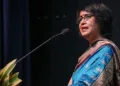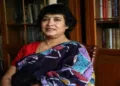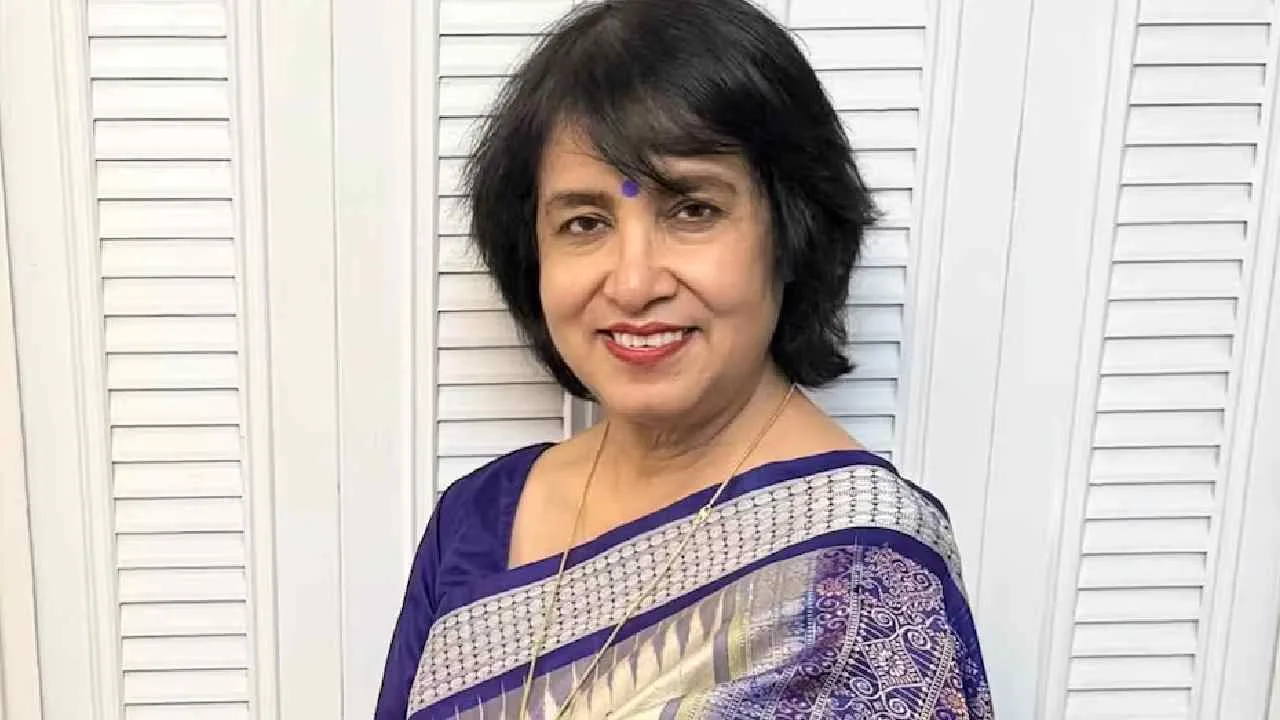
Exiled Bangladeshi author and activist Taslima Nasreen is set to return to Kolkata on August 1 to attend an anti-fundamentalism programme at Rabindra Sadan, marking her first major public visit to the city in nearly two decades.
The programme, organised by three organisations, will feature poetry recitations, discussions and a civic reception for the author. Her visit has drawn political attention in West Bengal and revived debates surrounding free speech, religious extremism, literary censorship and the circumstances that led to her departure from both Bangladesh and Kolkata.
Writer who challenged religious orthodoxy
Born in Mymensingh, Bangladesh, in 1962, Taslima Nasreen trained as a physician before establishing herself as a writer, columnist and activist. Over the years, she became known for her outspoken views on women’s rights, secularism, religious orthodoxy and minority rights.
Her 1993 novel Lajja (Shame) brought her international attention. The book portrayed the experiences of a Hindu family in Bangladesh in the aftermath of the Babri Masjid demolition in India and highlighted concerns about violence and discrimination faced by religious minorities.
The publication triggered widespread controversy in Bangladesh. Islamist groups organised protests against the author, while several religious organisations accused her of insulting Islam. Fatwas were issued against her, and demands were raised for legal action. The Bangladesh government later banned the book, and Nasreen eventually left the country amid mounting security concerns.
Years of exile and controversy
After leaving Bangladesh, Nasreen spent time in several countries, including Sweden, France, the United States and India. Kolkata became one of her most important bases after she moved there in 2004.
However, her stay in West Bengal was also marked by controversy. Her autobiographical work Dwikhandito (Divided) faced opposition from various groups, leading to protests and legal challenges. The book was eventually banned by the then Left Front government in West Bengal.
Tensions escalated in 2007 when violent protests erupted in Kolkata over her presence and writings. Amid growing security concerns and political pressure, Nasreen was moved out of the city. She subsequently spent periods in Delhi under government protection.
The author was also attacked during a public event in Hyderabad in 2007 by activists who accused her of making remarks against Islam. Since then, she has continued to live under varying levels of security while remaining an active commentator on issues relating to secularism, women’s rights and religious extremism.
Political reactions to her return
Nasreen’s upcoming visit has generated political reactions across West Bengal.
Leaders associated with the ruling BJP government in the state have welcomed her participation in the anti-fundamentalism programme, describing it as an opportunity to promote free expression and open debate. Organisers have said the event is intended to discuss challenges posed by religious extremism and reaffirm the importance of secular values.
At the same time, some opposition leaders and political groups have questioned the timing and intent of the programme, arguing that such events can become politically charged in Bengal’s polarised environment.
The differing responses reflect the broader debate that has long surrounded Nasreen’s work and public life.
Why the visit matters
Nasreen’s return to Kolkata carries significance beyond a literary event. The city was once her adopted home and the place from which she was eventually forced to leave amid controversy and security concerns.
Her appearance at Rabindra Sadan is expected to draw writers, academics, activists and political leaders, many of whom view the event as an opportunity to revisit questions surrounding freedom of expression, minority rights, secularism and the limits of dissent in a democratic society.
As preparations continue for the August 1 programme, the visit is likely to renew public discussion on the issues that have defined Taslima Nasreen’s life and work for more than three decades. Whether it leads to broader consensus or fresh political controversy, her return marks a significant moment in the ongoing debate over free speech and religious criticism in South Asia.