NEW DELHI: The Karkardooma Court in Delhi has convicted former Aam Aadmi Party (AAP) councillor Tahir Hussain and five others in the murder of Intelligence Bureau (IB) staffer Ankit Sharma, marking one of the most significant convictions arising from the 2020 North-East Delhi riots. The verdict, delivered on July 13, holds Hussain guilty of murder and multiple other offences linked to the brutal killing of the 26-year-old officer, whose death became one of the defining symbols of the communal violence that engulfed the national capital.
The judgment marks the first murder conviction in the Delhi riots cases and brings a significant legal breakthrough in a case that became emblematic of the communal violence that claimed 53 lives.
Additional Sessions Judge Praveen Singh convicted Hussain under Sections 188, 153A, 147, 148, 149, 365 and 302 of the Indian Penal Code (IPC), holding him guilty of murder, promoting enmity and unlawful assembly, among other offences. However, the court acquitted him of charges under Sections 120B (criminal conspiracy) and 129 IPC.
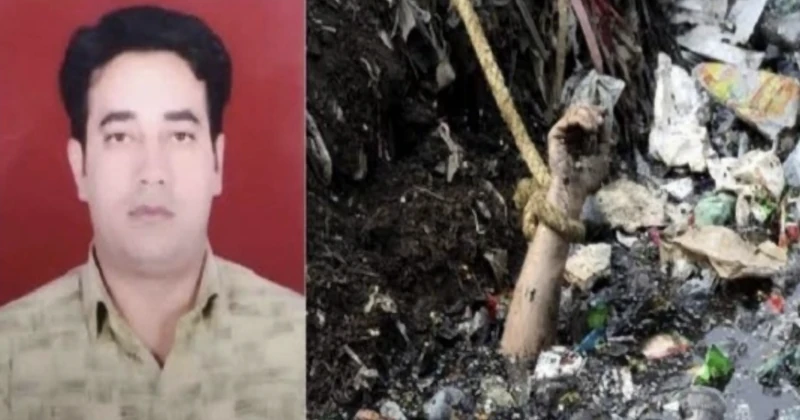
On February 25, 2020, Ankit Sharma, a 26-year-old Intelligence Bureau security assistant, stepped out of his Khajuri Khas residence to buy household essentials amid escalating communal violence. He never returned.
The following day, his body was recovered from a drain near Chand Bagh Pulia. The post-mortem examination recorded 51 sharp-force and blunt-force injuries, indicating a brutal assault before his body was dumped into the drain.
According to the Delhi Police chargesheet, Sharma was specifically targeted by a violent mob allegedly led by Tahir Hussain. The prosecution argued that he was dragged near Hussain’s residence, attacked with sharp-edged weapons and his body thrown into the adjoining drain after the murder.
Reacting to the conviction, Ankit Sharma’s brother, Ankur Sharma, said the attackers first confirmed his identity before killing him. “At the riot, no one knew he was with the IB. Everyone just knew he was in the Delhi Police and that he was a Hindu. They checked his clothes and verified his identity.
He was killed after they confirmed his identity and realised he was a police officer.” He added that the family later received an official letter from the Intelligence Bureau confirming that Ankit Sharma had been on duty.
“He made the ultimate sacrifice while performing his duty, saving others and serving the country.” The prosecution maintained that Tahir Hussain’s multi-storey building at Chand Bagh became a key operational point during the riots.
According to the Delhi Police investigation, mobs allegedly gathered around the building while stones, bricks, petrol bombs and other projectiles were hurled from its rooftop towards neighbouring localities during the violence on February 24–26, 2020.
Investigators also claimed that searches conducted at the premises led to the recovery of large quantities of stones, petrol bombs, acid packets, slingshots and other materials allegedly used during the riots.
The chargesheet alleged that Ankit Sharma was attacked outside Hussain’s residence before being murdered and his body disposed of in the nearby drain.
During the course of the investigation, Tahir Hussain publicly maintained that he had no role in the violence and claimed that his building had been taken over by rioters, leaving him unable to control the situation.
However, after examining the evidence presented by the prosecution, including witness testimonies, forensic material and other evidence placed before it, the Karkardooma Court convicted Hussain for murder and other offences, rejecting his defence in the case.
The case was registered on February 26, 2020, based on a complaint filed by Ankit Sharma’s father, Ravinder Kumar.
In his complaint, Kumar alleged that large-scale stone pelting, arson, firing and violence had erupted around Chand Bagh Pulia during the anti-CAA protests. He further alleged that Tahir Hussain’s office and building served as the centre from where armed rioters operated, creating an atmosphere of terror in the locality.
Following the investigation by the Special Investigation Team (SIT), Delhi Police filed a detailed chargesheet naming Tahir Hussain and several others as accused in the murder.
Those named included Tahir Hussain, Haseen alias Mullaji alias Salman, Nazim, Kasim, Sameer Khan, Anas, Firoz, Javed, Gulfam, Shoaib Alam alias Bobby and Muntajim alias Musa.
Timeline
- February 17–23, 2020: Tensions escalate in North-East Delhi over the Citizenship Amendment Act (CAA).
- February 24: Large-scale communal violence breaks out across Chand Bagh, Jaffrabad and adjoining areas.
- February 25: IB officer Ankit Sharma goes missing after leaving home to buy household items.
- February 26: His body is recovered from the Khajuri Khas drain. An FIR is registered based on his father’s complaint.
- February 27: A Special Investigation Team is constituted, and the AAP suspends Tahir Hussain from the party.
- March 2020: Delhi Police arrests Tahir Hussain.
- June 3, 2020: Delhi Police files its chargesheet.
- August 21, 2020: The Karkardooma Court takes cognisance of the chargesheet.
- July 13, 2026: Tahir Hussain and five others are convicted for the murder of Ankit Sharma.
More than 700 FIRs were registered relating to murder, rioting, conspiracy, arson and vandalism.