US Independence Day on July 4, 2026 marks the historic 250th anniversary of the Declaration of Independence. The day marks the moment when the 13 American colonies formally declared themselves free from the British rule. This day laid the foundation of today’s United States, the lone superpower, largest economy, most advanced military and a champion of democracy. The US is hosting nationwide events to commemorate its 250th anniversary. Similarly, India gained independence from the British rule on August 15, 1947. Today India is world’s largest democracy (population of approximately 140 crores) and the US is world’s second largest democracy (population of approximately 35 crores).
Ideally, a newly independent India should have aligned more closely with the US. The US had emerged victorious in the Second World War in 1945 and the British rule was in decline the world over. By mid 1950s, the sun had set on most of the colonial British empire and the US was a superpower now. This fact was proved in the 1956 Suez Canal Crisis when the US played a decisive role as a mediator and enforcer. When Britain, France and Israel (American allies) launched an invasion against Egypt to regain control of the Suez Canal in October 1956, the US quickly intervened to ensure a ceasefire, ensuring deployment of the first UN Peacekeeping Force. This event more or less cemented the US global leadership.
India and the US began their relationship on a cautious note and established diplomatic relations with some common values. But India became a founding member of the Non-Aigned Movement in 1961 and this created a definite strain in the Indo-US relationship. Thereafter, the mistrust between the two countries grew when the US leaned towards Pakistan during the Cold War with the erstwhile USSR. When India signed 1971 treaty with the Soviet Union, the mistrust further grew. The worst phase of the Indo-US relations came after the 1998 Pokhran-II tests that led to US sanctions. The decisive change came during the visit of President Bill Clinton to India under PM Vajpayee in March 2000. Thereafter, the nuclear deal with the US under PM Manmohan Singh in July 2005 ended the nuclear isolation of India.
After coming to power in the year 2014, PM Modi has fundamentally transformed the Indo-US relations with his personal style diplomacy. He has been instrumental in shaping a comprehensive global strategic alliance with the US. Since then, the relationship has expanded into joint military exercises, logistics agreements, intelligence sharing, space cooperation, maritime surveillance and technological collaboration. India is the most important ally in the Quad initiative for the Indo-Pacific. But still there is a degree of mistrust as evident from the prolonged trade deal negotiations between India and the US. This was also highlighted by PM Modi during the G7 Summit in France in June 26 when he said that a lack of mutual confidence and the misuse of trade and technology for narrow interests have created a global ‘trust deficit’.
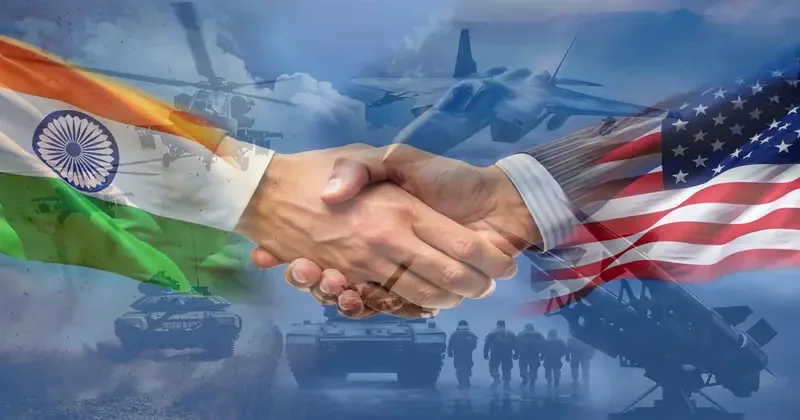
Therefore, a time has come to move beyond the routine rhetoric that India and the US are natural allies due to their shared democratic values, pluralistic societies and mutual strategic interests. It is proposed that India and the US enter into a specific D-2 Alliance (between the two largest democracies) where the two partners work together to promote democratic values around the globe, combat global terrorism, ensure free maritime navigation and push technological collaboration. The issues like the tariffs should promote mutual economic interests, with special attention to India’s diversity and specific needs. Simply put, under the proposed D-2 Alliance, India and the US provide preferential treatment to each other’s critical and essential interests.
The US leadership is aware of the global realities and the challenges that lie ahead. China is now posing a major challenge to the US leadership and its diplomacy. Once China takes control of Taiwan, then the world is going to witness the expansionist agenda of the communist regime. The Indo-Pacific is going to be the next major theatre of conflict. The ongoing West Asia conflict has damaged the invincibility of the US armed forces. The military bases of the US are likely to be under the threat of asymmetric warfare. The homogeneity of the NATO alliance has also weakened. The threat from terrorism may acquire a totally different dimension. Under these circumstances, the US forces need the support of a major military like India. India has no expansionist agenda and the military cooperation with the US can usher a stable and peaceful world.
Let the past be left behind and the Indo-US relationship can now look at cementing a D-2 Alliance between the two largest democracies in the world. Both the nations must respect each other’s strengths and carve out a special relationship based on genuine mutual trust, economic growth, strategic partnership and close people to people connect. With the proposed D-2 Alliance, the prospects of Indo-US relations can be taken to the highest level.