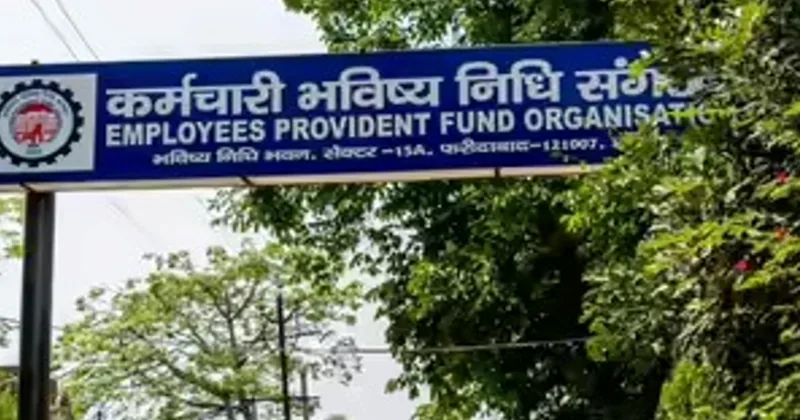
One of India’s oldest and most significant social security mechanisms has undergone its biggest legal overhaul in decades. The Ministry of Labour and Employment has notified the Employees’ Provident Fund Scheme, 2026, replacing the EPF Scheme, 1952, which served as the backbone of retirement savings for generations of salaried workers.
The new framework came into force on June 29, 2026, following its publication in the Gazette of India. It forms part of the broader implementation of the Code on Social Security, 2020, which seeks to consolidate and modernise India’s labour and social security laws.
For millions of employees, however, the immediate question is simple: What actually changes?
The answer is both reassuring and significant. The core provident fund architecture remains largely unchanged. Employees will continue to contribute to their retirement savings, employers will continue to make matching contributions, and existing account balances remain fully protected. At the same time, the new scheme introduces a more digital, transparent and streamlined system designed for a workforce that increasingly relies on online services rather than paper-based processes.
With nearly 8 crore active EPFO subscribers across the country, the changes are expected to impact one of India’s largest financial and social security ecosystems.
Why government introduced EPF scheme 2026
The Employees’ Provident Fund Scheme of 1952 was introduced in the early years of independent India, when the country’s industrial workforce was relatively small and labour administration was largely manual.
Over the next seven decades, India’s economy transformed dramatically. Digital banking emerged, online employment records became common, mobile applications replaced paperwork and millions of workers began changing jobs multiple times during their careers.
Despite these changes, much of the legal framework governing provident fund administration continued to be rooted in a system designed for the mid-twentieth century.
The Code on Social Security, 2020, was introduced to consolidate several labour laws and modernise social security administration. The EPF Scheme, 2026, is one of the key frameworks notified under this broader reform exercise.
According to the government, the objective is not to dismantle the existing provident fund system but to modernise it, improve compliance, strengthen governance and make services more accessible to employees and employers alike.
What does not change
For most salaried employees, the most important takeaway is that the fundamental structure of provident fund savings remains intact.
The mandatory EPF contribution continues to be 12 per cent of wages from the employee and 12 per cent from the employer. Establishments that currently qualify for the reduced contribution rate of 10 per cent under existing government notifications will continue to enjoy that provision.
The statutory wage ceiling also remains unchanged. Mandatory contributions continue to be linked to the wage ceiling notified by the government, which currently stands at Rs 15,000 per month.
This means the compulsory employee contribution continues to be Rs 1,800 per month, with the employer making a corresponding contribution under existing rules.
There is no reduction in retirement benefits, no change in accumulated balances and no disruption to existing EPF memberships. Every employee who was covered under the EPF Scheme, 1952, automatically becomes a member under the EPF Scheme, 2026. For millions of workers, the transition is therefore largely seamless.
New clarity on mandatory and voluntary contributions
One of the most significant changes introduced by the new scheme is the explicit distinction between mandatory and voluntary contributions.
Under the previous framework, many employees contributed provident fund amounts based on their full salaries, often without a clear understanding of which portion was legally mandatory and which portion was voluntary.
The EPF Scheme, 2026, clearly states that the compulsory contribution requirement applies only up to the statutory wage ceiling of Rs 15,000. Any contribution beyond that amount is treated as a voluntary contribution.
This clarification is expected to improve transparency and help employees make more informed decisions regarding retirement planning.
Experts note that many employees prefer contributing larger amounts because provident fund investments provide stable returns and long-term retirement security. The new framework does not prevent such contributions; it merely provides greater clarity regarding their legal status.
Voluntary Provident Fund continues
Employees who wish to build a larger retirement corpus can continue contributing more than the mandatory amount through the Voluntary Provident Fund (VPF).
The new scheme explicitly allows employees to contribute beyond the statutory requirement. This provision is particularly important for middle-income and high-income earners who use provident fund contributions as part of their long-term savings strategy.
However, the scheme also makes it clear that employers are not obligated to match these additional contributions. Employer matching will continue only if such arrangements are provided under company policies, employment contracts or separate agreements between employers and employees.
This distinction is likely to become increasingly important as organisations review their compensation structures under the new framework.
UAN remains the backbone of EPF portability
One of the most successful reforms introduced by the Employees’ Provident Fund Organisation over the past decade has been the Universal Account Number (UAN). The EPF Scheme, 2026, retains UAN as the permanent identifier for every member.
The UAN system enables employees to carry their provident fund accounts across jobs without having to open new accounts each time they change employers. In an era where career mobility has become common, UAN has effectively eliminated many of the administrative challenges that workers previously faced.
The new scheme strengthens this framework by requiring employers to facilitate UAN generation whenever employees are unable to create one themselves through the EPFO portal. Officials say this will ensure that workers enter the formal social security ecosystem more quickly and with fewer procedural hurdles.
Push towards digitisation
Perhaps the most visible feature of the EPF Scheme, 2026, is its emphasis on digital governance. The government has sought to create an ecosystem where most provident fund-related services can be accessed electronically.
The scheme encourages electronic filings, digital record keeping, online account access and paperless claim processing. Employees are expected to increasingly rely on online services for checking balances, updating information, tracking claims and accessing account statements.
The move aligns with broader government efforts to digitise public services and reduce administrative burdens. For subscribers, this could mean faster processing times, fewer visits to EPFO offices and greater transparency regarding account information.
Withdrawal rules become simpler
Another important reform concerns provident fund withdrawals. Historically, EPF withdrawal provisions were spread across numerous categories and conditions, making them difficult for many employees to understand.
The EPF Scheme, 2026, simplifies this structure by grouping withdrawals into broader categories.
Members can now access provident fund savings for essential needs such as illness, education and marriage. Housing-related requirements continue to remain eligible for withdrawals, while provisions have also been retained for special circumstances subject to prescribed conditions.
The objective is not to alter the purpose of withdrawals but to make the rules easier to understand and navigate. For employees, this simplification could reduce confusion and improve access to benefits during times of need.
Stricter rules for exempted PF trusts
One of the most significant governance reforms under the new framework involves exempted establishments that manage their own provident fund trusts. Many large companies operate private PF trusts that function separately from the central EPFO while providing equivalent benefits.
The EPF Scheme, 2026, introduces stricter compliance requirements for these trusts. They must now maintain electronic records, provide online account access, issue annual statements digitally and process claims electronically within prescribed timelines.
Trustees will also face enhanced governance and disclosure obligations. The government believes these measures will improve transparency, strengthen oversight and ensure that employees covered by private trusts receive the same level of service expected from the EPFO system.
Better transparency and accountability
A recurring theme throughout the new scheme is transparency. By digitising records, automating workflows and improving access to information, the government hopes to reduce delays and administrative inefficiencies.
Employees are expected to benefit from quicker claim settlements, easier access to account details and improved visibility into their retirement savings. At the same time, regulators will have stronger tools to monitor compliance and ensure that employers meet their obligations.
The focus on transparency is particularly important given the scale of the EPFO ecosystem, which manages retirement savings worth several lakh crore rupees on behalf of millions of workers.
What it means for employees
For the average salaried employee, the EPF Scheme, 2026, is more evolutionary than revolutionary.
There is no reduction in benefits. Mandatory contribution rates remain unchanged. Existing balances remain protected. UAN continues to ensure portability. Provident fund savings continue to enjoy the security and stability that have made EPF one of India’s most trusted retirement instruments.
The real changes lie in administration rather than benefits. Employees can expect greater clarity regarding contributions, simplified withdrawal provisions, more digital services and improved access to account information.
Those working in organisations with exempted PF trusts may also benefit from stronger governance standards and enhanced transparency.
Future of social security administration
The notification of the EPF Scheme, 2026, marks an important milestone in India’s broader effort to modernise social security administration. As the workforce becomes increasingly mobile and digitally connected, traditional paper-based systems are proving inadequate for managing retirement savings at scale.
The new framework seeks to address these challenges by creating a more technology-driven ecosystem while preserving the fundamental principles that have defined provident fund savings for decades.
For nearly 8 crore EPFO subscribers, the transition represents continuity with improvement rather than disruption. The retirement savings structure they are familiar with remains intact, but the systems supporting it are being redesigned for a digital age.
In that sense, the EPF Scheme, 2026, is less about changing how Indians save for retirement and more about changing how those savings are managed, accessed and protected in the years ahead.