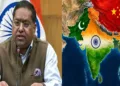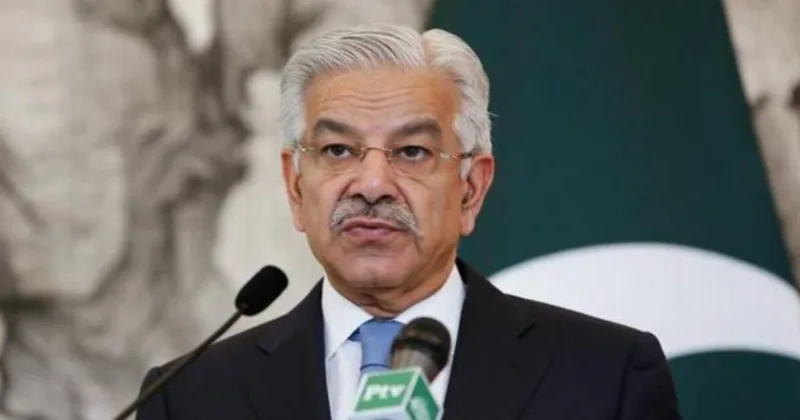
Pakistan Defence Minister Khwaja Asif’s comments calling people of Rawalakot and Mirpur as non-Kashmiris has drawn strong reactions from the Pakistan Occupied Jammu Kashmir (POJK) diaspora living abroad in Europe. It has miffed the large Mirpuri community living in the UK which has been vociferous supporters of Pakistan globally through the past several decades.
In the Pakistan National Assembly, the manner in which Asif called those people as non-Kashmiris for speaking Potohari and Pahari, not Kashmiri, drew sharp responses. Asif argued in an interview on a private TV channel that these non-Kashmiri people were creating problems by siding with the Joint Awami Action Committee (JAAC). Asif’s host on the channel said he agreed with the minister’s assessment that these people were indeed non-Kashmiris.
Incidentally, it needs to be stressed here that Mirpuris, no less than 1,50,000 of them, were rendered homeless after the Indus Waters Treaty (IWT) was signed in September 1960. The houses, mosques, schools and streets, where their forefathers lived, were all submerged in the Mangla dam as Jhelum started rising. Slowly in the beginning but rapidly after some years submerging everything that came in its catchment.
The Mirpuris, people of Rawalakot and places nearby did the heavy lift duties at all international forums in support of Pakistan. To be disowned in this manner by a politician of the stature of the Defence Minister of Pakistan has shocked them, according to reports in several Pakistani newspapers.
Bilawal Bhutto Zardari Wants Asif Out of Cabinet
Khwaja Asif’s comments provided a rare opportunity, on a platter, to Pakistan Peoples Party (PPP) boss Bilawal Bhutto Zardari to demand his resignation. Bhutto also sought to drive a wedge between Asif and Pakistan Prime Minister Shebaz Sharif using these comments as a fulcrum. Criticising Asif’s over remarks about Mirpuris and people of Rawalakot, Bilawal questioned how and why he remained in the cabinet. He accused Asif of creating political problems for PM Sharif, according to a report of The Express Tribune.
Bilawal’s remarks are widely seen as an attempt at consolidation of his party PPP’s hold over POJK politics. In the 53-member Legislative Assembly, the present Prime Minister Mumtaz Rathore is affiliated to PPP. However, the PPP does not have deep roots among constituents of 12 refugee seats (six reserved for Kashmiris and six for people from the Jammu region). In the past, Pakistan Muslim League (Nawaz) of Sharif has managed to corner most of these seats and this trend may continue in the near future too.
This is the basic reason why PPP is not inclined towards keeping these seats and maintains ambivalent stand towards JAAC also. It wants to put the onus of the crackdown in POJK against JAAC leaders on Khwaja Asif and others in the Sharif ministry.
JAAC Leaders Were Not Kashmiris
In an interview, Asif said Rawalakot, which has seen protests led by the Joint Awami Action Committee (JAAC), was “not Kashmir” and that he did not regard its residents as Kashmiris.
He later sought to clarify the remarks on X, saying that “Kashmiriat is defined by the sacrifices and struggles waged over almost eight decades” by Pakistanis, Kashmiris and others, “not by birth certificates”.
“There are certain ministers whose politics I do not understand. Instead of helping the PM, they create problems for him,” Bilawal said while addressing the National Assembly (NA) during debate on the federal budget on Wednesday. The PPP chairman went on to say that every coalition partner, every member of the opposition and every citizen of Pakistan should ask “why such a minister is still in the cabinet,” he said, adding: “How is it possible for us to accept that a federal minister can say that the Kashmiris of Rawalakot are not Kashmiris?”
For the last couple of years, the local administration and the JAAC have been at loggerheads over the abolishment of 12 reserved seats in the POJK assembly allocated for the refugees hailing from Jammu & Kashmir who settled in Pakistan after 1947.
Minister Has Worsened Volatile Situation
Bilawal said criticism of statements made at rallies or protests was legitimate, but argued that the comments of a serving Federal Minister carried a different weight. “If he is not prepared to apologise, then what justification do we have for sitting alongside that minister?” he asked.
While expressing respect for PM Shehbaz, Prime Minister’s Adviser on Political Affairs Rana Sanaullah and former PM Nawaz Sharif’s association with the Kashmir cause, Bilawal said a minister’s remarks had worsened an already sensitive situation. “Instead of extinguishing the fire, it was like pouring oil on it,” he said.
“If a minister says that we bring 12 seats in our pocket, then how can we object when people react to such statements?” Bilawal said. Calling for a political solution to the dispute, Bilawal suggested: “As your coalition partner, is that we should give Maulana Fazlur Rehman the space to engage with the Federal government and the protesters so that this process reaches a conclusion and the people of Kashmir do not have to protest again and again.”
Bilawal defended the PPP government’s record on local government, arguing that Sindh was currently the only province where a functioning local government system was in place. “Where the PPP is in government, there is a local government system. Where the PML-N is in government, they are afraid even to hold a union council election,” he said.
He challenged political opponents to implement in Lahore the same local government model that existed in Karachi and called for local government elections to be held in Punjab and Islamabad before any constitutional amendments were considered. This was an indirect potshot aimed at Punjab Chief Minister Maryam Nawaz, daughter of Nawaz Sharif, elder brother of PM Shehbaz Sharif.
The PPP chairman also pledged that local government elections would be held in Gilgit-Baltistan within 90 days if a new government was formed there with PPP participation.
Fazlur Rehman Welcomes JAAC Decision
Later, the Jamiat Ulema-e-Islam-F chief Fazlur Rehman also addressed the House and criticised the government’s handling of the situation. He also questioned remarks made by Asif and warned against what he described as the political involvement of state institutions. Fazl said he had responded to a letter from the JAAC through a video message and had also informed the government of his position. “I welcome the decision of the Awami Action Committee to postpone tomorrow’s march towards Muzaffarabad,” he said, referring to planned protests in POJK.
“You have entrusted the conflict to Khawaja Asif and the reconciliation to Ishaq Dar,” he said. The JUI-F chief also criticised the use of security forces in internal matters, saying, “Pakistan’s army should be on the borders; instead, it is being used within the country.”
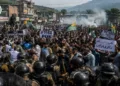
The recent unrest broke out in Rawalakot on June 5 where the JAAC had been holding a sit-in outside the Combined Military Hospital (CMH). The clashes started as the government and the JAAC witnessed a face-off, as the election date for AJK was announced for July 27.