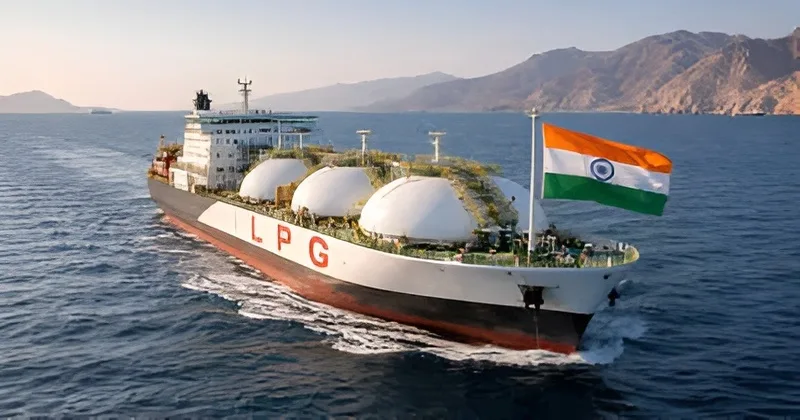
India’s swift diversification of liquefied petroleum gas (LPG) imports during the West Asia conflict helped the country maintain supplies despite severe disruptions in its traditional sourcing network, demonstrating the resilience of its energy security strategy amid geopolitical uncertainty.
Before the conflict, nearly 90 per cent of India’s LPG imports originated from West Asian suppliers, making the country highly vulnerable to any disruption in the region. As tensions escalated, India moved quickly to broaden its sourcing base, increasing imports from the United States, Iran and several other countries while strengthening domestic production to cushion the impact on consumers and industry.
A report by Crisil noted that by April 2026, the United States accounted for almost one-third of India’s LPG imports, an increase from just 8 per cent in February. This shift was supported by a 2.2 million tonne-per-year LPG supply agreement signed with the US in late 2025, equivalent to around 10 per cent of India’s annual LPG import requirement.
Iran also re-emerged as a supplier, contributing about 6 per cent of India’s LPG imports in April. Additional cargoes were sourced from countries including Argentina, Chile, France and the Netherlands, helping ensure continuity of supplies despite the conflict-related disruptions in West Asia.
Building a wider import network
The diversification strategy enabled India to avoid major supply shortages, although it resulted in longer transportation routes and higher freight costs. Nevertheless, the broader sourcing network significantly reduced the risks associated with excessive dependence on a single region. The conflict, however, affected demand patterns. LPG consumption declined to 2.47 million tonnes in April from 3.2 million tonnes in February as tighter availability and rising international prices influenced consumption behaviour.
After recording a 6 per cent increase to a record 33.2 million tonnes during fiscal 2026, India’s LPG consumption fell sharply in the following months. Demand declined 13 per cent year-on-year in both March and April and dropped by 20 per cent in May. Commercial and industrial consumers experienced the steepest decline, as market-linked users responded quickly to rising prices and supply constraints.
Household demand proved comparatively more resilient despite the challenging market conditions. The crisis also pushed global LPG prices significantly higher. According to the report, the Saudi Aramco Contract Price, the benchmark used for Indian LPG imports, increased by 46 per cent between February and June as markets factored in supply risks and elevated freight charges.
Shielding households from price shocks
Despite the sharp rise in global prices, much of the burden was absorbed by state-owned oil marketing companies in an effort to protect household consumers. Between February and June, the price of a 14.2-kg domestic LPG cylinder in Delhi increased by only about 10 per cent.
In contrast, the price of a 19-kg commercial cylinder surged by more than 79 per cent during the same period, reflecting the stronger pass-through of international costs to commercial users. The limited increase in household cooking gas prices led to a sharp rise in under-recoveries for fuel retailers. Under-recoveries on domestic LPG cylinders in Delhi climbed to ₹651 per cylinder in May, while cumulative losses borne by oil marketing companies during March-May were estimated at nearly ₹22,000 crore.
With tensions in West Asia easing and key trade routes potentially reopening, immediate supply concerns are expected to moderate. However, the episode highlighted India’s continuing dependence on imported LPG and the risks of concentrated sourcing. While diversification and higher domestic production helped the country navigate the crisis, maintaining a broad import portfolio remains essential to guard against future geopolitical disruptions, freight volatility and fluctuations in global energy prices.