New Delhi: The National Investigation Agency (NIA) on Thursday filed a massive 7,500-page chargesheet against 10 accused in the 2025 Red Fort area car bomb explosion case that killed 11 people and injured several others in the national capital.
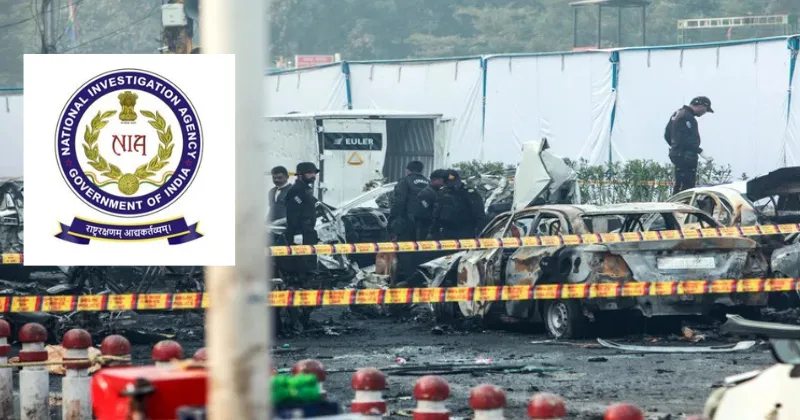
The high-intensity Vehicle-Borne Improvised Explosive Device (VBIED) blast near the Red Fort on November 10, 2025 had also caused extensive property damage, triggering one of the biggest anti-terror investigations in recent years.
According to the NIA, all 10 accused, including the main perpetrator Dr Umer Un Nabi (now deceased), were linked to Ansar Ghazwat-ul-Hind (AGuH), an offshoot of Al-Qaeda in the Indian Subcontinent (AQIS). The chargesheet was filed before the NIA Special Court at Patiala House Courts in New Delhi.
The agency said the accused have been booked under various sections of the UAPA,BNS, Explosive Substances Act, Arms Act, and Prevention of Damage to Public Property Act.
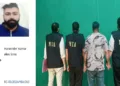
Apart from Dr Umer Un Nabi, a former Assistant Professor of Medicine at Al-Falah University in Faridabad, the accused named in the chargesheet are Aamir Rashid Mir, Jasir Bilal Wani, Dr Muzamil Shakeel, Dr Adeel Ahmed Rather, Dr Shaheen Saeed, Mufti Irfan Ahmad Wagay, Soyab, Dr Bilal Naseer Malla and Yasir Ahmad Dar.
The NIA said its investigation uncovered a “major Jehadi conspiracy” involving radicalised medical professionals inspired by AQIS and AGuH ideology.
The probe revealed that the accused had regrouped in Srinagar in 2022 under a new banner called “AGuH Interim” after a failed attempt to reach Afghanistan via Turkey.
Investigators alleged that the terror module had launched “Operation Heavenly Hind” with the objective of overthrowing the democratically elected Indian government and imposing Sharia rule in the country.
According to the chargesheet, the accused recruited members, propagated the violent Jehadi ideology of AGuH, stockpiled arms and ammunition, and manufactured explosives using commercially available chemicals.
The agency said the explosive used in the Red Fort blast was Triacetone Triperoxide (TATP), prepared through clandestine procurement of ingredients and repeated experiments.
The investigation, spread across Jammu & Kashmir, Haryana, Uttar Pradesh, Maharashtra, Gujarat and Delhi-NCR, includes 588 oral testimonies, over 395 documents and more than 200 material exhibits.
The NIA also stated that the accused had allegedly procured prohibited weapons, including AK-47 rifles, Krinkov rifles and country-made pistols with live ammunition. They were also experimenting with rocket-mounted and drone-mounted IEDs to target security establishments in Jammu & Kashmir and other parts of India.
The probe further revealed that the terror module had sourced specialised laboratory equipment, including MMO anodes, electric circuits and switches, through online and offline channels for manufacturing explosives and improvised devices.
The agency said the identity of deceased accused Dr Umer Un Nabi was established through DNA fingerprinting. Forensic analysis, voice examination and evidence recovered from multiple locations, including Al-Falah University premises and sites in Jammu & Kashmir, formed a crucial part of the investigation.
The NIA said the accused were also planning to expand operations to other parts of the country before the module was busted.
So far, 11 persons have been arrested in the case, while efforts are continuing to trace absconders whose involvement surfaced during the investigation.