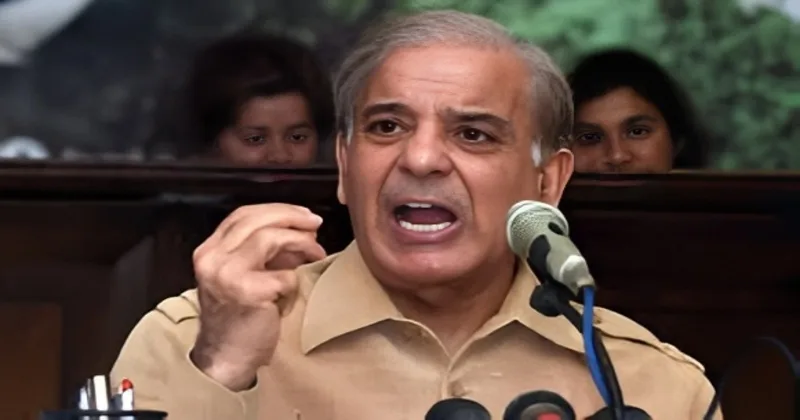
Islamabad: Prime Minister Shehbaz Sharif on April 29, Wednesday acknowledged that the ongoing US-Iran war has significantly undermined Pakistan’s economic progress over the past two years, even as he reiterated Islamabad’s intent to act as a mediator to ease tensions in West Asia, despite grappling with its own escalating energy and economic crisis.
Highlighting the sharp rise in global fuel prices since the conflict began in February, Shehbaz underlined the strain on Pakistan’s economy. “Our weekly pre-war oil bill was around USD 300 million, and today it has surged to USD 800 million,” he said during a Cabinet meeting, as reported by Pakistani media house Geo TV. The remark reflected a deeper contradiction that while Pakistan seeks to facilitate dialogue between major powers, it is itself struggling to stabilise its oil import burden.
He informed the Cabinet that a dedicated task force is closely monitoring developments on a daily basis, stressing that collective national efforts are essential to confront the mounting challenges. Even as Islamabad positions itself as a bridge between adversaries, the economic fallout of the war, especially in energy imports,has exposed vulnerabilities at home.
Mediator under pressure amid energy shock
Briefing the Cabinet on diplomatic developments, Prime Minister Shehbaz Sharif said Pakistan has made sincere efforts to promote regional stability and reduce tensions between Iran and the United States. He noted that talks between the two sides commenced in Islamabad on April 11 and continued for 21 hours, with a ceasefire currently holding. The Prime Minister revealed that Iran’s Foreign Minister Abbas Araghchi visited Pakistan with his delegation for the second phase of negotiations. “Important meetings were held with them,” he said, referring to Araghchi’s rapid diplomatic engagements across Islamabad, Muscat, and Moscow over the weekend. Shehbaz added that he had spoken to Araghchi before the latter’s visit to Russia. During the call, the Iranian minister assured him that discussions in Oman were conducted with sincerity and that, after consultations with his leadership, a positive response would follow soon. Expressing optimism, the Prime Minister said he hopes the conflict will come to an end in the near future.
However, Sharif’s claims of effective mediation face growing scepticism from key stakeholders. Iranian lawmakers and officials have openly questioned Pakistan’s neutrality in facilitating talks with Washington. Ebrahim Rezaei, who represents Dashtestan and serves as spokesperson for Iran’s National Security and Foreign Policy Commission, asserted that Pakistan “is not a suitable intermediary,” alleging bias towards American interests, particularly those of Donald Trump. “Pakistan is a good friend and neighbour of ours, but it is not a suitable intermediary for negotiations and lacks the necessary credibility for mediation. They always take Trump’s interests into account and do not say a word against the Americans’ wishes,” Rezaei said in a post on X.
Adding to the credibility concerns, Israel has also voiced deep distrust of Pakistan’s role. In April 2026, Israel’s Ambassador to India Reuven Azar stated, “We don’t trust Pakistan as it sponsors terrorism.” The remarks came after Pakistan’s Defence Minister described Israel as “cancerous” and “evil,” prompting strong criticism from Tel Aviv, which labelled the comments antisemitic and questioned Islamabad’s neutrality in any mediation effort between Washington and Tehran.
Energy crisis undermines mediation credibility
Pakistan is now planning to host a second round of talks between Washington and Tehran. Over the weekend, Abbas Araghchi made two brief visits to Pakistan within 48 hours, holding meetings with senior leadership, including Chief of Defence Forces and Chief of the Army Staff Field Marshal Asim Munir, as well as Prime Minister Shehbaz Sharif, to discuss the evolving regional situation. Shehbaz also praised Field Marshal Munir and Deputy Prime Minister and Foreign Minister Ishaq Dar for making their “best efforts to restore peace in the region.” Yet, the contrast is difficult to ignore that while projecting itself as a diplomatic bridge, Pakistan is simultaneously struggling to manage a spiralling oil import bill at home, raising doubts about how far such ambitions can realistically go.
Meanwhile, Donald Trump on Sunday reiterated that officials from the United States and Iran could continue engaging through phone discussions to seek a resolution. Last week, Trump extended a two-week ceasefire with Iran indefinitely, giving Tehran more time to prepare a unified proposal to end the conflict. The war began on February 28 when the United States and Israel jointly launched strikes on Iran, resulting in the killing of Iranian Supreme Leader Ayatollah Ali Khamenei and several top commanders. Iran’s retaliation subsequently expanded the conflict across the Gulf region. As Pakistan presses ahead with its mediation pitch, the irony is increasingly stark. A country unable to stabilise its own energy costs and struggling with a sharply escalating import bill now seeks to position itself as a peacemaker in one of the world’s most volatile conflicts.