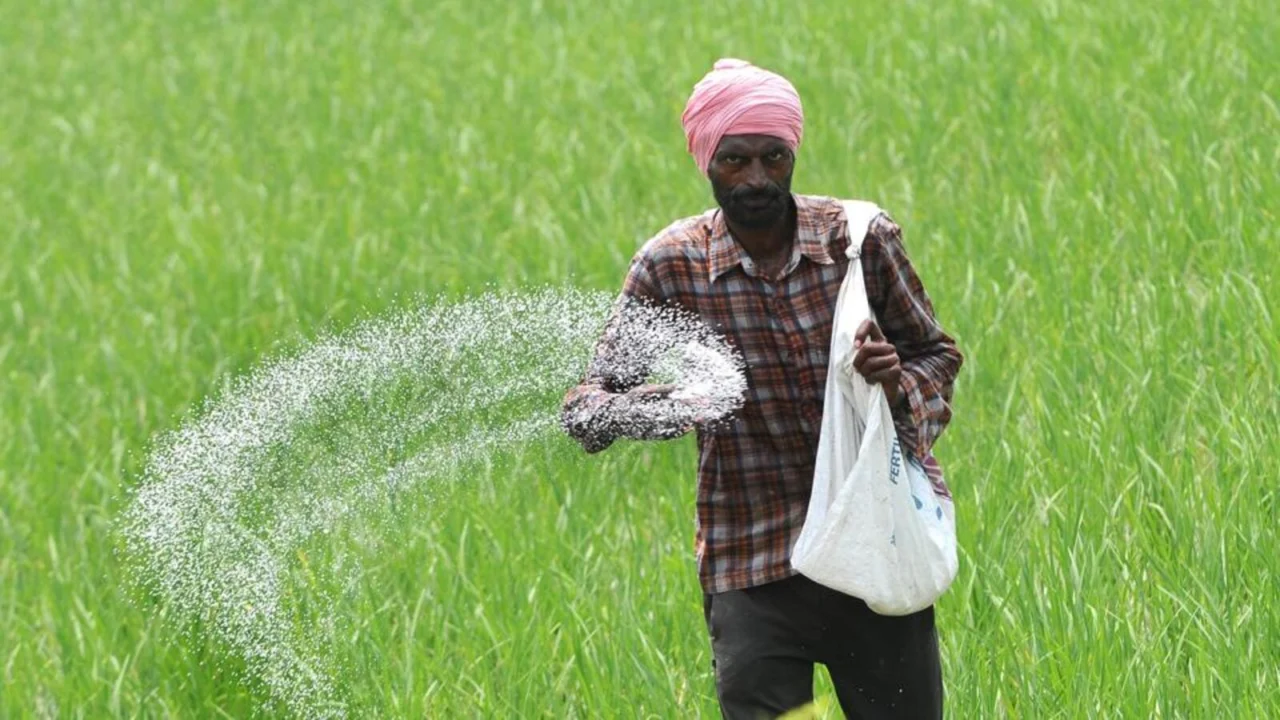
The escalating conflict involving Iran has severely disrupted global fertiliser supply chains, exposing vulnerabilities in countries dependent on imports, including India.
At the centre of this disruption lies the Strait of Hormuz, one of the world’s most critical energy and commodity transit routes. Nearly 20 to 30 per cent of global fertiliser exports, including urea, ammonia, and sulphur, pass through this narrow waterway.
With maritime traffic restricted and geopolitical tensions escalating, shipments from key Middle Eastern exporters have either slowed down or been suspended. At the same time, disruptions in natural gas flows, an essential input for fertiliser production, have compounded the crisis.
Prices surge as supply tightens
The immediate impact of these disruptions has been a sharp spike in global fertiliser prices.
Key urea benchmarks surged from around $484 per metric tonne in late February to nearly $597 per tonne in early March. In some markets, prices have even crossed $600 per tonne, reflecting tightening supply and heightened risk premiums.
This surge has not occurred in isolation. The broader energy market has also been affected, with crude oil prices crossing $110 per barrel, raising transportation and production costs across sectors.
For fertiliser production, which is highly energy-intensive, rising fuel costs further amplify price pressures, creating a cascading effect on agricultural inputs worldwide.
India’s fertiliser sector is especially exposed due to its heavy reliance on imports.
The country consumes approximately 35-36 million tonnes of urea annually, while domestic production stands at around 28-29 million tonnes. The gap is bridged through imports, much of which traditionally comes from the Gulf region.
In fact, nearly half of India’s imports of urea and phosphatic fertilisers such as DAP have historically been sourced from Middle Eastern countries like Saudi Arabia and Oman. With these regions facing logistical and production disruptions, India’s supply lines have come under strain.
Additionally, India depends on liquefied natural gas (LNG) imports, particularly from countries like Qatar to fuel its fertiliser plants. Any disruption in LNG supply directly impacts domestic production capacity.
Rising costs and production stress
The global fertiliser shock is now translating into tangible domestic challenges.
Higher import costs are increasing the financial burden on fertiliser companies, while constrained LNG availability is forcing some domestic plants to operate below optimal capacity. This dual pressure, rising costs and limited production is tightening overall supply.
Reports warn that while India currently has better stock levels compared to last year, a prolonged conflict could lead to shortages, especially ahead of the critical kharif sowing season.
Why fertilisers are critical to India’s food security
Fertilisers are not just another industrial commodity in India they are central to the country’s agricultural backbone.
Nearly half of India’s workforce is dependent on agriculture and allied sectors. Crops such as rice and wheat, which form the foundation of India’s food security system, rely heavily on balanced fertiliser use.
Since the Green Revolution, fertilisers like urea, DAP, and potash have played a crucial role in boosting crop yields and maintaining soil fertility. Any disruption in their availability or affordability can directly impact farm output, rural incomes, and food prices.
Recognising this, the government provides substantial subsidies to keep fertilisers affordable for farmers. However, rising global prices threaten to inflate subsidy bills, posing fiscal challenges.
Government Response: Managing the crisis in real time
Faced with a rapidly evolving crisis, the Indian government has moved swiftly to stabilise the situation.
One of the key steps has been securing short-term stockpiles. India has already received around 1 million tonnes of urea at its ports through pre-war tenders, ensuring adequate supply at least until May 2026.
However, officials acknowledge that this is only a temporary buffer. With demand expected to rise sharply during the monsoon planting season, additional imports will be necessary.
To address this, the government has floated new tenders and accelerated procurement processes to ensure timely arrivals of fresh cargoes.
Looking beyond the Gulf
A major takeaway from the crisis has been the urgent need to diversify supply sources.
India is actively engaging with countries such as Russia, Belarus, and Morocco to secure fertilisers including urea, DAP, and potash.
Indonesia is also being explored as a potential supplier, reflecting a broader strategy to reduce dependence on volatile Middle Eastern routes.
This diversification is not just about managing the current crisis, it represents a long-term shift in India’s fertiliser procurement strategy.
Ensuring domestic production
On the domestic front, the government is prioritising the allocation of LNG to fertiliser plants.
Despite disruptions in global gas supplies, authorities have ensured that fertiliser manufacturers receive around 70 per cent of their usual gas allocation. This has helped keep plants operational and prevented a deeper production crisis.
Such measures highlight the government’s focus on maintaining a balance between imports and domestic output to ensure supply stability.
While India’s response has been proactive, several challenges remain.
Logistical bottlenecks, longer shipping routes from alternative suppliers, and higher freight costs could complicate procurement efforts. Additionally, global competition for limited supplies may push prices even higher.
Timing is another critical factor. Any delay in securing imports ahead of the peak agricultural season could disrupt sowing cycles and affect crop yields.
New players step in for India
Amid the crisis, new suppliers are beginning to play a stabilising role.
Countries like Argentina, which have recently increased LPG supplies to India, are also being seen as potential partners in broader energy and fertiliser linkages. Argentina’s strong natural gas base and expanding export capacity could open new avenues for cooperation.
While it may not replace traditional suppliers entirely, such partnerships provide India with critical flexibility in times of crisis.
The fertiliser shock shows a fundamental lesson for India: the importance of resilience in supply chains.
Overdependence on a single region, no matter how reliable it may seem, carries inherent risks. Diversification, strategic reserves, and domestic capacity building are essential to mitigate such vulnerabilities.
The crisis also highlights the interconnected nature of global markets, where disruptions in one region can have far-reaching consequences.
Crisis today, opportunity tomorrow
The ongoing fertiliser crisis, triggered by the West Asia conflict, has posed a serious challenge for India’s agricultural and economic stability. However, it has also acted as a catalyst for change.
From securing emergency supplies to exploring new partnerships and strengthening domestic production, India is actively recalibrating its strategy.
As global uncertainties persist, the focus is shifting from mere availability to strategic security. And while challenges remain, India’s proactive approach offers a measure of hope that it can navigate the crisis without major disruptions to its farming sector.
In the long run, the current shock may well pave the way for a more resilient, diversified, and future-ready fertiliser ecosystem in the country.