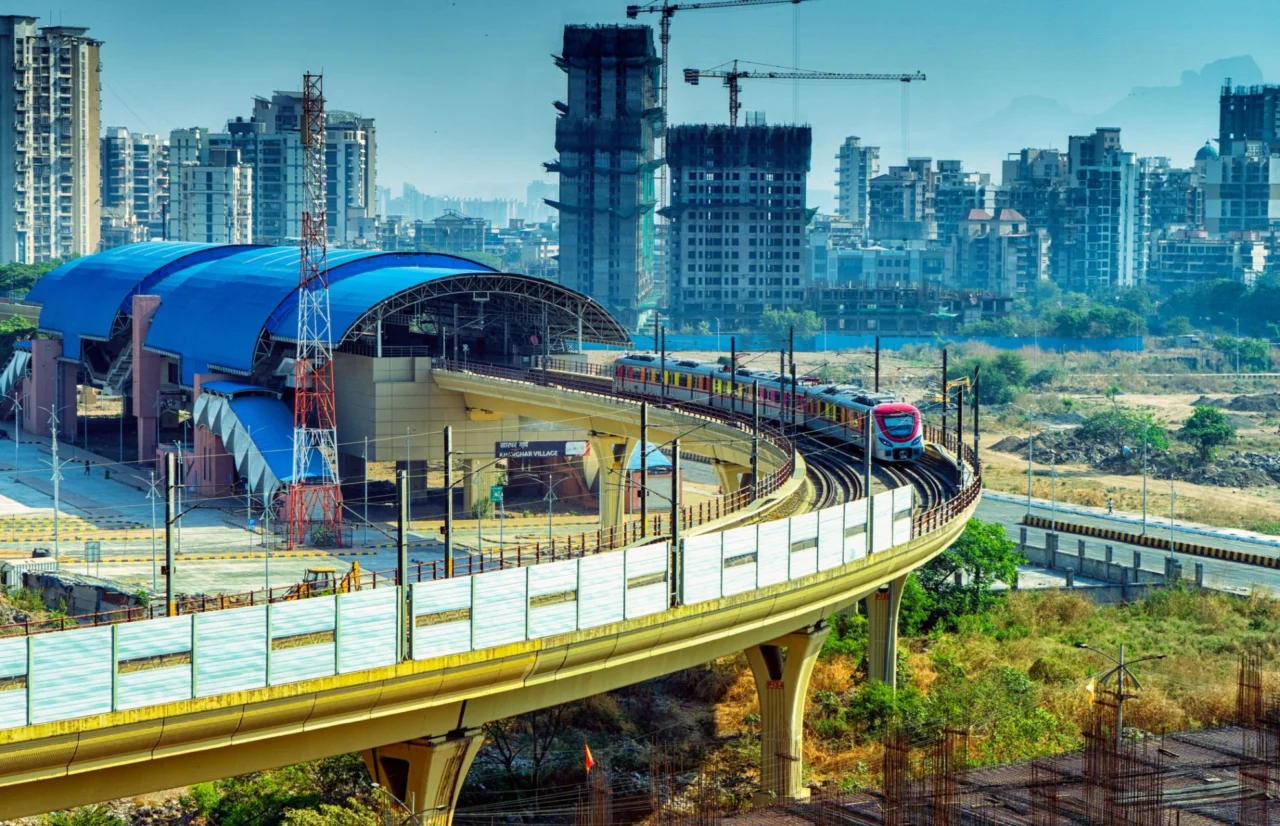
Over the last ten years, India has witnessed one of the fastest expansions of metro rail systems in the world. What was once limited to a few cities has now grown into a nationwide urban transport network connecting multiple metropolitan centres.
According to official government data, India’s operational metro rail network has expanded dramatically from 248 kilometres in 2014 to nearly 1,095 kilometres by 2025. During the same period, the number of cities with metro connectivity has increased from just five cities to 26 cities.
This transformation has fundamentally changed how people move within urban areas. For millions of daily commuters, the metro has become a preferred option because it offers predictable travel times, lower costs, and reduced dependence on congested roads.
The expansion reflects a broader push by the government to modernise infrastructure and build efficient public transport systems in rapidly growing cities.
Today, India has emerged as the world’s third-largest operational metro network, a milestone that highlights the country’s growing investment in urban mobility and infrastructure development.
Major cities now connected by metro rail
Metro services are now operating across several major cities, creating integrated public transport networks that support daily commuting.
Key cities with operational metro systems include: Delhi, Mumbai, Bengaluru, Hyderabad, Kolkata, Chennai, Lucknow, Pune and Ahmedabad.
In total, around 1,095 kilometres of metro rail lines are currently operational across the country.
This figure also includes approximately 55 kilometres of the Delhi–Meerut Regional Rapid Transit System corridor, which represents a new generation of high-speed urban transit.
Metro systems in these cities have become an essential part of daily life. Workers, students, and business travellers increasingly rely on these trains to reach offices, schools, and commercial centres on time.
The impact is especially visible in megacities where road congestion has historically caused long delays and unpredictable travel times.
Large investments driving the metro boom
India’s metro expansion is supported by significant financial investments and long-term planning.
Since 2014, the government has sanctioned 38 metro rail projects covering about 1,051 kilometres, with a total estimated investment of Rs 3.44 lakh crore.
These projects include both newly constructed metro networks and the expansion of existing systems in large cities.
The scale of investment highlights the government’s focus on improving urban transport infrastructure to support economic growth and rising urban populations.
Metro rail projects are often complex and require years of planning, construction, and coordination between central and state governments. They involve large civil engineering works such as tunnels, elevated corridors, and advanced signalling systems.
Despite these challenges, the pace of metro construction has increased significantly over the last decade.
Technological innovations in India’s metro systems
India’s metro journey has not been limited to expansion alone. The country has also introduced several technological innovations aimed at improving passenger experience and transport efficiency.
One major development was the launch of the Namo Bharat Train in 2023.
This semi high-speed train operates on the Delhi-Meerut corridor and can reach speeds of up to 160 kilometres per hour. It represents a new generation of regional rapid transit designed to connect cities with their surrounding regions.
Another landmark achievement came in 2024 when India opened its first underwater metro tunnel beneath the Hooghly River in Kolkata.
The tunnel connects Esplanade with Howrah Maidan, creating a fast underground link between two major parts of the city. This project is considered a significant engineering achievement and demonstrates India’s growing expertise in advanced metro construction.
In Kochi, a different type of innovation emerged with the launch of the Kochi Water Metro in 2023.
This system uses electric-hybrid boats to connect island communities across the city’s backwaters. It provides an environmentally friendly alternative to traditional water transport while integrating with the city’s metro network.
Modern metro systems across India are increasingly adopting advanced technologies that make travel safer and more convenient.
Some of the key innovations include:
Driverless Metro Trains: Certain lines of the Delhi Metro Rail Corporation now operate driverless trains. These systems use advanced signalling and automation to ensure safe and efficient operations.
QR-Code Ticketing: Passengers can now buy digital tickets through QR codes using smartphones. This reduces queues at ticket counters and speeds up entry at stations.
National Common Mobility Card: The National Common Mobility Card allows passengers to use a single card across different transport systems, including metro trains, buses, and parking services.
Platform Screen Doors: Many metro stations now have automatic platform screen doors that open only when trains arrive. These doors improve passenger safety and reduce accidents.
Energy-Saving Systems: Metro trains use regenerative braking technology, which converts braking energy into electricity. This energy is then reused, reducing overall power consumption.
Solar-Powered Stations: Several metro stations are equipped with solar panels to generate renewable energy. This helps reduce carbon emissions and promotes greener urban transport.
Metro growth linked to India’s infrastructure push
The expansion of metro systems is part of a broader national strategy focused on infrastructure development.
In the Union Budget 2024-25, the government allocated Rs 11.21 lakh crore for capital expenditure, which is about 3.1 percent of India’s GDP.
A significant portion of this investment supports transportation infrastructure, including metro rail projects.
The annual metro rail budget has increased substantially over the years. It has grown from Rs 5,798 crore in 2013-14 to Rs 29,550 crore in 2025-26.
Metro projects are also integrated into the PM GatiShakti National Master Plan, a large infrastructure coordination platform designed to connect roads, railways, ports and logistics networks across India.
Additionally, metro projects are prioritised under the National Infrastructure Pipeline, which aims to accelerate infrastructure development and improve connectivity across the country.
These initiatives help ensure that metro networks are developed alongside other transport systems, creating integrated mobility solutions.
Metro connectivity and household financial stability
While metro systems are widely known for improving urban mobility, new research suggests they also have a deeper economic impact on households.
A study conducted by the Economic Advisory Council to the Prime Minister highlights how metro connectivity can improve financial stability for families living near metro stations.
The report, titled “Golden Decade of Infrastructure Development in India with Special Reference to Metro Rail Network,” examines how access to metro transport affects household spending patterns and financial behaviour.
According to the study, families living close to metro networks spend less money on daily transportation, as they rely less on private vehicles, taxis, or fuel-based transport.
Lower commuting expenses mean that households have more disposable income, which can be used for savings, investments, or loan repayments.
This shift has been linked to better financial discipline and improved loan repayment behaviour.
Improvement in loan repayment behaviour
The study also analysed financial data from several major cities and found noticeable changes in loan repayment patterns after metro networks expanded.
In Hyderabad:
Missed home loan payments declined by 1.7 percent
Early repayments increased by 1.8 percent
In Bengaluru:
Delays in loan repayments fell by 2.4 percent
Early repayments increased by 3.5 percent
In Delhi:
Missed payments declined by 4.42 percent
Early mortgage repayments increased by 1.38 percent
These improvements suggest that easier and cheaper commuting allows households to allocate money more efficiently toward financial obligations.
Decline in private vehicle dependence
Metro expansion has also influenced transportation choices in cities.
According to the study, areas with strong metro connectivity have seen lower registrations of two-wheelers and entry-level cars.
Many commuters now prefer metro travel because it is faster, more predictable and often cheaper than driving through traffic.
Reduced reliance on private vehicles has several long-term benefits:
Lower fuel consumption
Reduced traffic congestion
Lower air pollution
Reduced household transport expenses
These changes contribute to a healthier urban environment and more sustainable transport systems.
Beyond household finances, metro systems contribute to broader economic growth.
Efficient public transport improves productivity because workers spend less time stuck in traffic and more time at workplaces.
Businesses also benefit from improved connectivity between commercial areas, residential neighbourhoods, and industrial zones.
Metro systems also play a crucial role in reducing carbon emissions. Electric metro trains produce far fewer emissions compared to petrol or diesel vehicles.
By shifting commuters from private vehicles to public transport, metro networks help cities move toward cleaner and more sustainable mobility.
A new era of urban mobility
India’s metro expansion represents a major shift in the way cities are planned and managed.
Urban planners increasingly view metro rail as the backbone of modern transport systems, around which buses, feeder services, cycling routes and pedestrian infrastructure can be developed.
The integration of metro rail with other transport systems is expected to improve accessibility and reduce travel times further.
With several new metro projects currently under construction and many more in planning stages, India’s metro network is expected to continue growing rapidly in the coming years.
India’s metro expansion over the past decade reflects a broader transformation in urban infrastructure.
The growth from 248 kilometres of metro rail in 2014 to more than 1,095 kilometres today shows the scale of investment and planning aimed at improving city transport.
Metro systems are not only reducing congestion and travel time but are also contributing to economic efficiency, environmental sustainability and household financial stability.
As new lines and technologies continue to be introduced, metro networks are likely to play an even greater role in shaping India’s urban future.
For millions of commuters, the metro is no longer just a transport option, it has become a vital part of daily life and a symbol of India’s rapidly modernising cities.