Housing has long been considered a key pillar of social and economic development in Bharat. For millions of families, owning a home represents stability, security and a lifetime achievement. As cities expand and urban aspirations grow, the demand for housing continues to increase across the country. The housing sector also plays a major role in the broader economy because it generates employment and stimulates activity in related sectors such as construction, infrastructure, steel, cement and financial services.
Over the past decade, the Government of India has placed strong policy emphasis on improving housing access for different income groups. A number of housing projects have been launched in urban and semi urban areas to address the growing demand for homes, especially in the affordable and middle-income segments. However, several housing projects faced delays or remained incomplete due to financial stress, rising costs and other operational challenges.
An Expert Committee on the Rehabilitation of Legacy Stalled Real Estate Projects, set up by the Ministry of Housing and Urban Affairs in 2023, noted that many stalled projects suffer from gaps in financial viability. Cost overruns and delays often make it difficult for developers to complete projects, leaving thousands of homebuyers waiting for possession of their homes. The committee highlighted the importance of priority financing mechanisms to ensure that stalled projects can be completed.
It was in response to this challenge that the Government of India introduced a targeted policy intervention known as the Special Window for Affordable and Mid-Income Housing Investment Fund, commonly referred to as SWAMIH.
SWAMIH Fund: A targeted intervention
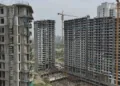
The SWAMIH Fund was launched in 2019 with the objective of providing last-mile financing to stalled residential housing projects in the affordable and mid-income segments. The initiative focuses on completing housing projects that are delayed due to financial constraints but remain viable.
Rather than funding new housing projects, SWAMIH is designed to ensure that projects already under construction are completed and delivered to homebuyers. This approach helps protect the interests of existing buyers while also restoring confidence in the real estate sector.
By supporting the completion of stalled housing developments, SWAMIH aims to convert partially built structures into finished homes. The initiative also reflects a shift towards outcome-based policy support where the focus is on actual delivery and tangible results rather than just financial investments.
SWAMIH currently supports more than 146 residential projects across 20 cities and 12 states. Through these interventions, the fund is expected to facilitate the delivery of more than 1 lakh homes and provide relief to over 2.38 lakh people.
Recognising the impact of the initiative, the government announced in the Union Budget for 2025-26 that a second phase of the fund, known as SWAMIH Fund-2, will be established to accelerate the completion of stalled housing projects.
Housing policies supporting urban development
India’s housing sector operates within a broader policy framework designed to expand housing access and improve living conditions across the country. Several government schemes together form a comprehensive housing ecosystem.
1. Pradhan Mantri Awas Yojana – Urban (PMAY-U): The Pradhan Mantri Awas Yojana – Urban was launched in 2015 with the aim of providing pucca houses to eligible families, particularly those belonging to Economically Weaker Sections, Low Income Groups and Middle Income Groups. The scheme has been a central component of India’s housing strategy by helping millions of families access affordable housing in urban areas.
2. PMAY-U 2.0: Building on earlier progress, the government introduced PMAY-U 2.0 to expand housing support to an additional one crore families. The scheme involves an investment of Rs 10 lakh crore and will be implemented over a period of five years starting from 1 September 2024. The new phase expands the eligibility criteria and includes a wider range of beneficiary categories, including vulnerable and special groups.
3. Affordable Rental Housing Complexes: The Affordable Rental Housing Complexes initiative was introduced to provide rental housing options for migrant workers and urban labourers. The programme uses both existing government housing stock and new developments through partnerships with different stakeholders.
While these schemes focus on creating new housing supply and improving access, SWAMIH plays a different role by ensuring that housing projects already under construction are completed.
Addressing the challenge of stalled projects
Before the launch of SWAMIH, the scale of stalled housing projects in India had become a major concern. A study commissioned by SBI Ventures found that nearly 90 percent of stalled housing projects were concentrated in the affordable and mid-income segments.
The study identified approximately 1,509 stalled projects involving around 4.58 lakh housing units. Completing these projects required an estimated funding support of about Rs 55,000 crore.
Such delays affected not only homebuyers but also developers, banks and the broader construction industry. Many homebuyers had invested their life savings in projects that remained incomplete for years.
The SWAMIH Fund was therefore created to unlock liquidity in stressed housing projects and support their completion. The initiative also helps revive the residential real estate ecosystem and its allied sectors.
Early success and project deliveries
The impact of SWAMIH became visible in 2021 when the Rivali Park housing project in suburban Mumbai became the first project in the country to be completed with SWAMIH funding. Possession was handed over to homebuyers after the project received financial support from the fund.
This milestone demonstrated how the initiative could transform stalled construction sites into completed homes.
By March 2023, SWAMIH had facilitated the delivery of more than 22,500 homes. The number continued to grow steadily, and by December 2025 more than 58,000 homes had been completed under the programme.
The SWAMIH Fund operates as a government-backed investment platform specifically designed to support stalled housing projects. It pools capital from multiple investors and deploys these funds as priority debt financing to eligible projects.
The Government of India acts as the sponsor of the fund, while the Department of Economic Affairs in the Ministry of Finance oversees its strategic direction.
The fund is professionally managed by SBICAP Ventures Limited, a wholly owned subsidiary of the State Bank of India. The involvement of professional fund managers ensures financial discipline and effective monitoring of investments.
SWAMIH has been structured as a Category II Alternative Investment Fund under regulations of the Securities and Exchange Board of India. Category II funds typically include real estate funds, private equity funds and funds that invest in distressed assets.
The SWAMIH Fund is considered the first social impact investment platform in India that focuses on completing stalled residential housing projects.
Eligibility criteria for funding
Projects seeking financial support from the SWAMIH Fund must meet specific eligibility conditions.
Firstly, the housing project must be stalled mainly because of lack of adequate funds.
Secondly, the project must be registered with the Real Estate Regulatory Authority. This requirement ensures that the project complies with regulatory norms.
Thirdly, the project must fall within the affordable or middle-income housing segment. Eligible housing units must not exceed 200 square metres of RERA carpet area.
Price limits have also been defined depending on the location. Homes priced below Rs 2 crore in the Mumbai Metropolitan Region qualify for the scheme. In major metropolitan regions such as the National Capital Region, Chennai, Kolkata, Pune, Hyderabad, Bengaluru and Ahmedabad, the price limit is Rs 1.5 crore. In the rest of the country, the limit is Rs 1 crore.
Projects must also be financially viable. This means that the combined value of receivables and unsold inventory must be greater than the remaining completion cost and liabilities at the project level.
Priority is given to projects that are already in advanced stages of construction and close to completion.
In order to widen the scope of assistance, projects classified as Non Performing Assets and those undergoing proceedings before the National Company Law Tribunal are also eligible for consideration.
The SWAMIH Fund has demonstrated significant progress in reviving stalled housing developments.
As of 15 December 2025, more than 58,000 homes had been completed across 146 projects. Among these are over 7,000 housing units under rehabilitation and Economically Weaker Sections categories.
The fund has unlocked more than Rs 49,500 crore in capital across projects covering over 90 million square feet of development area. About 44 percent of these units belong to Low Income Group and Middle Income Group housing segments.
The revival of construction activities has also generated employment for more than 30,000 skilled and unskilled workers.
The economic impact extends to government revenues as well. The projects supported by SWAMIH have contributed more than Rs 6,900 crore in revenues to the Centre and states through GST collections, government dues and stamp duties.
The construction activity has also increased demand for building materials, including more than 20 lakh tonnes of cement and 5.5 lakh metric tonnes of steel.
Environmental initiatives have also been incorporated into the projects, resulting in the addition of more than 1.06 lakh trees at different project sites.
Financially, the fund has maintained strong performance. Nearly 50 percent of the capital drawn has already been returned to investors. Out of the approximately Rs 7,000 crore invested by the Government of India in SWAMIH projects, about Rs 3,500 crore has been recovered and returned to the government.
Examples of project revival
Several projects across the country have demonstrated the impact of SWAMIH funding.
1. SS Leaf, Gurgaon: The SS Leaf residential project in Gurgaon consists of 670 housing units. The project was launched in 2012 but experienced delays of nearly five years due to cash flow problems and the Non Banking Financial Company crisis.
SWAMIH invested in the project in September 2020, enabling rapid completion. The project received its occupancy certificate in June 2022.
Following the investment, the project was completed in about two years. Around 62 new units were sold, generating collections of approximately Rs 164 crore. Vendor payments were cleared and 670 homebuyers received possession of their homes.
2. Mantri Serenity, Bengaluru: Mantri Serenity is a large mid income residential project in Bengaluru with around 1,800 housing units. The project was launched in 2011 but faced delays of three to four years due to funding constraints and slower sales.
SWAMIH invested in the project in September 2020. Despite disruptions caused by the pandemic, the project progressed steadily.
Around 350 new units were sold, generating collections of about Rs 450 crore. Contractor dues were cleared and legal challenges were resolved during project management. Full repayment of Rs 230 crore was achieved by April 2024, and around 1,800 homebuyers were able to receive their homes.
3. Elite Acres, Chennai: Elite Acres is a residential development in Chennai consisting of 249 housing units. The project was launched in 2017 but faced delays due to approval issues and financial stress.
SWAMIH invested in the project in July 2020. The project was completed within about two years of the investment.
Around 193 new units were sold, generating collections of about Rs 59 crore. Contractor dues were cleared and the project completion certificate was obtained, allowing more than 250 homes to be delivered to buyers.
SWAMIH fund 2 announced
With thousands of homes already delivered and construction activity revived across multiple cities, the government has decided to expand the initiative.
In the Union Budget for 2025-26, the government announced the launch of SWAMIH Fund 2. The new fund will operate as a blended finance facility with contributions from the government, banks and private investors.
The proposed corpus of the fund is Rs 15,000 crore. The initiative aims to support the completion of an additional 1 lakh stalled housing units across the country.
The SWAMIH initiative has emerged as an important policy tool to address the problem of stalled housing projects in India. By providing last-mile financing and professional project management, the fund has helped convert incomplete construction sites into completed homes.
The programme has not only benefited homebuyers but has also revived construction activity, generated employment and supported related industries.
With the planned launch of SWAMIH Fund 2, the government aims to continue supporting affordable and mid income housing projects and strengthen confidence in India’s real estate sector.