From Ore to Chip: Jharkhand’s quiet power in semiconductor
June 14, 2026
  • Read Ecopy
  • Circulation
  • Advertise
  • Careers
  • About Us
  • Contact Us
Android AppiPhone AppArattai
Organiser
  • ‌
  • Bharat
    • Assam
    • Bihar
    • Chhattisgarh
    • Jharkhand
    • Maharashtra
    • View All States
  • World
    • Asia
    • Europe
    • North America
    • South America
    • Africa
    • Australia
  • Editorial
  • International
  • Opinion
  • RSS @ 100
  • More
    • Op Sindoor
    • Analysis
    • Sports
    • Defence
    • Politics
    • Business
    • Economy
    • Culture
    • Special Report
    • Sci & Tech
    • Entertainment
    • G20
    • Azadi Ka Amrit Mahotsav
    • Vocal4Local
    • Web Stories
    • Education
    • Employment
    • Books
    • Interviews
    • Travel
    • Law
    • Health
    • Obituary
  • Subscribe
    • Subscribe Print Edition
    • Subscribe Ecopy
    • Read Ecopy
  • ‌
  • Bharat
    • Assam
    • Bihar
    • Chhattisgarh
    • Jharkhand
    • Maharashtra
    • View All States
  • World
    • Asia
    • Europe
    • North America
    • South America
    • Africa
    • Australia
  • Editorial
  • International
  • Opinion
  • RSS @ 100
  • More
    • Op Sindoor
    • Analysis
    • Sports
    • Defence
    • Politics
    • Business
    • Economy
    • Culture
    • Special Report
    • Sci & Tech
    • Entertainment
    • G20
    • Azadi Ka Amrit Mahotsav
    • Vocal4Local
    • Web Stories
    • Education
    • Employment
    • Books
    • Interviews
    • Travel
    • Law
    • Health
    • Obituary
  • Subscribe
    • Subscribe Print Edition
    • Subscribe Ecopy
    • Read Ecopy
Organiser
  • Home
  • Bharat
  • World
  • Operation Sindoor
  • Editorial
  • Analysis
  • Opinion
  • Culture
  • Defence
  • International Edition
  • RSS @ 100
  • Magazine
  • Read Ecopy
Home Bharat

From Ore to Chip: Jharkhand’s quiet power in East India’s semiconductor corridor

India’s strategic deficit lies not in mineral availability, but in refining and purification depth. Today, high-value and strategic materials are routinely lost in slag and tailings, instead of being recovered, upgraded and absorbed into semiconductor and power-electronics supply chains. Jharkhand’s opportunity is to close this gap—to convert geological abundance into certified, usable semiconductor-grade inputs

Sushmita SinghSushmita Singh
Mar 15, 2026, 05:00 pm IST
in Bharat, Analysis, Opinion, Technology, Jharkhand
Follow on Google News
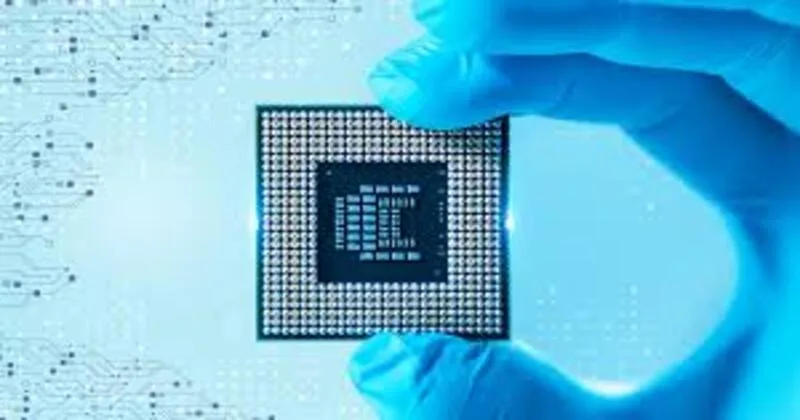
Representative Image

Representative Image

FacebookTwitterWhatsAppTelegramEmail

On my recent visit to Netarhat Vidyalaya in Jharkhand, I went in expecting to see mining scale. I came back seeing something far more strategic: a materials advantage that India cannot afford to ignore in a world of tightening geopolitics.

Netarhat is more than a hill town, it is a symbol of discipline and long-term thinking. Home to the legendary Netarhat Vidyalaya, often described as a modern gurukul, it shaped generations through rigor, patience and process rather than quick outcomes. Travelling across the same plateau, through Lohardaga, Latehar and Palamu, it became clear that the geology beneath mirrors this ethos: graphite, quartz and industrial minerals whose true value emerges only through refinement, purity and discipline.

Standing near operating belts and industrial zones, one realization became unavoidable: chips don’t fail first because a fab is missing, chips fail because materials don’t arrive.

Days later, in a detailed discussion with Dr. Kumud Ranjan, a GaN/SiC technologist and former DRDO scientist with years of experience in compound semiconductor innovation, I posed a question that now sits behind every serious semiconductor strategy.

Sushmita: “If geopolitical tensions worsen—sanctions, export controls, shipping disruptions, what breaks first?”

Dr. Kumud Ranjan: “Materials. Not fabs. If the upstream feedstocks and purified inputs choke, downstream capacity becomes theatre.”

Recent export controls on gallium, germanium and graphite have reinforced this reality. In modern geopolitics, minerals, not microchips, have become the first pressure point. This exchange frames Jharkhand’s relevance to an East India Semiconductor Corridor: not as a competing ‘fab state,’ but as India’s materials spine, the layer that ultimately determines resilience.

Why India must secure its own materials

Semiconductors and critical minerals are no longer just industrial inputs; they are instruments of national power. The IEA’s Global Critical Minerals Outlook 2025 highlights strong demand growth for minerals such as graphite, alongside increasing concentration and vulnerability in global supply chains.

For India, the strategic inference is clear: semiconductor sovereignty cannot be built on fab incentives alone. It must rest on domestic access, processing and qualification of critical materials, particularly those exposed to global chokepoints.

This shift is now visible in policy. The Government of India’s articulation under India Semiconductor Mission (ISM) 2.0 explicitly emphasizes building domestic capabilities in semiconductor materials and equipment, not just fabrication.

Semiconductor ecosystems do not depend on a single mineral; they rely on clusters of materials, energy and processing capability. What I observed during my visit was not merely extraction capacity, but the foundation of a mineral-to-material economy—precisely the layer India must strengthen.

Semiconductor-relevant materials in Jharkhand

From a value-chain perspective, Jharkhand’s relevance is clear:

  • Quartz and quartzite (silica family) form the starting point for silicon and advanced material pathways.
  • Graphite, particularly in the Palamu belt, is a strategic carbon material with growing importance across electronics, power devices, and energy systems.
  • Copper ore from the Singhbhum Copper Belt underpins metallurgical and electronics applications.
  • Coal and industrial minerals such as limestone and dolomite provide the energy and processing backbone for refining and purification.
  • Bauxite supports alumina-linked industrial pathways relevant to advanced manufacturing.

Individually, these are minerals. Collectively, they are inputs to a semiconductor materials ecosystem.

Also Read: Back-to-Back Blows Rock Trump: POTUS unveils 15% global tariff after court rebuke amid GDP slump and rising inflation

Why Dr Kumud Ranjan’s GaN/SiC lens matters

GaN and SiC technologies are central to EVs, renewable energy, railways and defence, particularly for RF, millimetre-wave and power electronics. These technologies dramatically raise the bar on material quality, purity, and consistency.

As Dr. Kumud put it succinctly: ‘Build the qualification layer first. Without qualification, minerals don’t enter semiconductor supply chains’. This leads to the only credible pathway for Jharkhand.

Jharkhand’s Real PlaybookNot hype—but precision sequencing:

mineral → refined material → semiconductor-grade purity (3N, 4N, 5N+; 99.9 %– 99.999 %+) → qualification → industrial adoption

India’s strategic deficit lies not in mineral availability, but in refining and purification depth. Today, high-value and strategic materials are routinely lost in slag and tailings, instead of being recovered, upgraded and absorbed into semiconductor and power-electronics supply chains.

Jharkhand’s opportunity is to close this gap—to convert geological abundance into certified, usable semiconductor-grade inputs.

For policymakers, this requires a decisive shift from extraction-led mining to purity- led materials development. Priority must be given to companies investing in beneficiation, advanced refining, contamination control, metrology, and qualification infrastructure—the true entry conditions for semiconductor ecosystems.

Executed well, this would anchor Jharkhand as the materials backbone of the East India Semiconductor Corridor, positioning the state as a national hub for high- purity materials and upstream semiconductor resilience.

A strong call to action: What India must do now

If India wants semiconductor resilience, materials must be treated as strategic infrastructure—not commodities.

  1. Create a Semiconductor Materials Security Track under ISM 2.0, with
    explicit targets for domestic materials processing and qualification.
  2. Fund the ‘missing middle’ in mineral-rich states through purification plants and contamination-controlled testing and qualification labs.
  3. Shift incentives from extraction to value addition, rewarding purity upgrades, traceability, certification, and ESG-compliant processing.
  4. Formally declare and govern the East India Semiconductor Corridor, with clear role definition: Jharkhand as the materials spine, and eastern/coastal states as logistics and downstream manufacturing hubs.

The Road Ahead:

My Jharkhand visit made one reality impossible to unsee: India’s semiconductor future is decided long before the cleanroom—at the materials layer. In a world where geopolitics can interrupt supply overnight, Jharkhand offers India a structural advantage.

Just as Netarhat trained minds before producing leaders, Jharkhand must now train its minerals, through purification and qualification—before they can power India’s semiconductor future. The only question that remains is one of urgency: Will we build capability before disruption forces the decision?


Topics: JharkhandSemiconductorTechnologyCritical MineralsSupply Chain
ShareTweetSendShareSend
✮ Subscribe Organiser YouTube Channel. ✮
✮ Join Organiser's WhatsApp channel for Nationalist views beyond the news. ✮
Previous News

Election Commission announces assembly poll schedule: Voting from April 9 in 5 states & Puducherry, results on May 4

Next News

Assam Elections to be held in a single phase on April 9; 2.50 crores voters will exercise voting rights

Related News

Significance of Sanatan Dharma in Digital Era: A guide to ensure ethical practices & serve humanity

Bharat Innovates: Launchpad for India’s deeptech industry; Features 120 innovators, 15 institutions & 500 investors

A large crowd of Bangladeshis residing in West Bengal gathers at the Hakimpur border crossing in the Basirhat subdivision of North 24 Parganas district to cross over to Bangladesh

Unnatural Demographic Change: Securing Bharat against the silent invasion

Champai Soren demands inquiry into 'Delisting' and Church-Held land issues in Jharkhand

Jharkhand’s Tribal Identity Under Threat? Champai Soren seeks probe into conversions and church land holdings

Representative Image

Indian scientists embed nano-gold in ultra-thin films; Opening new frontiers in self-powered wearable technologies

Representatives of Intel Corporation, 3D Glass Solutions and the Odisha Government during the signing of an MoU to explore an advanced semiconductor glass core packaging substrate manufacturing facility in Odisha

Intel, 3DGS explore Rs 28,000-Crore semiconductor project as Odisha targets global technology leadership

Load More

Latest News

PoJK: Hostage of Islamabad-Rawalpindi nexus to seek hegemony; Trapped in politics with zero ambitions for progress

Significance of Sanatan Dharma in Digital Era: A guide to ensure ethical practices & serve humanity

Beyond False Binaries: Tribal faith, conversion and the real challenges before adivasi India

12 years of Modi Government: A new era of nation building

PoJK Protests: A reality check on Pakistani atrocities & violence in the occupied territory

Prime Minister Narendra Modi addressing the NDA leaders meeting, marking his becoming India’s longest-serving elected prime minister and the completion of 12 years of the NDA government, at
Bharat Mandapam, in New Delhi

12 years of Modi Government: Golden chapter of stability, continuity and decisive leadership

A representative image generated via AI

Hindu Hate Watch-A Weekly Tracker: 59 cases of abuse, threats, violence and anti-Hindu incidents reported across Bharat

Kolkata airport to relocate 136-year-old Bankra Mosque near runway, expansion and safety upgrades to follow

West Bengal: Kolkata airport to relocate 136-year-old Bankra Mosque as runway safety, expansion plans move forward

Bharat Innovates: PM Modi pitches India as global problem-solver; President Macron vows stronger Indo-French tech ties

America’s Friend, Pakistan’s Burden: The hidden cost of Washington’s Iran strategy

Load More
  • Privacy
  • Terms
  • Cookie Policy
  • Refund and Cancellation
  • Delivery and Shipping

© Bharat Prakashan (Delhi) Limited.
Tech-enabled by Ananthapuri Technologies

  • Home
  • Search Organiser
  • Bharat
    • Assam
    • Bihar
    • Chhattisgarh
    • Jharkhand
    • Maharashtra
    • View All States
  • World
    • Asia
    • Africa
    • North America
    • South America
    • Europe
    • Australia
  • Editorial
  • Operation Sindoor
  • Opinion
  • Analysis
  • Defence
  • Culture
  • Sports
  • Business
  • RSS @ 100
  • Entertainment
  • More ..
    • Sci & Tech
    • Vocal4Local
    • Special Report
    • Education
    • Employment
    • Books
    • Interviews
    • Travel
    • Health
    • Politics
    • Law
    • Economy
    • Obituary
  • Subscribe Magazine
  • Read Ecopy
  • Advertise
  • Circulation
  • Careers
  • About Us
  • Contact Us
  • Policies & Terms
    • Privacy Policy
    • Cookie Policy
    • Refund and Cancellation
    • Terms of Use

© Bharat Prakashan (Delhi) Limited.
Tech-enabled by Ananthapuri Technologies