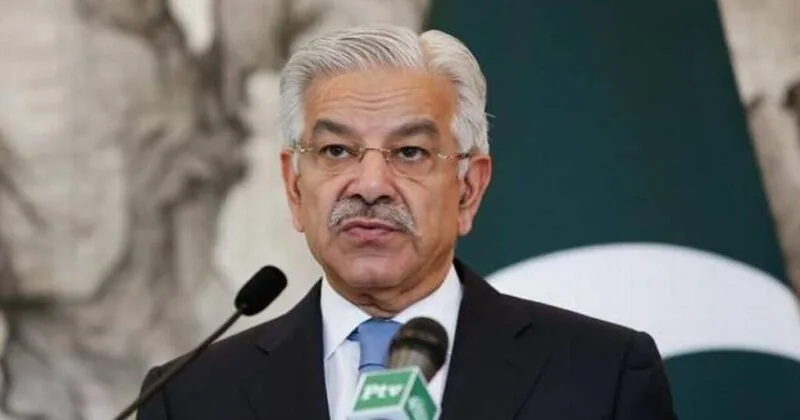
Islamabad: The US and Israeli attacks on Iranian territory have unnerved Pakistan, which shares a more than 900-kilometre-long border with Iran. On Tuesday, Pakistan’s Defence Minister, Khawaja Asif, alleged that a “Zionist plan” lay behind the ongoing armed conflict in Iran and claimed it was aimed at turning Pakistan into a “vassal state”. According to him, an Israeli victory in the conflict could pave the way for a coordinated strategy involving Afghanistan, India and Iran against Pakistan.
Pakistan already faces mounting regional tensions. The country is currently engaged in what it describes as an “open war” with Taliban-led Afghanistan and had fought a brief but intense military confrontation with India in May 2025. Iran, meanwhile, shares a long and sensitive border with Pakistan’s Balochistan province, a region that has witnessed insurgency and instability for decades. In a post on X, Asif alleged that Zionism, the movement to establish and protect a Jewish homeland, had played a “direct or indirect” role in almost every conflict affecting the Islamic world since the creation of Israel in 1948. He argued that Zionist ideology had been a driving force behind major wars and crises in the Muslim world. According to him, powerful global actors had long been influenced by Zionist interests, which he claimed were shaping global political and economic dynamics.
Referring to the current confrontation involving Iran, Israel and the United States, Asif alleged that the war had been imposed on Tehran despite Iran’s willingness to negotiate. He claimed that the conflict was deliberately orchestrated by Zionist forces with the aim of expanding Israel’s strategic reach closer to Pakistan’s borders.
The Pakistani minister warned that if Israel were to emerge victorious in the conflict, it could eventually result in India, Afghanistan and Iran adopting what he described as a “joint single-point agenda” against Pakistan. Such a development, he said, would leave Pakistan surrounded by hostile powers and render its borders vulnerable.
According to Asif, this scenario would effectively “surround Pakistan with enemies from all sides and turn it into a vassal state”. He urged the country’s 250 million citizens to recognise what he described as a broader conspiracy and called on people to rise above political and sectarian divisions to defend national interests.
Khawaja Asif calls for unity among Muslim nations
Asif also emphasised Pakistan’s status as a nuclear power, arguing that the country’s nuclear capability served as a deterrent against external threats. He asserted that Pakistan’s nuclear arsenal protected the country from what he termed “Zionist ambitions” and claimed that the strength of Pakistan’s armed forces was acknowledged across the world. He also acknowledged the role of former Pakistani Prime Minister Nawaz Sharif, who oversaw the 1998 nuclear tests that officially declared Pakistan a nuclear weapons state. According to Asif, those tests had strengthened Pakistan’s strategic standing and provided the country with the ability to safeguard its sovereignty.
The minister further expressed solidarity with the Palestinian cause, stating, “May Palestine be free,” while offering prayers for Pakistan’s continued security and stability. He concluded by calling for greater unity among Muslim-majority countries, urging them to recognise common challenges and coordinate their responses to global crises.
Conflict in Iran raises regional tensions
Asif’s remarks come amid a dramatic escalation of hostilities in West Asia, where the United States and Israel are engaged in a major military confrontation with Iran. The conflict began with coordinated US and Israeli strikes targeting key Iranian military and political infrastructure.
The attacks reportedly destroyed large sections of Iran’s defence and leadership structure, including senior military officials and members of the country’s clerical establishment. Iran’s Supreme Leader, Ayatollah Ali Khamenei, was killed during the strikes, an event that has further intensified tensions across the region. Following the strikes, Iran retaliated by launching waves of drones and missiles targeting multiple countries across the Gulf region. These attacks reportedly struck locations in Bahrain, Oman, the United Arab Emirates and Saudi Arabia, raising fears of a wider regional conflict.
Khawaja Asif’s remarks reflect a long-standing narrative within Pakistan’s political discourse. Despite facing accusations of supporting militant groups and proxy conflicts, Islamabad has often sought to portray India as its primary adversary. After previously blaming ethnic Baloch insurgents on alleged Indian backing, Pakistan has recently described the Afghan Taliban, which it had supported for decades, as an “Indian proxy”. Analysts say that Pakistan’s perception of being surrounded by hostile forces reflects the complex consequences of its own strategic policies in the region.