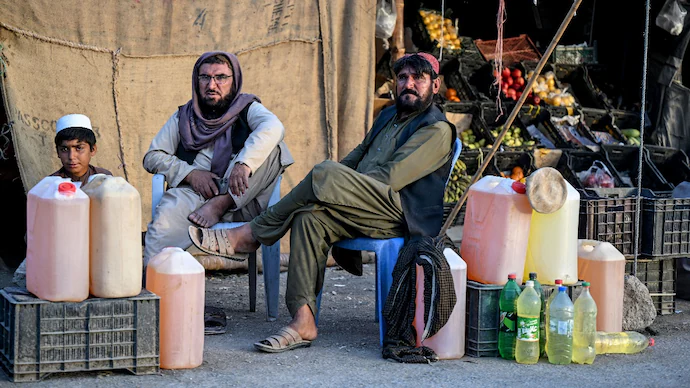
Pakistan has begun preparing emergency energy conservation measures as the ongoing West Asia conflict threatens to disrupt crucial oil supply routes. With Iran reportedly closing the Strait of Hormuz, through which a significant portion of Pakistan’s fuel imports travel, the government in Islamabad has started considering strict fuel-saving steps.
Among the proposals under discussion are work-from-home arrangements for employees and online classes for schools and colleges, aimed at reducing daily commuting and lowering fuel consumption.
The measures closely resemble those implemented during the COVID-19 pandemic, when mobility restrictions forced governments worldwide to shift work and education online.
The situation has also highlighted the contradiction in Pakistan’s diplomatic messaging. Just a day before discussing austerity measures, Pakistan’s leadership had adopted a confrontational tone towards Iran over the widening regional conflict.
Pakistan’s foreign minister Ishaq Dar signalled that the country might be compelled to participate in the war against Iran if the conflict escalated further. His remarks referenced Pakistan’s defence understanding with Saudi Arabia, which includes a provision that an attack on one could be considered an attack on both.
Dar also claimed that Pakistan had issued warnings to Iran regarding the regional escalation.
However, reports note that such rhetoric contrasts sharply with Pakistan’s economic vulnerability. The country is currently grappling with severe fiscal stress and relies heavily on international loans to maintain financial stability.
Pakistan’s ability to respond to an external conflict remains constrained by its fragile economic position. The country continues to depend heavily on assistance from global lenders and friendly nations to sustain its balance of payments.
In addition to economic challenges, Pakistan is also dealing with ongoing tensions along its border with Afghanistan, further complicating its security and financial landscape.
Against this backdrop, the possibility of being drawn into a wider regional conflict could place additional pressure on an already strained economy.
The most immediate concern for Islamabad is the closure of the Strait of Hormuz, one of the world’s most critical maritime oil routes.
Nearly one-fifth of the global oil supply passes through the narrow waterway connecting the Persian Gulf with the Gulf of Oman. For Pakistan, the route is even more crucial, as a significant share of its fuel imports travels through this corridor.
Any prolonged disruption in shipping through Hormuz could therefore create severe supply shortages in Pakistan’s domestic fuel market.
The potential impact goes beyond oil. The Gulf region also hosts millions of Pakistani workers whose remittances form a vital pillar of Pakistan’s economy.
The conflict in West Asia raises additional concerns about remittance flows to Pakistan.
According to official estimates, over 4.7 million Pakistani citizens live and work in Gulf countries, including United Arab Emirates, Saudi Arabia, Qatar, and Kuwait.
Remittances from these expatriate workers represent a major source of foreign exchange for Pakistan. Any regional instability affecting employment or financial transfers could therefore worsen Pakistan’s already precarious economic situation.
In response to the looming crisis, Pakistani authorities have begun discussing several energy-saving measures.
According to reports in the Pakistani newspaper Dawn, officials are considering a return to pandemic-style arrangements that limit commuting and reduce fuel consumption.
Under the proposals:
1. Government offices may operate with minimal essential staff present physically.
2. Employees in sectors such as telecom and information technology may be asked to work remotely at least twice a week.
3. Schools and colleges could shift to online learning temporarily.
4. Ride-sharing among office employees may be encouraged to reduce the number of vehicles on the road.
The measures are expected to remain in place at least through March if the oil supply situation remains uncertain.
Pakistan’s limited fuel reserves have added urgency to the government’s response.
According to Finance Minister Muhammad Aurangzeb, the country currently has:
1. Around 25 days of petrol and diesel stocks
2. Approximately 10 days of crude oil reserves
3. About 15 days of LPG supplies
These relatively modest reserves leave the government with little room for complacency if supply disruptions persist.
As a result, authorities are scrambling to implement conservation measures before the situation worsens.
Alongside conservation efforts, the government is exploring economic measures to stabilise the fuel market.
One such proposal involves weekly revisions of petroleum prices, replacing the current system of periodic price adjustments.
Officials believe that more frequent price changes could discourage hoarding by fuel dealers and ensure smoother supply distribution.
In addition, the government is considering providing compensation to oil companies to offset the increased costs caused by the regional conflict.
The ongoing conflict has significantly increased the cost of transporting oil shipments.
Shipping companies operating in the region are facing higher insurance premiums due to the heightened security risks around major maritime routes.
Freight charges for oil cargoes have also surged, further increasing the cost burden for importing countries like Pakistan.
To prevent a severe supply disruption, Islamabad may have to subsidise or compensate energy companies for these additional expenses.
As part of contingency planning, Pakistan has already reached out to Saudi Arabia for assistance in maintaining fuel supplies.
According to reports, Islamabad has asked Riyadh to route oil shipments through the Yanbu Port on the Red Sea, bypassing the closed Strait of Hormuz.
However, such alternative routes could increase transportation time and costs, making them a temporary rather than permanent solution.
The developments shows how vulnerable Pakistan remains to global energy shocks.
Unlike major economies with large strategic petroleum reserves, Pakistan has limited capacity to absorb disruptions in international oil supply chains. Its heavy reliance on imported fuel means that geopolitical events in distant regions can quickly translate into domestic economic crises.
The current emergency measures from remote work policies to online classes, illustrate the scale of the challenge facing Islamabad as it navigates the fallout of the widening West Asian conflict.