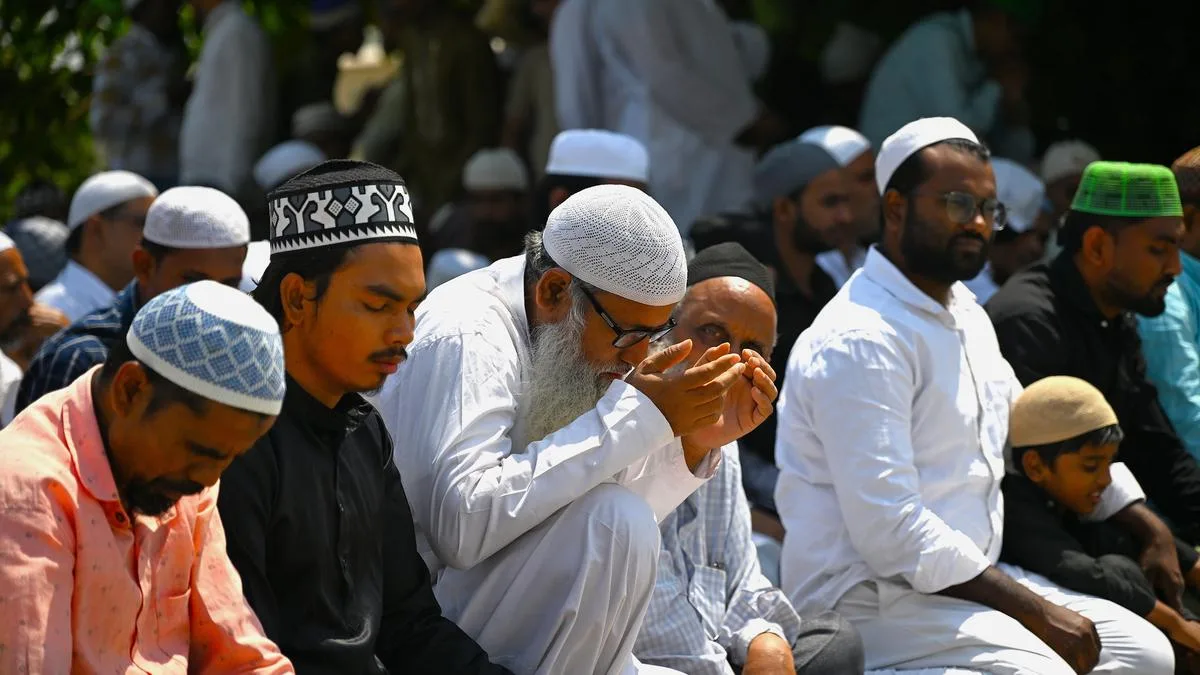
The Bombay High Court on Thursday (March 5) declined to grant relief to taxi and auto-rickshaw drivers who had sought permission to offer namaz at a location near the Chhatrapati Shivaji Maharaj International Airport during Ramzan.
The petition was filed by the Taxi-Rickshaw Ola-Uber Men’s Union, which argued that many drivers working in and around the airport area required a nearby place to offer their daily prayers, especially during Ramzan when religious observance becomes particularly significant.
However, the High Court ruled that security considerations surrounding the airport must take precedence over such requests.
The matter was heard by a bench comprising Justice B P Colabawalla and Justice Firdosh Pooniwalla, who observed that while Ramzan holds deep religious significance for Muslims, individuals cannot claim an absolute right to offer prayers at any location they prefer.
In its oral observations, the court stressed that highly sensitive areas such as airports demand strict security protocols.
“There is no question of getting a structure near airport (to offer prayers). Religion or otherwise – security comes first. Everybody travels through this airport irrespective of their religion,” the bench remarked while rejecting the request.
During the hearing, the petitioners informed the court that taxi and auto-rickshaw drivers had previously used a temporary shed located near the airport premises to offer namaz.
According to the union, the structure had existed for some time and was frequently used by drivers waiting for passengers in the area. However, the shed was demolished by authorities last year during redevelopment and security clearance operations.
The petitioners therefore requested the court to direct authorities either to permit prayers again at the earlier location or to identify another nearby space that could serve as a designated prayer area.
They argued that since drivers spend long hours around the airport transporting passengers, having a nearby place for prayer was a practical necessity, especially during the fasting month.
In response, airport authorities and government representatives informed the court that officials had already examined multiple possible locations in the vicinity.
According to the report submitted before the bench, authorities inspected seven different sites in the surrounding area to explore the feasibility of allowing prayers there.
However, none of the locations were found suitable due to several concerns, including:
1. Heavy traffic congestion near the airport
2. High-security protocols around aviation infrastructure
3. Ongoing airport development and redevelopment projects
Officials told the court that allowing a prayer structure or congregation in such a sensitive zone could create logistical and security complications.
After reviewing the report submitted by authorities, the court stated that it could not intervene in the matter because the issue directly involved airport security.
The bench made it clear that while individuals are free to practice their religion, they cannot insist on offering prayers at a specific location of their choice.
“You cannot decide the place. Tomorrow you will say you want to stand in the middle of Oval Maidan and offer prayers. That is not possible,” the court told the petitioners, referring to the well-known public ground in south Mumbai.
The judges emphasised that public spaces and critical infrastructure zones cannot be used for religious purposes without considering broader public safety implications.
During the proceedings, the bench also noted that there was a madrassa located within one kilometre of the airport area where prayers could be offered.
The court suggested that the drivers could make use of existing religious institutions in the vicinity rather than insisting on a new arrangement within a high-security zone.
At the same time, the judges clarified that their decision should not be interpreted as restricting anyone’s right to pray.
“No one is stopping you from offering prayers five times a day, but it cannot be anywhere. Security concerns are serious,” the bench stated.
The High Court also observed that similar arrangements for religious congregations are rarely seen near airports in other parts of the world.
The judges pointed out that international aviation infrastructure is typically governed by stringent security norms and spatial restrictions.
“We have never seen anything like this anywhere in the world. You cannot have something like this near the airport,” the bench remarked, highlighting the need for caution in matters involving airport security.
While rejecting the plea at present, the court did leave a small window open for the petitioners in the future.
The bench suggested that the drivers could approach airport authorities again once the redevelopment of Terminal 1 at the airport is completed.
If additional infrastructure space becomes available after redevelopment, authorities may consider allocating a designated prayer area within appropriate security limits.
However, the court made it clear that any such decision would ultimately depend on airport planning authorities and security assessments.
Before concluding the hearing, the bench acknowledged the important role played by taxi and auto-rickshaw drivers in Mumbai’s transport ecosystem.
Drivers operating near the airport play a crucial role in ferrying passengers to and from the city’s primary aviation hub, often working long and irregular hours.
Recognising their contribution, the court said their concerns could be considered when future infrastructure planning takes place around the airport.
Nevertheless, the judges reiterated that security considerations must remain paramount in any such decision.