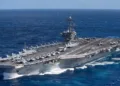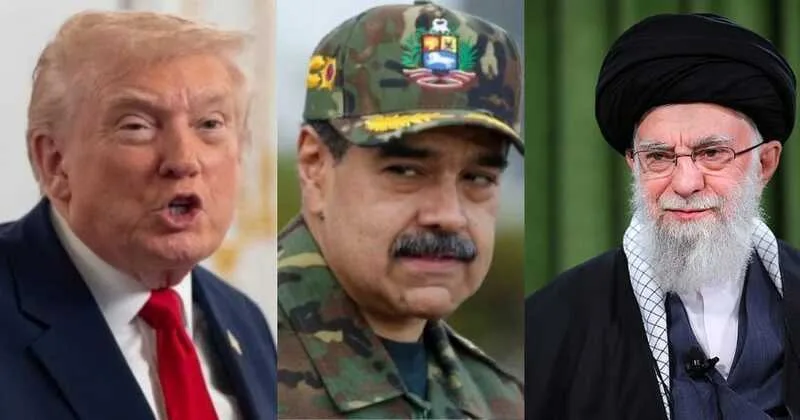
New York: With the dramatic capture of Venezuelan President Nicolas Maduro alive and the assassination of Iran’s Supreme Leader Ayatollah Ali Khamenei following joint U.S.–Israeli military strikes, the United States appears to have entered a decisive phase in its bid to control the world’s oil markets.
In recent weeks, Washington has intensified its pressure on two of the world’s most significant oil producers, Venezuela and Iran, both of which have vast petroleum reserves that have long challenged U.S. influence. The capture of Maduro and the moves by the U.S. Department of Justice to seize oil shipments and tankers off the Venezuelan coast highlight an aggressive strategy to dismantle Caracas’s oil trade and bring Venezuelan energy resources under American control. Meanwhile, the elimination of Iran’s supreme leader, a central figure in the Islamic Republic’s energy and foreign policy, signals a new and volatile stage in West Asian geopolitics.
For decades, Iran and Venezuela have been among the few producers whose oil could be exported relatively cheaply and outside the full orbit of Western corporate and financial influence. Their disruption, therefore, aligns with U.S. aims to restructure global supply chains in favour of higher-cost producers, including American shale oil, that are more tightly woven into Washington’s geopolitical strategy. In this unfolding geopolitical landscape, Russian oil remains the only major source that has so far resisted full American leverage, as Moscow continues to export crude despite Western sanctions. The global economy is now witnessing what many analysts describe as a new economic war, with Washington’s moves aimed not only at energy dominance but also at weakening geopolitical competitors, most notably China’s energy security. Beijing has reportedly been building strategic oil stockpiles amid fears of broader supply disruptions.
The Strait of Hormuz, a chokepoint only 33 kilometres wide, has emerged as the epicentre of these tensions. Approximately 20% of the world’s oil supply transits this narrow waterway from major Gulf producers including Saudi Arabia, Kuwait, the UAE, Iraq, and Iran. Iranian forces have broadcast orders claiming the strait is closed to all shipping, a declaration that, while not legally binding under international law, has already led oil majors and shipping companies to suspend crude and liquefied natural gas shipments through the passage. A prolonged disruption of traffic through the strait would send shockwaves through global energy markets. Oil prices could surge well above $150 per barrel, as supplies dwindle and market uncertainty rises. This would not only affect energy-dependent advanced economies but also emerging markets which imports lion share of its petroleum needs, mainly from West Asia.
For oil importing states, the implications are severe. A sharp rise in international oil prices will force higher import bills, exacerbating the current account deficit and placing downward pressure on their currency . While remittances from expatriates may benefit from a weaker curency, the broader economy would face increased inflationary pressures as petrol, diesel, and essential goods become more expensive.
Economists warn that supply chain disruptions and higher energy costs could slow economic growth, strain foreign exchange reserves, and trigger volatility in many state’s stock markets. With Western restrictions on Russian oil still in place, oil importing state’s options for cheap crude imports remain limited. How much additional oil it can procure from Russia, and under what conditions, poses yet another strategic challenge for policymakers. In sum, what began as targeted geopolitical actions in Caracas and Tehran now threatens to reshape global energy flows and intensify economic stress worldwide, with emerging countries deeply exposed to the consequences.