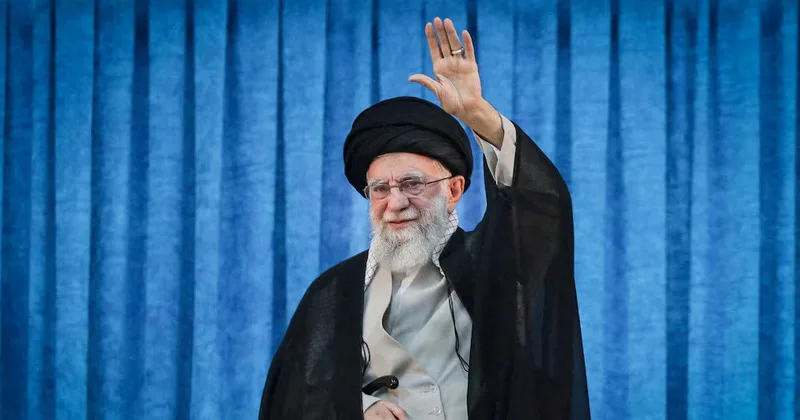
Tehran/Washington: The Iranian government has officially confirmed the death of Iran’s Supreme Leader, Ali Khamenei, in a development that has sent shockwaves across the world. According to official statements, Khamenei was killed in a joint US-Israeli airstrike in Tehran early Saturday morning. Unconfirmed reports also suggest that his daughter and granddaughter were among those killed in the attack. Anger and celebration are spreading across West Asia, as people react with a mix of outrage and jubilation following US President Donald Trump’s announcement confirming Khamenei’s death. Khamenei assumed leadership in 1989 after the death of Ruhollah Khomeini and for the past 36 years held the ultimate authority in Iran’s political and military affairs.
There were earlier indications that Iranian authorities attempted to conceal news of Khamenei’s death. Shortly after the airstrike, a post titled “In the name of Imam Ali” appeared on Khamenei’s official X (formerly Twitter) account. However, reports now suggest that the message was not authored by Khamenei himself but was part of a calculated move by the Iranian regime to prevent panic and avoid demoralising the armed forces. Khamenei had reportedly announced that he would address the nation within half an hour of the attack, but he never appeared in public, further intensifying suspicions before the official confirmation.
US-Israeli operation and global reaction
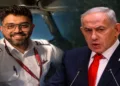
President Trump had initially announced Khamenei’s death hours after the joint US-Israeli military operation. Israeli Prime Minister Benjamin Netanyahu also stated that there were strong indications that the Iranian Supreme Leader had been killed. Trump confirmed the development through his social media platform, Truth Social. In a strongly worded message, Trump wrote that “one of the most evil people in history has been killed'”. He stated that this is justice not only for the people of Iran, but for Americans and others around the world who have been victims of Khamenei’s brutality. He claimed that Khamenei’s movements had been closely monitored using advanced tracking systems and that he could not evade the coordinated strike carried out in cooperation with Israel. Trump described the moment as the “greatest opportunity” for the Iranian people to reclaim their country.
He further asserted that Khamenei was unable to escape the consequences of his policies towards Israel and could not protect those who were with him at the time of the strike. According to Trump, intelligence reports indicated that several members of Iran’s Revolutionary Guard and sections of the military were unwilling to continue fighting and were seeking protection. In another post, he claimed that not only was Khamenei dead, but that the country had been “largely destroyed” within a single day of operations. Reports indicate that nearly 30 bombs were dropped on the heavily fortified compound housing Khamenei’s official residence and office. Satellite images circulating in international media appear to show extensive damage to the complex. Israeli media outlets have reported that Khamenei may have been inside an underground bunker during the strike, but may not have survived the massive bombardment.
Iranian retaliation and Gulf under fire
In the aftermath of Khamenei’s assassination, Iran launched a sweeping retaliation that has shaken the Gulf region. Missile and drone strikes were reported in the United Arab Emirates, including Dubai and Abu Dhabi. The iconic Burj Al Arab hotel in Dubai reportedly caught fire, while a missile is said to have struck the Fairmont The Palm on Palm Jumeirah. One person was killed and several others were injured in attacks targeting Dubai and Abu Dhabi airports. According to reports, Iran fired 137 missiles and 209 drones at the UAE alone. Although most were intercepted by defence systems, falling debris caused significant damage in residential neighbourhoods. Gulf countries were described as being in a state of alarm as air defence sirens sounded across major cities. The situation within Iran itself is equally grave. The Iranian Red Crescent has reported that at least 201 people have been killed in the bombings carried out by the United States and Israel, with 747 others injured. Simultaneous strikes were reported across 24 provinces, leaving the country in shock and uncertainty. Hospitals are reportedly overwhelmed, and emergency services are struggling to respond to the scale of destruction.
Region on the brink of war
The crisis has escalated into a broader regional confrontation. In addition to targeting Israel, Iran reportedly launched retaliatory strikes towards Qatar, Bahrain, Saudi Arabia and the UAE, raising fears of a full-scale regional war. Tensions between major global powers have reached a critical point, with the possibility of prolonged military engagement looming large. Khamenei’s death marks a turning point in Iran’s modern history. Since assuming power after Khomeini’s death in 1989, he had maintained absolute authority over Iran’s political system, military establishment and foreign policy. For more than three decades, he shaped the country’s direction and played a decisive role in its confrontations with the West and regional rivals. As the West Asia braces for further escalation, global leaders are urging restraint. However, with retaliatory strikes already underway and casualties mounting on multiple fronts, fears are growing that West Asia could descend into a devastating and prolonged conflict. The coming days are likely to determine whether the region steps back from the brink or moves deeper into a wider and more destructive war.