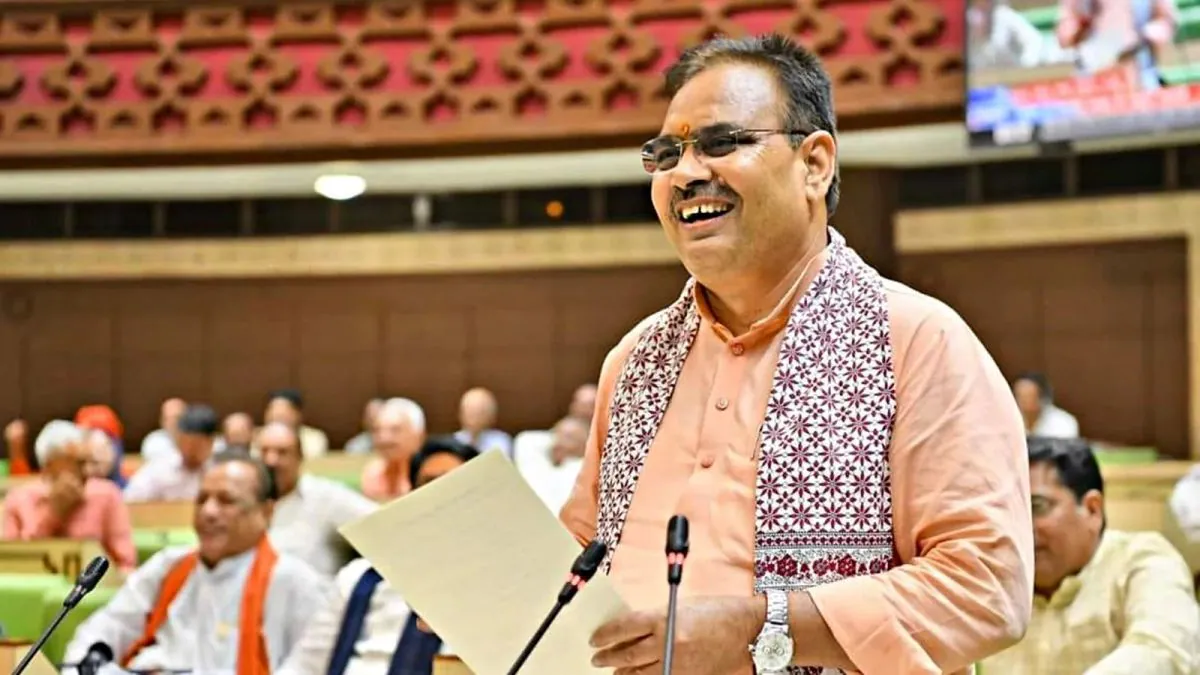
In a significant legislative development, the government led by Chief Minister Bhajan Lal Sharma on Feb 25 tabled the Rajasthan Prohibition of Transfer of Immovable Property and Provision for Protection of Tenants from Eviction from Premises in Disturbed Areas Bill in the state Assembly. The Bill is aimed at regulating property transactions in areas declared as “disturbed,” with the stated objective of preventing what it terms as “improper clustering” of one community in a particular locality.
According to the state government, the legislation has been brought forward to “safeguard the demographic equilibrium and social harmony of Rajasthan.” Officials explained that in certain areas, property transactions allegedly driven by coercion, distress sales, or socio-economic pressure have resulted in demographic shifts that altered the mixed-community character of neighbourhoods, leading to social friction and communal tension.
What the bill proposes
As outlined during the tabling of the legislation, the proposed law seeks to make prior approval from a designated competent authority mandatory before any transfer of immovable property in notified disturbed areas. Any property transaction carried out without such sanction could be declared null and void.
The government clarified that the measure is not designed to restrict lawful transactions but to ensure that property sales are conducted with “free consent and at fair market value.” By requiring official scrutiny, the state intends to prevent distress-driven transfers or transactions that could trigger social unrest.
The Bill also provides legal safeguards for tenants residing in notified disturbed areas, protecting them from eviction under circumstances deemed linked to communal or demographic tension.
Under the proposed provisions, violation of the Act may attract stringent penalties. Offenders could face imprisonment ranging from three to five years, along with a minimum fine of Rs 1 lakh or 10 per cent of the fair market value of the property involved, whichever is higher.
Government’s rationale: ‘Lack of public harmony’
Last month, Rajasthan Law Minister Jogaram Patel publicly articulated the government’s concerns regarding what he described as demographic imbalance and rising communal tension in certain parts of the state.
He stated that in “many areas of our state, the widespread impact of increasing population of a particular community, demographic imbalance, communal tension, and a lack of public harmony has been seen in society for quite some time.” The minister argued that unchecked demographic shifts in specific localities had led to social segregation and periodic disturbances.
Government sources in media maintain that the legislation is preventive in nature and aimed at addressing emerging patterns before they escalate into larger law-and-order challenges.
Defining ‘Improper clustering’
A central concept introduced in the Bill is “improper clustering of persons of one community.” The legislation defines this as the concentration or congregation of persons belonging to a particular community in any locality arising from coercive, distress-driven, or otherwise “unhealthy” circumstances.
The definition further adds that such clustering becomes problematic if it “causes or is likely to cause demographic imbalance, segregation, communal tension, disturbance of public order, social harmony, or erosion of the mixed-community character of the locality.”
Officials explained that the law would empower district administrations to identify and notify disturbed areas based on intelligence inputs, historical patterns of violence, or emerging demographic changes perceived to be sensitive.
Communal disturbances in sensitive localities
The introduction of the Bill comes against the backdrop of recurring communal clashes in certain urban pockets of Rajasthan that authorities have previously described as sensitive or communally polarised.
In Jaipur, areas such as Ramganj and Subhash Chowk have witnessed periodic communal flare-ups in the past, particularly during religious processions. Tensions have occasionally escalated into stone-pelting incidents and curfew-like restrictions imposed by local authorities.
Similarly, in Jodhpur, communal clashes erupted in 2022 during Eid and Parshuram Jayanti celebrations in the Jalori Gate area, leading to internet suspension and heavy police deployment. Authorities had then cited rapid mobilisation and dense clustering in certain neighbourhoods as factors that made the situation volatile.
In Karauli, violence broke out in April 2022 following a religious procession, resulting in arson and property damage. The administration imposed curfew and internet restrictions in the aftermath. Investigations pointed to long-standing tensions in communally sensitive zones.
Bhilwara and Tonk have also experienced episodes of communal unrest in the past decade, often linked to localised disputes, inflammatory social media posts, or religious processions passing through densely populated neighbourhoods.
While officials have refrained from officially categorising any area as belonging to a particular community, the available data acknowledges that high-density, community-segregated pockets sometimes pose operational challenges during flare-ups due to narrow lanes, rapid mobilisation, and heightened emotions.
Support and Criticism
Supporters of the Bill argue that similar “Disturbed Areas Acts” have been implemented in states such as Gujarat and Madhya Pradesh to regulate property transfers in communally sensitive zones. They claim such measures help prevent forced sales, protect vulnerable families, and reduce the risk of demographic-driven tension.
Critics, however, contend that the terminology used in the Bill, particularly phrases like “improper clustering” and “demographic imbalance” could be open to subjective interpretation. Opposition leaders have demanded clarity on how areas will be declared “disturbed” and what objective criteria will be used to assess demographic shifts.
The Bill has now been tabled and is expected to be debated in the Assembly in the coming days. If passed, the legislation would grant the state government broad regulatory powers over property transactions in notified areas.
Officials indicate that detailed rules and guidelines would be framed subsequently, specifying the procedure for area notification, appeal mechanisms, and the functioning of the competent authority responsible for granting sanctions.
As Rajasthan moves forward with the proposed Disturbed Areas framework, the debate is likely to centre on balancing constitutional rights related to property and residence with the state’s responsibility to maintain public order and social harmony.
Whether the law will effectively curb communal tension or invite legal and political challenges remains to be seen, but its introduction has undoubtedly triggered a broader conversation on demographic patterns, urban segregation, and governance in communally sensitive regions.