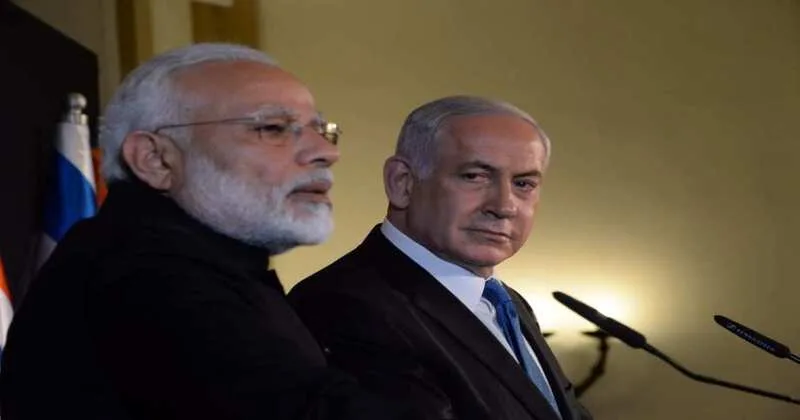
TEL AVIV: Prime Minister Narendra Modi will arrive in Israel today on a two-day visit, his first in eight years, at a moment of extraordinary regional tension, with fears of a possible Israeli strike on Iran and warnings of retaliatory attacks from Tehran. On February 22, Netanyahu announced on X (formerly Twitter) that his “dear friend” Modi would be visiting Israel for what he called a historic trip. He described India–Israel ties as a strong alliance between two global leaders, united by a shared vision for innovation, security and strategic cooperation, adding that he looked forward to welcoming Modi in Jerusalem. This is Modi’s second visit to Israel, following his landmark trip in July 2017.
I will be undertaking a State Visit to Israel today and tomorrow. Our nations share a robust and multifaceted Strategic Partnership. Ties have significantly strengthened in the last few years. I will be holding talks with PM Netanyahu, in which we will discuss ways to strengthen…
— Narendra Modi (@narendramodi) February 25, 2026
Strategic optics amid regional volatility
During the current visit, Modi is scheduled to address the Knesset, Israel’s parliament, and later accompany Netanyahu to Yad Vashem, the country’s Holocaust memorial. The two sides are also expected to sign agreements related to advanced technology and innovation. Netanyahu has previously outlined plans for a multilateral coalition aimed at stability and development in West Asia and the surrounding regions, potentially involving India alongside selected Arab, Asian and African countries, as well as Greece and Cyprus. Officials indicate that this broader strategic framework is likely to feature in the Modi–Netanyahu talks. Defence cooperation will also be high on the agenda, with negotiations expected on missiles, drones and air-defence systems.
Modi’s Israel trip now unfolds against a backdrop of escalating military posturing across Central and West Asia. The United States Navy has reportedly deployed 14 warships, including two aircraft carriers, around Iran. Tehran has warned that any attack would trigger missile strikes on US bases and Israel.
Despite the apparent risks, strategic analysts argue that Modi’s decision is deliberate, a calculated move to project India’s growing geopolitical footprint and position New Delhi as a consequential power in West Asian affairs.
Defence deals and technology partnerships
With Israeli general elections due in the coming months, Modi’s presence in Jerusalem also carries political symbolism for Netanyahu at home. For India, officials say the visit could yield concrete gains across defence and high-tech sectors.
Israel is expected to extend offers for advanced weapons platforms, including next-generation missiles, armed drones and components drawn from its layered air-defence architecture, such as Iron Dome, Arrow and David’s Sling.
Sources suggest Israel may also propose the Golden Horizon ballistic missile system, designed for potential integration with India’s Sukhoi fighter jets. Additional cooperation is anticipated in drone development, electronic warfare capabilities and AI-enabled combat systems.
Beyond hardware, both governments are keen to deepen collaboration in cybersecurity, precision manufacturing and defence innovation ecosystems, building on years of quiet but expanding strategic engagement. While concerns persist over how Iran and parts of the Arab world may perceive Modi’s high-profile visit, Indian officials maintain that New Delhi’s approach remains one of balanced diplomacy, strengthening ties with Israel while continuing engagement across West Asia. For Prime Minister Modi, the trip underscores a broader ambition that to elevate India from a regional stakeholder to a decisive strategic actor, even as conflict clouds the horizon.