

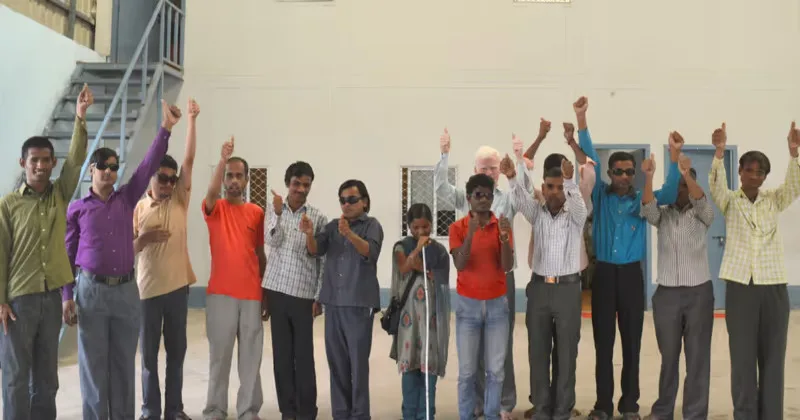
As India advances toward its ambition of Viksit Bharat, inclusion is no longer a peripheral concern—it is central to sustainable growth. Among the several groups that need policy revamp are ‘Persons with Disabilities’(Divyangjans, a more dignified name given by the PM Modi Government), who constitute a significant yet underutilized segment of India’s human capital. The Economic Survey 2025–26 and Union Budget 2026–27 together indicate a quiet but meaningful shift in India’s approach—from welfare-centric support to capability and employment-driven inclusion.
The scale of the challenge
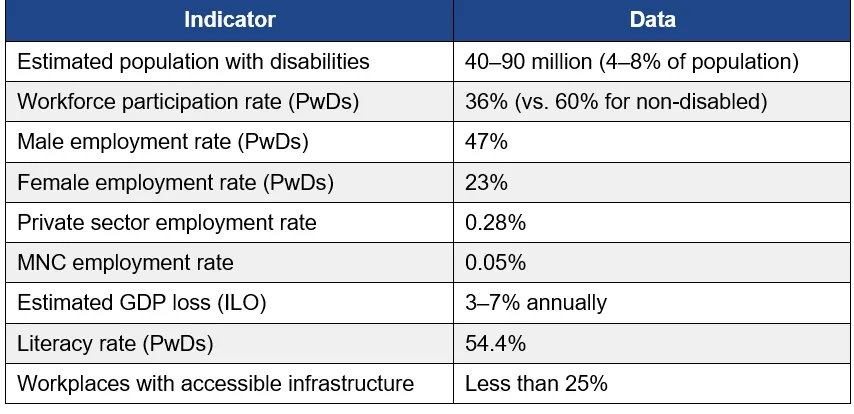
India is home to an estimated 40–90 million persons with disabilities, constituting between 4–8 per cent of the population. According to the 2011 Census, 26.8 million people officially reported having a disability—representing 2.21 per cent of the total population. However, more recent data from the National Family Health Survey-5 (2019–21) reveals that 4.52 per cent of the population(approximately 63.28 million individuals) experience some form of disability, suggesting significant underreporting in earlier official statistics.
Among persons with disabilities in India, 20 per cent face movement impairments, 19 per cent experience vision disabilities, 19 per cent have hearing impairments and 7 per cent face speech-related challenges. About 69 per cent of persons with disabilities live in rural areas, where access to healthcare, education and employment opportunities remains severely limited. The gender disparity is equally stark: while 56 per cent of persons with disabilities are male, women with disabilities face compounded marginalization.
The Employment gap and its economic cost
The workforce participation rate for persons with disabilities in India stands at approximately 36%, compared to 60 per cent for those without disabilities. The disparity becomes even more pronounced when examining gender: while 47 per cent of men with disabilities are employed, only 23 per cent of women with disabilities have jobs. According to Census 2011 data, nearly a third of all persons with disabilities are working 47 per cent of males and 23 per cent of females from the disabled population.
Private sector participation remains dismally low. Data from 2023 shows that among India’s top Nifty 50 companies, only five had more than 1 per cent of persons with disabilities on their payroll, with four of them being public sector companies. Research by the National Centre for Promotion of Employment for Disabled People (NCPEDP) found that employment of persons with disabilities in the private sector was merely 0.28 per cent and in multinational companies, it was a stark 0.05 per cent.
This exclusion carries a significant economic cost. According to an International Labour Organization(ILO) study conducted in 2011, India could lose between 3–7 per cent of GDP due to the non-participation of persons with disabilities in the workforce. This translates to lost productivity, lower labour force participation, and higher dependency and welfare costs. For a growing economy like India, this represents not only a social deficit but a substantial missed growth opportunity.
Progress in social protection coverage
Over the past decade, India has expanded social protection coverage at an unprecedented scale. By 2025, nearly two-thirds of the population was covered under some form of social security. Divyangjans have benefited from improved access to identity documentation, pensions, health insurance, and community-based livelihood support. According to the 2011 Census, 22.4 per cent of the disabled population in rural areas and 19.9 per cent in urban areas reported receiving aid or help from the government.
However, as the Economic Survey implicitly highlights, coverage has not automatically translated into economic participation, particularly in formal employment and emerging sectors. While 54.4 per cent of persons with disabilities are literate, educational access remains limited. Census 2011 data reveals that 61 per cent of children with disabilities (aged 5–19 years) are in educational institutions, 12 per cent have attended in the past, and 27 per cent have never attended any educational institution. Critically, 50 per cent of children with mental disabilities have never attended any educational institution.
Union Budget 2026–27: A strategic shift
The Union Budget 2026–27 attempts to address the employment gap with sharper focus. Two announcements stand out:
First, the Divyangjan Kaushal Yojana signals a strategic shift in skilling policy. By aligning training for Divyangjans with sectors such as IT services, Animation, Visual Effects, Gaming and Comics(AVGC), hospitality, and food processing, the government has acknowledged that disability inclusion must be embedded within the mainstream services economy. The emphasis on customized, task-oriented, and industry-relevant training marks a move away from symbolic skilling toward dignified livelihoods.
Second, the Divyang Sahara Yojana reframes assistive devices not as welfare goods but as economic enablers. Support for scaling up ALIMCO(Artificial Limbs Manufacturing Corporation of India), investment in R&D and AI-enabled assistive technologies, strengthening PM Divyasha Kendras, and the creation of Assistive Technology Marts together reflect a more modern understanding of accessibility. This approach recognizes that mobility, hearing, vision, and cognitive aids are foundational infrastructure for participation, not discretionary support.
Infrastructure and accessibility challenges
Despite policy progress, accessibility in physical infrastructure remains a critical barrier. Less than 25 per cent of Indian workplaces provide accessible infrastructure such as ramps, adapted restrooms, or assistive technologies. Notably, 17 per cent of workplaces provide no accommodation at all. Digital accessibility, including user-friendly websites and software, is equally crucial to productivity and engagement.
The Rights of Persons with Disabilities (RPwD) Act, 2016, which replaced the 1995 legislation, increased the number of recognized disabilities from seven to 21 and mandated that all government-funded institutions of higher education reserve 5 per cent of enrollment spaces for persons with disabilities. The Act also increased job reservations in government from 3 per cent to 4 per cent . However, implementation and enforcement remain inconsistent, particularly in the private sector.
Looking Ahead: From protection to participation
Looking ahead to 2026–27, the direction of policy is clear. Disability inclusion is being increasingly linked with digital public infrastructure, emerging technologies, and services-led growth. The expansion of AI tools, remote work models, and flexible employment arrangements offers new opportunities for Divyangjans—provided skilling, employer sensitization, and outcome tracking are aligned.
Yet, significant challenges remain. Employment outcomes for persons with disabilities are still inadequately measured, private sector hiring remains severely limited, and accessibility in urban infrastructure, workplaces, and insurance continues to lag. The next phase of reform must therefore move beyond schemes to focus on convergence, outcome-based accountability, and strong incentives for employers.
Key Statistics
 Successful models exist: companies like Subros Ltd., Delhivery, Lemon Tree has devised mechanisms to recruit Divyangjans leveraging their cognitive skill like strong memory (hearing impaired and low vision) sustained attention (locomotor disability) etc. These companies with NGO collaborations have identified job roles ideal for each specific disability. Also, several funding schemes by central and state government offers funds for startups led by persons with disabilities, along with payroll subsidies for companies employing Divyangjans.
India stands at an inflection point. The narrative is gradually shifting—from protection to participation, from welfare to workforce. For this transition to succeed, Indian industry must appear as an active partner, recognizing Divyangjans not as a compliance obligation but as a source of diverse talent and competitive advantage. If the intent reflected in the Economic Survey and Union Budget is matched with sustained implementation and private sector leadership, India can ensure that Divyangjans are not merely beneficiaries of growth but productive contributors to the nation’s economic future.