TEHRAN: Iran has carried out surprise military exercises in the Strait of Hormuz while sensitive nuclear negotiations with the United States are underway in Geneva. International media reported that Iran’s elite Islamic Revolutionary Guard Corps fired missiles into the strait and temporarily shut parts of the busy waterway as a security precaution, a move that sent shockwaves across global markets and diplomatic circles.
Iran’s Tasnim News Agency said missiles launched from coastal batteries and naval platforms successfully struck their designated targets in the Strait of Hormuz. Authorities confirmed that sections of the strait were closed for several hours on Tuesday to ensure shipping safety. The narrow channel is one of the world’s most critical energy arteries, carrying nearly 20 per cent of global oil supplies, making any disruption a matter of international concern.
The talks are being held in Geneva at the residence of the Omani ambassador, with mediation by Oman. Indirect discussions took place between Iranian Foreign Minister Abbas Araghchi and US representatives Steve Witkoff and Jared Kushner. Speaking after the latest round, Araghchi said the negotiations were “a little more constructive” and that both sides had agreed on certain common principles. However, he cautioned that a comprehensive agreement could not be achieved immediately.
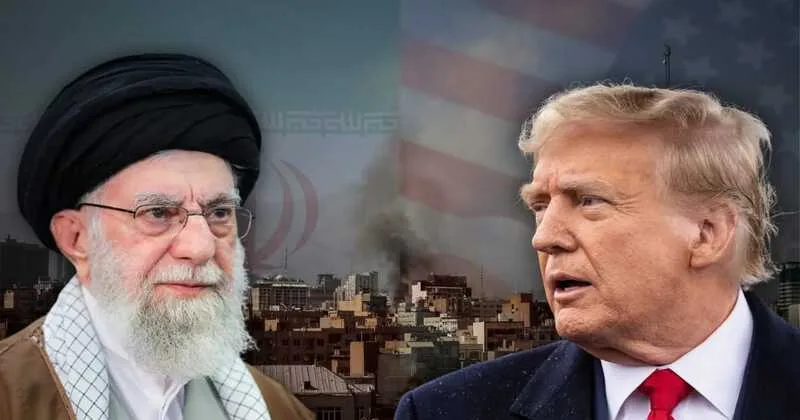
Meanwhile, Donald Trump has warned that military action remains an option if diplomacy fails, a statement widely seen as one of the triggers behind Tehran’s show of force in Hormuz. Iran’s Supreme Leader Ayatollah Ali Khamenei issued a stark warning in response. “Warships are dangerous,” he said, “but weapons capable of sinking them to the depths of the sea are even more dangerous,” underlining Iran’s readiness to counter any perceived threat.
Khamenei’s warning and US carrier deployment deepen tensions amid fragile Geneva nuclear talks
This marks the first time Iran has moved to close parts of the Strait of Hormuz, even temporarily, during ongoing negotiations. Trump has also publicly criticised Tehran over its handling of anti-government protests, while Iranian officials have reiterated that the country will retaliate if attacked. Khamenei went further, posting a series of messages on X aimed directly at the US leadership and military. In one post, Khamenei referenced Trump’s past remarks: “The US president said they have not been able to destroy the Islamic Republic for 47 years. That is a good confession. I say, you will not be able to do it either.” Another message sought to downplay the US military dominance, arguing that even the most powerful armed forces can suffer crippling blows and fail to recover.
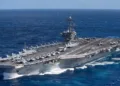
A third post focused on Washington’s naval deployments in the region. While acknowledging that warships are formidable assets, Khamenei stressed that Iran possesses weapons capable of neutralising them, reinforcing Tehran’s deterrence narrative. The United States has now dispatched two aircraft carriers to the Middle East amid rising fears of escalation. Satellite imagery indicates that one carrier strike group is operating close to Iranian waters, while another, the world’s largest warship, is expected to arrive in the coming weeks. Iranian officials say the ongoing drills in the Strait of Hormuz are a direct response to this expanding US military presence.
The Geneva negotiations follow an earlier round of talks held in Oman. Ahead of the meetings, Trump claimed Iran was keen to reach a deal with Washington. Khamenei’s latest statements, however, suggest a far more defiant posture, underscoring the fragile balance between diplomacy and confrontation as both sides test each other’s resolve.