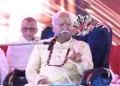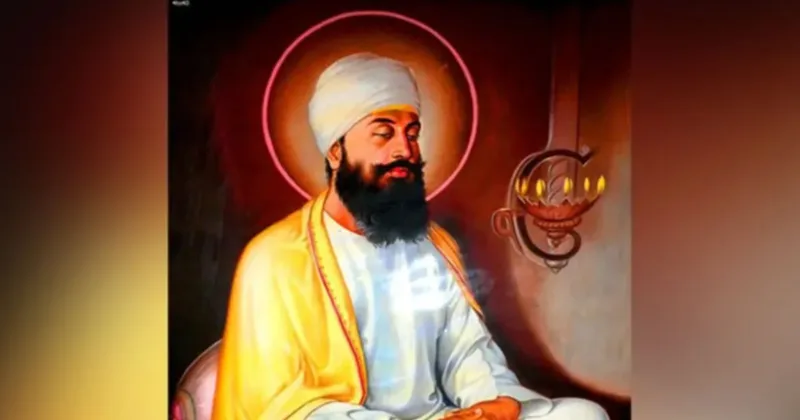
Programmes marking the 350th Martyrdom Anniversary of Hind Di Chadar Shri Guru Tegh Bahadur were organised across the state. The events held at Nagpur and Nanded were successfully conducted through the joint efforts of the Minority Development Department, the State-Level Coordination Committee, and communities, including Sikhs, Sikligars, Banjaras, Labanas, Mohyals, Sindhis, Valmikis, Udaiseens, and the Bhagat Namdev sect. Lakhs of devotees from across the state and the country participated.
Through these programmes, efforts were made to acquaint the younger generation with the history of Guru Tegh Bahadur’s courage and sacrifice. A grand event is scheduled to be held on February 28 and March 1 at Kharghar, Navi Mumbai, in the presence of Prime Minister Narendra Modi, Union Home Minister Amit Shah and Chief Minister Devendra Fadnavis.
The 350th Martyrdom Commemoration of Shri Guru Tegh Bahadur Sahib Ji, the Ninth Guru of Sikhism, who was conferred the title “Hind Di Chadar” (Protector of India’s Faith), is being observed on this occasion.
Guru–Disciple Tradition and Linguistic Identity
The Guru–disciple tradition in Sikhism is rooted in humanistic values. The word “Sikh” is derived from the Sanskrit word Shishya, meaning disciple. Punjabi is the primary language spoken in the Punjab region. In India, it is written in the Gurmukhi script, while in Pakistan’s Punjab province, it is written in the Shahmukhi script following the Partition of India.
Linguistically, Punjabi belongs to the Indo-Aryan language family. The Gurmukhi script, adopted by the Sikh Gurus and used for the composition of the Sri Guru Granth Sahib, evolved from Prakrit forms and has been in use since around the 11th–12th centuries.
The Shahmukhi script used in Pakistan shows strong Persian and Arabic influence. Globally, more than 20 million people speak Punjabi as their mother tongue.
Punjabi on the Global Stage
Punjabi is the official language of the state of Punjab in India and also enjoys recognition in Haryana and Delhi. Significant Punjabi-speaking populations reside in countries such as Canada, the United Kingdom, the United States of America and Australia. In Pakistan’s Punjab province as well, Punjabi is the most widely spoken language.
Recognising the importance of the language, Punjabi University was established in Patiala on April 30, 1969. The university houses a Department of Punjabi Language Research and Technology, which works on promoting Punjabi in digital platforms and developing language software, thereby strengthening the Punjabi presence in cyberspace.
In 2014, an online Punjabi encyclopedia titled PunjabiPedia was launched. The Punjabi Sahitya Akademi, established in 1954, has been conferring literary awards since 1955 for contributions to Punjabi literature. Additionally, the Canada-India Education Society presents the annual Dhahan Award to promote Punjabi literary excellence.
A Cultural Bridge Between Punjab and Maharashtra
An important cultural link between Punjab and Maharashtra is found in the devotional compositions of Sant Namdev. Several of his hymns are included in the Sikh holy scripture. In recognition of this shared heritage, the 88th (All India Marathi Literary Conference) was held in 2015 at Ghuman in Punjab, the karmabhoomi (land of spiritual work) of Sant Namdev.
Language: A Bridge of Dialogue
Language is the foundation of dialogue. The 350th Martyrdom Commemoration of Shri Guru Tegh Bahadur Ji has strengthened this bridge of cultural and spiritual communication. Devotion may be the path, but language is the medium through which it finds expression.
Language is not merely a tool of communication; it is a custodian of culture, history and identity. The Punjabi language stands as a vibrant and enduring example of this richness.