On February 12, when central trade unions called for a nationwide strike, India responded in a familiar, uneven rhythm. In Mumbai, suburban trains ran. In Delhi, the metro network functioned, and offices continued operations. In Bengaluru, the technology ecosystem shifted smoothly into remote mode. In several northern and western states, markets operated cautiously but did not collapse. The strike was visible, debated and politically amplified, yet the economy absorbed it.
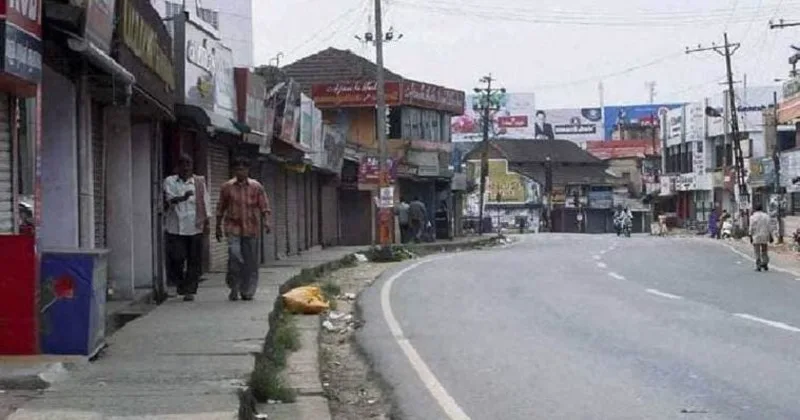
In Kerala, however, the atmosphere was unmistakably different. Roads emptied. State transport buses vanished. Shops shuttered in near-unison. Educational institutions closed in anticipation rather than reaction. The visual grammar resembled not a strike but a bandh, a collective suspension of daily life. Why does a national protest translate into total paralysis only in one state? The answer lies not in coincidence but in culture. Kerala has institutionalised shutdown as a political reflex.
From Class Struggle to Cultural Habit
Kerala’s political identity was forged in labour movements. Coir workers in Alappuzha, plantation labourers in Idukki, cashew workers in Kollam and toddy tappers across the state built powerful union networks in the early twentieth century. When the Communist Party formed the world’s first democratically elected communist government in 1957, mobilisation became part of governance itself. Strikes and hartals were not merely tools; they were celebrated acts of democratic assertion. Street mobilisation was valorised. The ability to close markets became proof of organisational strength.
Over decades, however, what began as resistance hardened into ritual. Every major political formation, Left or Congress-led, internalised the grammar of shutdown politics. Agitation was normalised. Protest became a periodic theatre. Kerala did not abandon the strike as an instrument. It absorbed it into its administrative psychology.
The Illusion of Prosperity
Kerala’s defenders often invoke its literacy rate, which consistently exceeds 90 per cent, and its strong public health indicators. These achievements are real. But social development without economic dynamism produces imbalance. Kerala’s Gross State Domestic Product stands at roughly Rs 14 lakh crore in recent estimates, accounting for around 3.8 per cent of India’s total GDP. While per capita income appears relatively high compared to the national average, the structure of that income tells a different story.
A significant share of household consumption is sustained by remittances from expatriate workers, particularly in the Gulf region. Over the past decade, remittances to Kerala have often crossed Rs 1 lakh crore annually, making the state one of India’s largest recipients. These inflows sustain real estate, retail and service sectors. But remittances are not endogenous productivity. They are external lifelines. States like Tamil Nadu, Gujarat and Maharashtra derive growth from manufacturing clusters, logistics corridors, automotive hubs and diversified industrial ecosystems. Kerala relies heavily on services, tourism and remittance-backed consumption. An economy dependent on external income and services is inherently more vulnerable to disruption.
Unemployment: The Uncomfortable Statistic
The most striking contradiction in Kerala’s narrative is unemployment. Labour force surveys over recent years have shown that Kerala’s unemployment rate remains significantly higher than the national average, particularly among educated youth. In certain recent assessments, the state’s unemployment rate has approached double digits, with youth unemployment figures nearing 30 per cent in some categories. By contrast, states such as West Bengal have reported unemployment rates around 3 to 4 per cent in comparable periods. Even states with lower literacy rates have managed to generate more consistent employment opportunities through manufacturing expansion and infrastructure-led growth.
Kerala’s educated youth often migrate to Bengaluru, Hyderabad, Pune, Mumbai or Overseas, not by cultural preference but by economic necessity. The state produces human capital but struggles to absorb it. The irony is stark. A state that prides itself on educational excellence cannot generate sufficient employment within its borders.
Growth Without Momentum
Kerala’s real GSDP growth over the last decade has often lagged behind the national average. Between the early 2010s and early 2020s, average real growth hovered around approximately 4.8 per cent annually, compared to India’s overall growth average of roughly 5.6 per cent in the same period. While Kerala’s nominal growth appears steady, real growth adjusted for inflation reveals relative stagnation. The service sector dominates state output, while manufacturing remains limited in scale and scope.
Compare this with Tamil Nadu’s industrial diversification, Karnataka’s technology-driven growth, or Gujarat’s manufacturing expansion. These states not only grow faster but also manage labour unrest without systemic shutdown. Kerala’s economic structure lacks shock absorbers. A strike, therefore, translates into a systemic pause.
Debt, Deficits and Fiscal Stress
Kerala’s fiscal health further complicates the picture. Recent data indicate that the state’s fiscal deficit has hovered around 3.8 to 4 per cent of GSDP, exceeding the normative threshold of 3 per cent often considered fiscally prudent. The state’s debt-to-GSDP ratio has climbed into the mid-20 per cent range, with total outstanding liabilities exceeding Rs 3 lakh crore. Revenue expenditure, largely salaries, pensions and welfare commitments, consumes a significant portion of state finances. Capital expenditure, which drives infrastructure and industrial growth, remains comparatively constrained. This fiscal structure leaves limited room for aggressive industrial investment or economic diversification. When shutdowns further reduce economic activity, revenue pressures intensify. A state already operating under fiscal strain can ill afford habitual economic paralysis.
Coercive Consensus and the Myth of Voluntary Participation
Kerala’s defenders argue that strikes reflect mass political consciousness. But participation in a shutdown environment is rarely purely voluntary. When buses do not operate, mobility collapses. When auto-rickshaws remain off the roads, access disappears. When markets collectively shut, individual traders face implicit pressure to conform. Even without explicit threats, the ecosystem ensures compliance.
The Supreme Court has previously distinguished between peaceful protest and enforced bandh, emphasising citizens’ rights to movement and trade. Yet in Kerala, social expectation substitutes for legal coercion. The right to strike exists. The right not to participate becomes practically impossible. Democracy requires pluralism. Shutdown culture enforces uniformity.
The Message to Investors
In contemporary India, states compete aggressively for investment. Tamil Nadu markets its industrial corridors. Gujarat highlights logistics efficiency. Karnataka promotes its technology ecosystem. Uttar Pradesh emphasises expressways and manufacturing parks. Investors assess not only tax incentives but operational predictability. They evaluate labour relations, supply chain continuity and administrative stability.
A state where public life can halt comprehensively during strikes sends a cautionary signal. Even if shutdowns are occasional, perception magnifies impact. Capital avoids unpredictability. Employment follows capital. Kerala’s human development achievements attract admiration. Its protest culture deters risk-sensitive investment.
The Romance of Resistance in a Global Economy
Kerala’s political discourse often frames shutdowns as moral stands against central policies or corporate interests. Empty streets are interpreted as solidarity. Closed shops are symbols of resistance. But the global economy no longer operates on mid-twentieth-century class binaries. It runs on integration, digital connectivity and supply chain interdependence. A state that repeatedly embraces total shutdown risks appears nostalgic rather than progressive. Resistance that undermines domestic enterprise does not strengthen worker welfare. It weakens long-term job creation.
A Generational Fault Line
Kerala’s younger generation inhabits a different world. IT professionals collaborate with global teams. Freelancers serve international clients. Entrepreneurs rely on logistics and digital infrastructure. Nurses and engineers migrate in large numbers. For this generation, predictability equals survival. A shutdown disrupts online meetings, cancels deliveries, postpones examinations and delays medical procedures. It imposes friction on an economy that rewards seamless continuity. The state exports its talent while preserving a political culture that deters large-scale domestic opportunity. That contradiction cannot persist indefinitely.
Agitation Versus Administration
Opposition politics thrives on mobilisation. Governance demands continuity. Kerala’s political ecosystem has mastered agitation but struggles with industrial transformation. Welfare commitments remain expansive. Social indicators remain strong. Yet wealth creation lags behind aspirational states. The February strike once again exposed this duality. Where other states bent and adjusted, Kerala broke and paused. The issue is not whether the protest is legitimate. It is whether paralysis is sustainable.
A State at the Crossroads
Kerala stands at an inflexion point. Its literacy and healthcare achievements are undeniable. But social capital must translate into economic capital. The state must decide whether it wishes to remain a showcase of welfare sustained by remittance flows or evolve into a growth engine capable of generating employment at scale. Strikes will remain part of democratic life. But a total shutdown cannot remain the default expression of dissent. When the rest of India treats protest as an interruption, and Kerala treats it as suspension, the contrast demands reflection.
When Protest Becomes Just Another Holiday
In many parts of Kerala, the strike has also acquired a disturbingly casual dimension. For a significant section of the public, particularly students and sections of the urban middle class, the announcement of a strike no longer triggers inquiry into its cause or ideological basis. It triggers anticipation of a holiday. Few pause to examine the labour codes being opposed, the policy specifics under debate, or the economic implications involved. The strike becomes detached from substance and reduced to a schedule. Social media fills with celebratory messages about unexpected leave, empty roads become photo opportunities, and the political seriousness of collective action dissolves into ritualised recreation. When dissent turns into default holiday culture, protest loses moral clarity and becomes mechanical observance rather than informed conviction.
Is this political consciousness, or institutionalised inertia?
The empty road may inspire ideological pride among party cadres and long-time believers in mobilisation politics. It may be photographed as proof of solidarity and narrated as evidence of resistance. But symbolism does not generate employment. Silence does not build industry. And shutdown does not inspire investor confidence. For entrepreneurs weighing risk, for investors assessing stability, and for young graduates searching for opportunity, the image of a halted state raises more questions than it answers.
A modern economy rewards continuity, predictability and innovation. It does not reward habitual suspension. Kerala’s future will not be determined by how effectively it can stop at a political signal, but by how confidently it can sustain motion despite disagreement. The true test of political maturity is not the ability to empty streets, but the capacity to protect both dissent and productivity. If Kerala wishes to remain a model, it must prove that protest need not mean paralysis and that conviction need not come at the cost of growth.