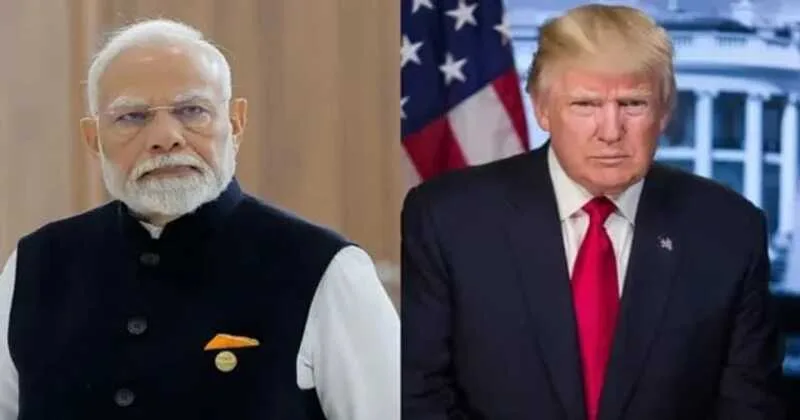
New Delhi: The United States administration under Donald Trump has made key revisions to the official fact sheet on the landmark trade framework between India and the US, removing contentious claims that had sparked concern in New Delhi.
Among the most significant changes is the withdrawal of an earlier assertion that India would reduce import duties on pulses, along with a softening of language surrounding the proposed purchase of $500 billion worth of US goods. The White House had initially stated that India would provide tariff relief on pulses, a claim strongly disputed by Indian officials, who clarified that these items were never part of the interim trade understanding. Following firm diplomatic engagement, the term “pulses” has now been completely removed from the revised documents.
This correction has helped clear lingering confusion around the deal. India is the world’s largest producer and consumer of pulses, including peas, dry beans and related crops. To safeguard domestic farmers, New Delhi maintains tariffs on US imports in these categories. The updated US fact sheet signals that India’s position has been acknowledged, reflecting a diplomatic win for the country’s agricultural interests.
US eases trade language, protects India’s core interests
The US administration has also moderated its language on procurement commitments. The revised documents now state that India is intended to purchase up to $500 billion worth of US products, rather than presenting it as a firm obligation. Crucially, agricultural goods have been excluded from this list. Reports suggest that negotiations in sectors such as energy, information technology and coal will continue to move forward. Agriculture remains the backbone of India’s economy, contributing roughly one-fifth of the national GDP. The sector is projected to grow to $1.4 trillion by 2035. Opening it fully to cheap foreign imports could destabilise domestic markets and harm millions of small farmers. This explains India’s consistent reluctance to liberalise agricultural trade.
Washington has also shown flexibility on India’s Digital Services Tax. While earlier statements suggested that India would scrap the levy, the revised fact sheet now notes that both sides have agreed to hold bilateral discussions on non-discriminatory digital trade rules instead. This shift is being seen as an important step toward preserving India’s economic autonomy in the rapidly evolving digital economy. Overall, the updated language reflects a more balanced approach, addressing Indian concerns while keeping broader trade talks on track.