The National Human Rights Commission of India (NHRC) has intervened in a mounting controversy surrounding a proposed Netflix film or series titled Ghooskhor Pandat, issuing a formal notice to the Ministry of Information and Broadcasting (I&B) and seeking an Action Taken Report within two weeks. The Commission has flagged concerns that the content may promote caste-based stereotyping and has the potential to trigger social discord.
Taking suo motu cognisance under the provisions of the Protection of Human Rights Act, 1993, the NHRC placed the spotlight on Netflix’s content vetting processes and the regulatory oversight of OTT platforms operating in India. The move follows a formal complaint filed by Sanjeev Newar, founder of the social media platform Gems of Bollywood.
In his complaint, Newar objected to the proposed title “Rishwatkhor Pandit” also referred to as “Ghooskhor Pandat” which translates to “a bribe-taking or corrupt Brahmin.” He argued that the title itself is inherently discriminatory, as it links an entire caste group with corruption and immoral behaviour.
According to the complaint, such portrayal goes beyond satire and amounts to public shaming, psychological harm, and targeted humiliation of a specific community. It further warned that in India’s socially sensitive environment, such depictions could inflame caste tensions, disturb public order, and violate the dignity and human rights of individuals belonging to the community.
An NHRC bench presided over by member Priyank Kanoongo found prima facie substance in the allegations, prompting the issuance of a notice to the concerned authorities. In a public post on X, Kanoongo said he had received a complaint stating that Netflix India was planning to broadcast a programme titled Ghooskhor Pandit.
“Such titles and programs target specific castes and communities, subjecting them to ridicule and criticism, shaming the community, and fostering animosity in society,” Kanoongo wrote.
मेरे पास @GemsOfBollywood ने शिकायत दी है कि @NetflixIndia OTT प्लेटफॉर्म द्वारा “घूसखोर पंडित” नाम से एक कार्यक्रम प्रसारित किए जाने की योजना है ।
इस प्रकार के टाइटल और कार्यक्रम जाति और समुदाय को लक्षित कर आलोचना,उपहास से इतर समुदाय को लज्जित करते हैं और समाज में वैमनस्यता… pic.twitter.com/7bfk0xsCsM— प्रियंक कानूनगो Priyank Kanoongo (@KanoongoPriyank) February 4, 2026
“This constitutes a form of psychological violence that threatens to disrupt public order and harm human lives. Therefore, a notice is being issued to the concerned department for necessary action.”
Protests and complaints across nation
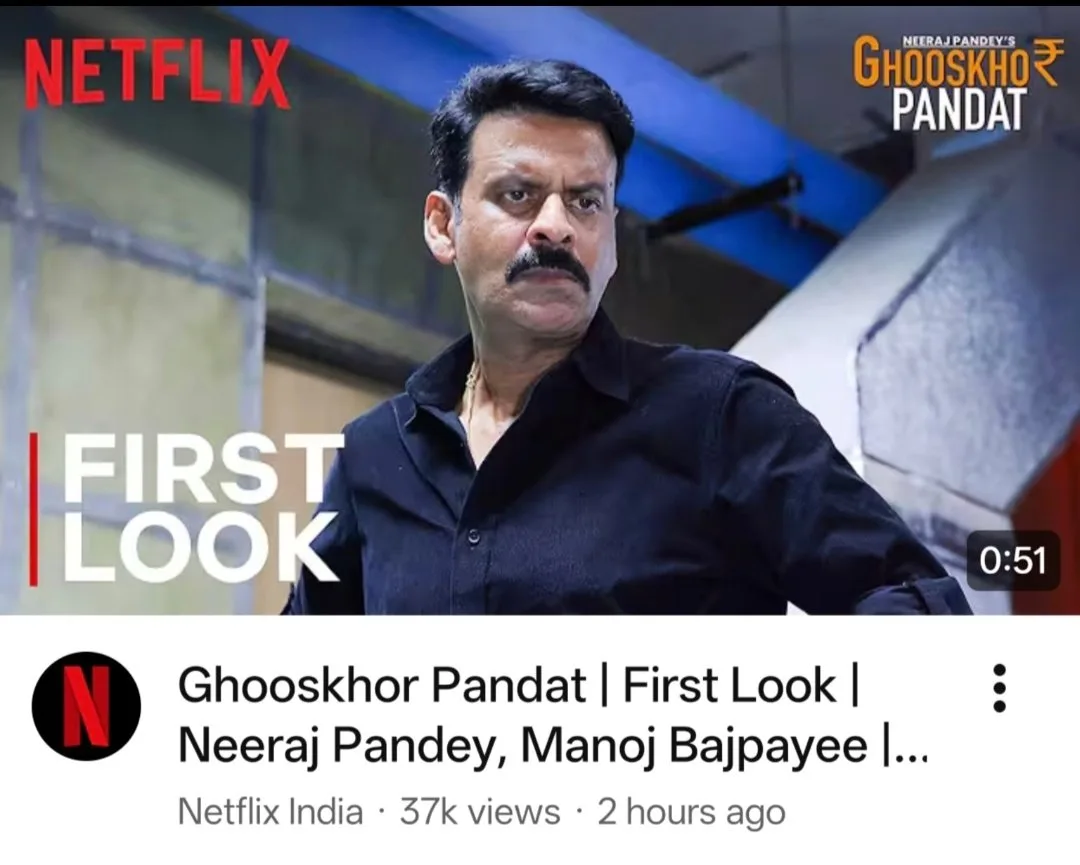
In the said film/series, Manoj Bajpayee plays the role of Ajay Dikshit, a corrupt and ethically conflicted police officer known by the nickname “Pandat.” The narrative, unfolding over the span of a single night, is set in motion when Dikshit discovers a critically injured girl who has been thrown from a moving car, an incident that draws him into a far-reaching conspiracy. The film is directed by Ritesh Shah, who has co-written the script along with Neeraj Pandey, and also stars Nushrat Bharuccha and Saqib Saleem in key roles.
Apart from NHRC, a Mumbai-based lawyer Ashutosh Dubey has also issued a legal notice to Netflix and the film’s makers, objecting to the title on grounds of defamation. The core objection centres on the use of the word Pandat, derived from Pandit, meaning priest or religious scholar, alongside ghooskhor, a term commonly associated with bribery and corruption.
In the notice, Dubey argues that this combination is inherently offensive and constitutes an attack on the dignity of the Pandit community. Describing the title Ghooskhor Pandat as “per se offensive,” the notice contends that it unfairly links an historically respected cultural and religious identity with criminality and moral depravity, while stressing that corruption is an individual moral failing and should not be portrayed as a characteristic of an entire community.
The notice demands the immediate withdrawal of the title Ghooskhor Pandat, calling it defamatory, unconstitutional and socially incendiary.
Also, a group of people, identifying themselves as Brahmins, protested against Bhuskhor Pandat in Bhopal, Madhya Pradesh’s capital, on Thursday. Hundreds of people from the Brahmin community, dressed in dhoti-kurta, took to the streets to protest against the film and accused it of insulting and portraying Brahmins in a negative light.
As per a report by LiveLaw, another petition was filed in the Delhi High Court objecting to the planned release of the Netflix film. The plea, filed by Mahender Chaturvedi, who describes himself as an acharya (a teacher), claims that the show’s title and promotional content are defamatory, communally insensitive and infringe upon fundamental rights.
The plea argues that the portrayal stereotypes and demeans an entire religious group, potentially violating fundamental rights under Articles 14, 21 and 25 of the Constitution.
The Ministry of Information and Broadcasting has now been tasked with examining the allegations, reviewing the content approval process, and submitting a detailed report to the NHRC within the stipulated timeframe. As of the time of publication, Netflix has not issued any public statement responding to the notice or the allegations.
The development adds to the growing debate around content regulation on OTT platforms, creative freedom, and the limits of satire when it intersects with caste, community identity, and constitutional protections of dignity and equality.