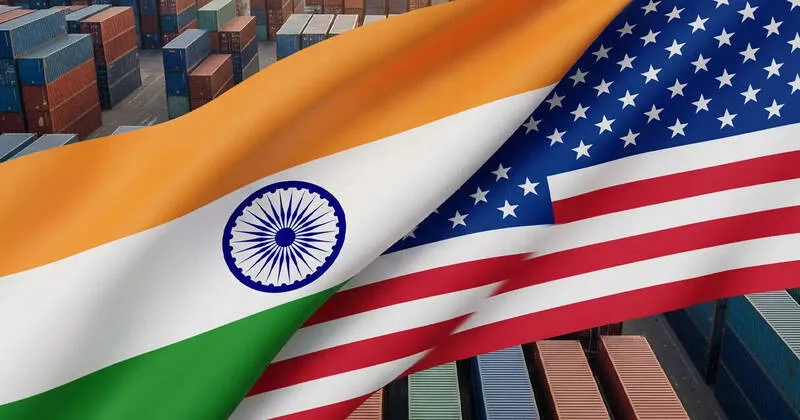
The India-US trade deal is indeed a strategic victory for New Delhi in the volatile geopolitical chessboard, which aids to secure the domestic economy coupled with consolidating a stronger position in the global supply chain. India is currently charged with 18 per cent tariffs which is deemed by many as a failure for New Delhi in striking its diplomatic leverage with Washington DC. However, constructive analysis reveals the fact that India has indeed gained a strategic edge and competitive advantage in the global economic paradigm when compared to its counterparts in Asia and beyond.
India leverages lowest tariffs compared to Asian counterparts
As per the latest India-US trade deal 18 per cent tariffs have been imposed on the Indian exports to the United States. This is one of the lowest tariffs when compared to most economies of South Asia and Southeast Asia. Thus, India has etched the biggest competitive advantage in the global export market that ultimately aims to secure the domestic industries and economy.
For example, Bangladesh, Sri Lanka, Taiwan, Vietnam face much steeper tariffs accounting to 20 per cent. Meanwhile, Pakistan, Indonesia, Malaysia, Thailand, Philippines, Cambodia are entangled in 19 per cent US tariffs. On the other hand, Myanmar has as high as 40 per cent tariffs. Many European economies who are apparently the allies of the United States also are suffering from higher tariff rates than India. For example, Canada suffers from a massive 35 per cent tariff rate. Many other European countries such as Belgium, Denmark, Finland, France, Germany, Greece, Italy, Netherlands, Poland and others who are also the allies of the US face 15 per cent tariffs. Though the percentage of tariffs is comparatively less, these deals inked by the European countries were sealed in urgency and suffer from strategic loopholes.
The countries have conceded many strategic merits to the advantage of the Trump administration. On the other hand, India has strongly hailed its strategic autonomy and diplomatic freedom. The 18 per cent tariffs comes with a big push for exports and simultaneously not derailing the shield of the country’s vulnerable sectors such as agriculture, dairy sector or the MSMEs. This agreement thus marks the biggest strategic advantage for India to propel the credentials of the domestic economy in the global export market.
Lower tariffs yields higher push for exports
With one of the lowest tariffs of 18 per cent, India has gained the biggest strategic advantage in the global export market against other export giants of Asia such as China, Vietnam, Malaysia, Thailand etc. As tariffs are comparatively less, India’s exports are now cheaper in comparison with the goods of other countries. In this direction, global demand rises for the Indian commodities as they are now much affordable. This is indeed a boon to Indian manufacturers and exporters particularly the MSMEs who were most hit by the irrational tariffs imposed by the US President Donald Trump.
The small scale exporters had virtually stopped the exports to the United States due to the brunt of 50 per cent tariffs imposed by the Trump administration on Indian goods which included 25 per cent additional tariffs for purchasing the Russian oil. However, with the reduction of tariffs, the exports are gradually scaling back. The textile exporters, footwear manufacturers and other garments exporters to the US are thus gearing up revamp the export and etch India’s footprint in the global export market.
India’s exports have now gained a competitive edge against the textiles of Pakistan or Bangladesh. Even Indian carpets, shrimps, gems and jewellery are more affordable in the American market, when compared to the commodities from Vietnam, Malaysia. This will help India also to stabilize the Balance of Trade(BoT) with the United States, where the country hitherto enjoys trade surplus. This strategic merit was dismantled due to the high tariffs imposed by President Trump. However, with stellar diplomatic potential and negotiating capabilities, India has achieved a low tariff bracket with the US, thus securing the domestic economy and also gaining edge in the export market against the competitors.
India gains export muscle against China
The lower tariffs particularly gives India a competitive advantage against China, which is a manufacturing and export bulwark. China currently is encapsulated in nearly 30-35 per cent of US tariffs. Thus Chinese exports are extremely expensive in the American market. With just 18 per cent tariffs, India thus is capable of fueling its exports in the US market. American consumers indeed prefer Indian goods over Chinese commodities as they are more affordable. Thus, India has clearly crafted a strategic weightage against China with lower tariffs weaved with increased export potential. In other words, Indian industries, manufacturers and exporters overweigh their Chinese counterparts across sectors.
Reduced tariffs and more demand for Indian goods also strengthens New Delhi’s position in the global supply chain. Analysts opine that the effective tariffs on India is more than 30 per cent in fact, which can sum up to 40 per cent. If this steep divide in the tariff rate persists between India and China for a prolonged duration, India will indeed emerge as a stronger, credible and resilient partner in the global supply chain. Indian goods will become more attractive and affordable in the US market against Chinese goods. India thus has the potential to flex its diplomatic, manufacturing and trade muscle in the global trade and foreign exchange market.
The India-US trade deal, hence is a strategic victory for India against its global competitors. With one of the lowest tariff rates, India not just rectified the fissures in the India-US bilateral relations, but also upheld the country’s strategic autonomy and the future of its industries, manufacturers and exporters. The most striking factor is, by choreographing a balanced and mutually beneficial trade deal, India has consolidated a solid strategic proposition in the global trade market against competing countries. This is indeed a dual victory that boosts global demand for Indian goods, accelerates domestic manufacturing and resounds India’s position in the global supply chain as a credible player.