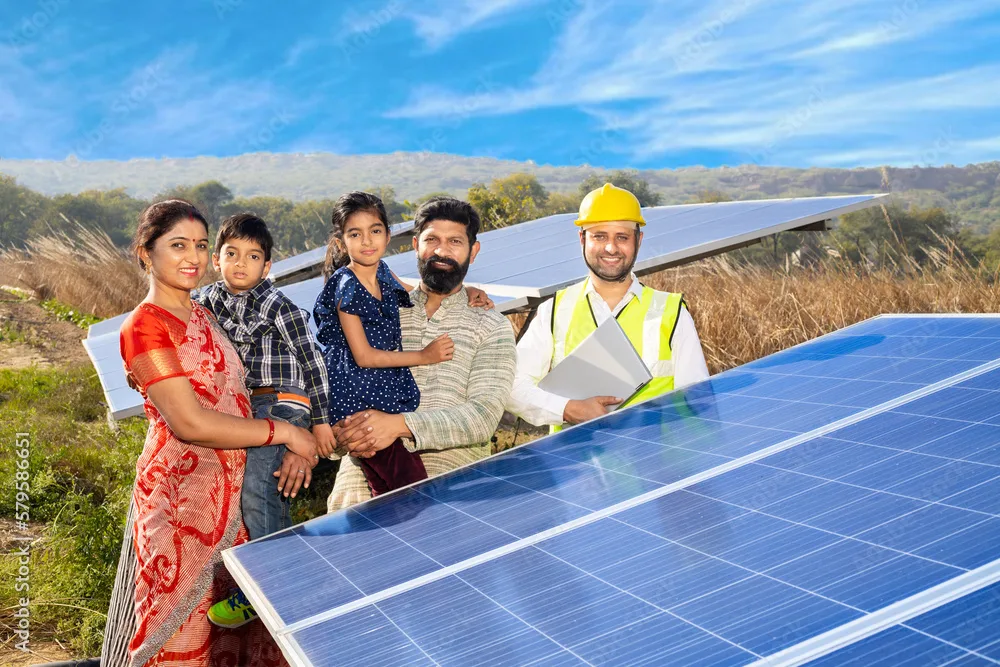
The Union government on Tuesday (Feb 3) informed Parliament that over 28 lakh households across India have benefitted from rooftop solar installations under the Pradhan Mantri Surya Ghar: Muft Bijli Yojana, marking significant progress in the country’s largest-ever domestic rooftop solar programme. Since its launch in February 2024, the scheme has emerged as a cornerstone of India’s renewable energy transition, aimed at reducing household electricity expenses while expanding clean power generation.
The information was shared by Union Minister of State for New and Renewable Energy Shripad Yesso Naik in a written reply to the Lok Sabha on February 4, 2026. According to the minister, a total of 22,65,521 rooftop solar systems have been installed nationwide, benefitting 28,24,518 households till January 30, 2026. The Centre has disbursed Rs 16,061.12 crore as central financial assistance under the scheme during this period.
Top states lead rooftop solar adoption
Data provided to Parliament shows that Gujarat, Maharashtra, Uttar Pradesh, Kerala, and Rajasthan have emerged as the top five beneficiary states under the PM Surya Ghar scheme. These states have seen rapid uptake due to a combination of high solar potential, proactive state-level implementation, and increasing consumer awareness about the long-term financial benefits of rooftop solar systems.
Officials from the Ministry of New and Renewable Energy (MNRE) noted that urban as well as semi-urban regions in these states have witnessed growing participation, while efforts are underway to further penetrate rural and remote areas through targeted awareness campaigns and simplified installation processes.
Subsidies and free electricity for households
At the heart of the PM Surya Ghar: Muft Bijli Yojana is a generous subsidy structure designed to make rooftop solar accessible to ordinary households. Under the scheme, beneficiaries are eligible for subsidies ranging from Rs 30,000 to Rs 78,000, depending on the installed system capacity. The programme allows households to generate up to 300 units of free electricity per month, significantly reducing or even eliminating their monthly power bills.
In addition to free electricity for self-consumption, households can earn an estimated Rs 17,000 to Rs 18,000 annually by selling surplus electricity back to distribution companies (DISCOMs) through net metering arrangements. This dual benefit lower expenses and additional income has played a key role in driving adoption, particularly among middle- and lower-middle-income families.
Budgetary push in Union Budget 2026
The government’s commitment to rooftop solar and renewable energy was further reinforced in the Union Budget presented on February 1, 2026. The Pradhan Mantri Surya Ghar scheme received an allocation of Rs 22,000 crore in Budget 2026, representing a 10 per cent increase over the previous year’s budget estimate of Rs 20,000 crore and nearly 29 per cent higher than the revised estimate of Rs 17,000 crore for 2025-26.
Overall, the Union Budget earmarked Rs 32,914.7 crore for renewable energy, a substantial 30 per cent rise from the revised estimate of Rs 25,301.22 crore in the previous fiscal year. The enhanced allocation reflects the Centre’s strategic emphasis on clean energy expansion, grid modernisation, and household-level solar adoption as part of India’s long-term development vision.
World’s largest domestic rooftop solar programme
With a total outlay of Rs 75,021 crore until FY 2026-27, the PM Surya Ghar scheme is being described by the government as the world’s largest domestic rooftop solar programme. The initiative aims to install rooftop solar systems in one crore (10 million) households over its lifetime.
According to government estimates shared in Parliament, rooftop solar installations across 10 million homes could generate nearly 1,000 billion units of renewable electricity over 25 years, the typical operational life of solar panels. This massive clean energy output is expected to reduce carbon dioxide emissions by approximately 720 million tonnes of CO₂ equivalent, making the scheme a critical contributor to India’s climate commitments under global frameworks.
Strengthening energy security and climate goals
The rooftop solar push is also closely aligned with India’s broader energy security and climate objectives. By decentralising power generation and reducing dependence on fossil fuels and imported energy, the scheme strengthens the resilience of the electricity system while supporting India’s goal of achieving net-zero emissions by 2070.
In his reply to Parliament, Minister Shripad Yesso Naik also highlighted that the government is actively strengthening global partnerships to advance renewable energy technologies, energy storage solutions, and grid integration. These collaborations are expected to play a crucial role in managing the intermittency of solar and wind power while ensuring stable electricity supply.
Beyond rooftop installations, the increased renewable energy allocation in Budget 2026 also focuses on boosting domestic manufacturing of solar panels, wind turbines, and related components. Officials said the funding will help reduce India’s reliance on imports, particularly from China, while creating employment opportunities across the clean energy value chain.
Investments are being directed towards grid-scale renewable projects, energy storage systems such as batteries and pumped hydro, and transmission infrastructure in regions with high renewable potential. Strengthening transmission networks is seen as essential to integrate large volumes of variable renewable energy into the national grid.
Awareness and implementation challenges
While the scheme’s progress has been widely welcomed, experts caution that challenges remain in terms of awareness, last-mile connectivity, and timely approvals from DISCOMs. In some regions, households have faced delays in installation or net metering approvals, highlighting the need for smoother coordination between central, state, and local authorities.
To address these issues, the government has indicated that part of the Surya Ghar allocation will be used for awareness programmes, capacity building, and digital platforms to simplify applications and tracking. The aim is to ensure faster installations, transparent subsidy disbursement, and improved consumer confidence
With over 28 lakh households already covered in less than two years, the PM Surya Ghar: Muft Bijli Yojana is on track to become a defining pillar of India’s clean energy transition. The increased budgetary support in 2026, combined with policy backing and global collaborations, signals that the Centre intends to scale up the programme aggressively in the coming years.