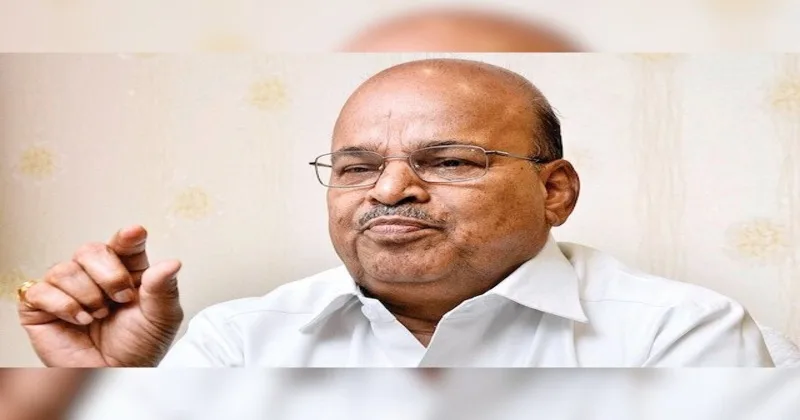
BENGALURU: Karnataka Governor Thawar Chand Gehlot has referred the Karnataka Prevention of Hate Speech and Hate Crimes Bill–2025 to the President of India without granting his assent, citing 29 detailed reasons for his decision. The Governor has expressed serious concerns over various provisions of the proposed legislation, describing them as vague, excessive and potentially detrimental to fundamental rights.
According to sources, the Governor has questioned the very definition of “hate speech” provided in the Bill, stating that it is unclear and open to broad interpretation. He has pointed out that the government introduced the legislation without adequate consultation with the public, civil society groups, legal experts, or even concerned government departments. The Bill was also not subjected to meaningful debate in the state legislature before being passed, he noted.
One of the major objections raised is that over 40 representations were received from various individuals and organisations requesting that the Bill not be approved. Many of these petitions expressed fears that the law could be misused to curb freedom of expression and press freedom. The Governor has taken these concerns into account while forwarding the Bill to the President for further consideration.
In his note, Gehlot has observed that several provisions of the Indian Penal Code already address hate speech and related offences. Sections such as IPC 153A, 153B, 295A and 298 already provide legal remedies against acts that promote enmity or hatred between communities. However, the proposed Bill seeks to expand the scope of these offences and significantly enhance the punishment, which he termed as “disproportionate and oppressive.”
The Governor has particularly objected to the fact that offences that are currently bailable under existing laws have been made non-bailable, and that serious crimes have been introduced under the new Bill. For example, while the Bharatiya Nyaya Sanhita (BNS) prescribes up to three years imprisonment for certain hate speech offences, the new law proposes to increase the punishment to seven years in jail and a fine of Rs 50,000 for first-time offenders, and up to 10 years imprisonment with a fine of Rs 1 lakh for repeat offences. Such harsh provisions, he argued, go against constitutional morality.
Another major concern is that the Bill grants sweeping powers to the police and the state government to regulate online content. It empowers authorities to block or remove digital content deemed hateful and to control internet platforms. The Governor warned that these provisions could be misused to suppress legitimate criticism, academic debate and journalistic work.
He also highlighted that the Bill makes not only individuals but also organisations liable for hate speech. If any offensive statement is made at a rally or event organised by a registered or unregistered body, the organisation’s leaders can be held criminally responsible. This, he noted, could have a chilling effect on political activities, social movements and media freedom.
The Governor further pointed out that the law allows the police to take “preventive action” against any speech or event that they believe might lead to hatred. This effectively gives authorities the power to ban programmes or gatherings based on mere suspicion. “Such provisions grant arbitrary and unchecked powers to officials and can easily be misused against political opponents or disliked groups,” he stated.
Gehlot has also emphasised that the definition of hate speech in the Bill is extremely broad and ambiguous. Ordinary statements, satire, cartoons, or even academic criticism could be interpreted as hate speech at the discretion of lower-level police officers. This could lead to selective targeting and harassment, he warned.
Among the other key reasons listed by the Governor are:
– The Bill was passed without meaningful consultation with both Houses of the legislature, constitutional experts, media bodies and civil society.
– It may have a serious negative impact on democratic debate and constitutionally protected free speech.
– There is an immediate risk of arbitrary blocking of online content, including lawful educational or advocacy material.
– The provisions are overly harsh and may have far-reaching unintended consequences.
– The Bill prioritises the “effect” of speech over its intent, meaning even truthful statements could attract punishment if someone claims to be offended.
– Existing laws in India are sufficient to deal with genuine cases of hate speech and communal hatred.
The Governor concluded that while hate speech is undoubtedly harmful to society, curbing it should not come at the cost of basic freedoms guaranteed by the Constitution. Suppressing free expression in the name of preventing hatred, he observed, would be more dangerous than the problem itself.
All 29 objections have now been forwarded, along with the Bill, to the President of India, who will take a final decision on whether the controversial legislation should receive assent. The development has once again sparked a major debate in Karnataka over the balance between regulating hate speech and protecting freedom of expression.