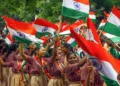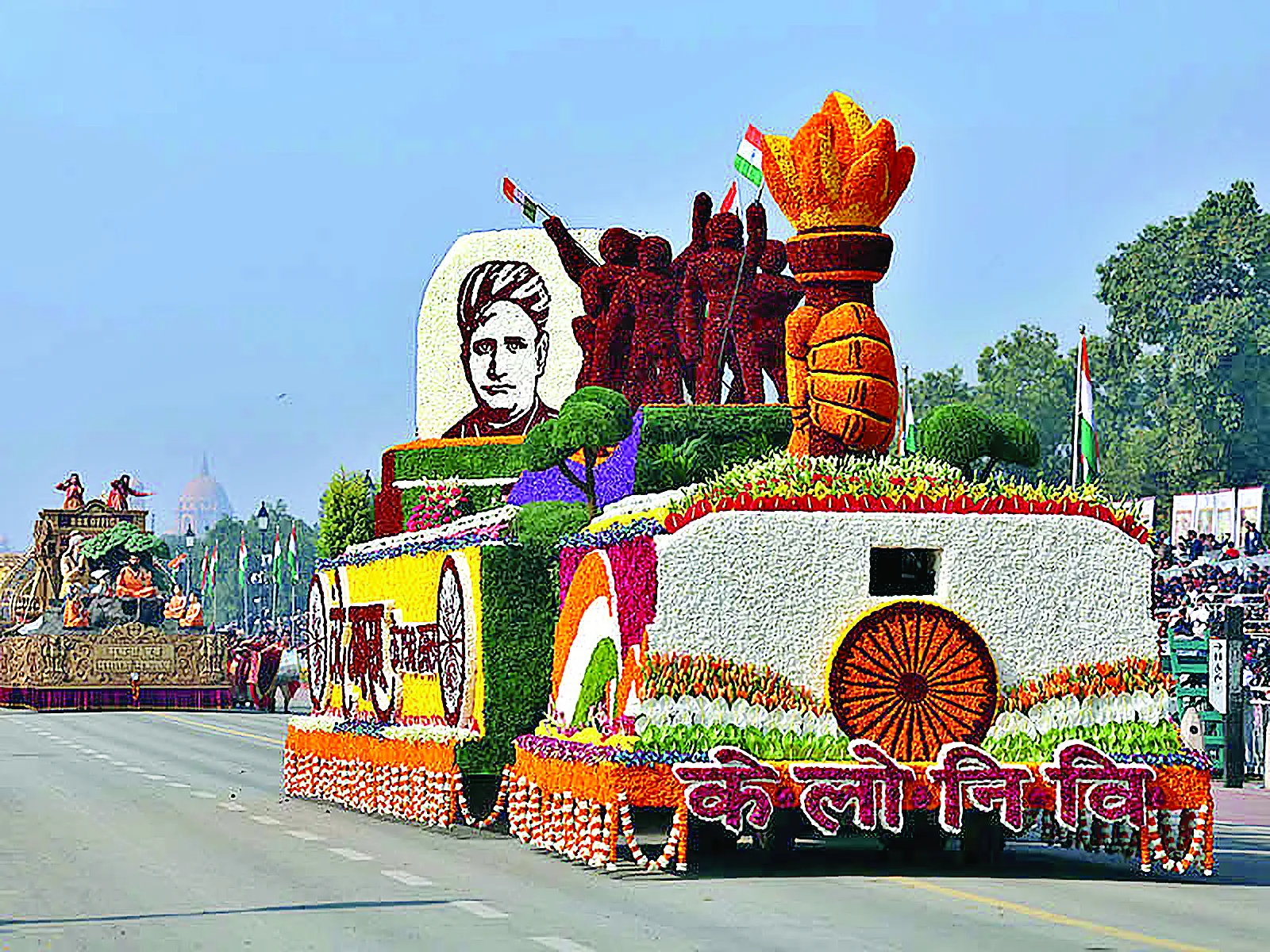
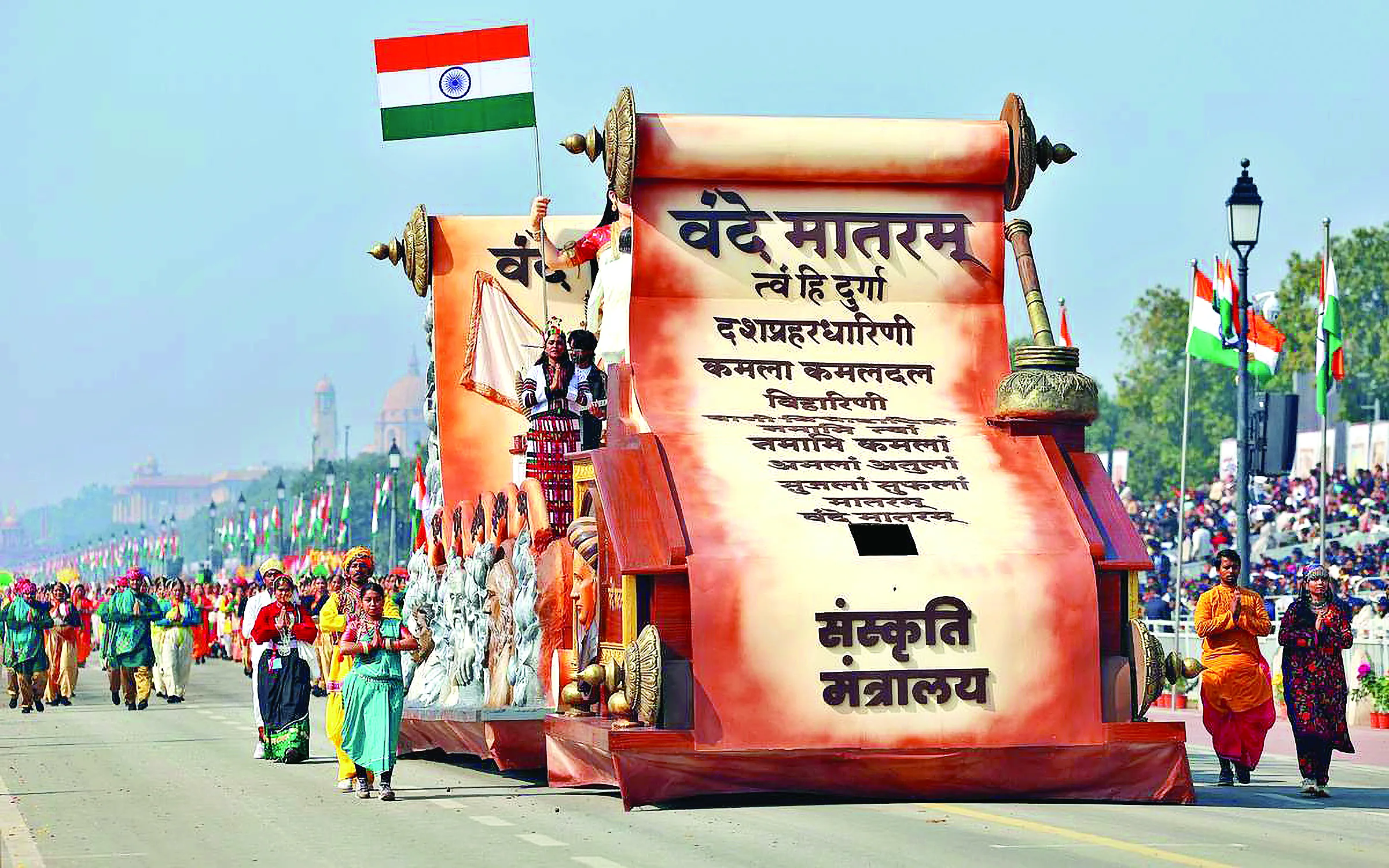
The Kartavya Path Parade evolved into much more than a ceremonial spectacle as Bharat commemorated its 77th Republic Day with the theme “150 Years of Vande Mataram.” It was a purposeful gesture of commemoration and a call to duty, reminding the Republic that daily efforts to preserve memory, strengthen communities, and share responsibilities are just as much a manifestation of loyalty to the country as words and music. The procession transformed Vande Mataram from a hymn of historical struggle into a live ethic of service for the current Republic by fusing history and hope. Vande Mataram transcended from being a timeless transcendent hope, to a practiced commitment of the motherland, the republic, the living ethic, and the civilisation of the nation.
North East: A Picture of Resilience
Reaffirming our civilisation as an object of adoration and devotion of caring or love of possession as a transformational metamorphosis of affection is the metaphoric expression of the North East’s centrality of Vande Mataram.
By establishing North East as a focal point, the Parade commemorated and sheltered Vande Mataram‘s 150-year history, a song that serves as a purposeful anaphora of the motherland: the mother of the land, the song, the North East, the Republic and the Constitution.
Perfect Embodiment of Grace
Assam-designed tableau, a paragon of visual elegance, asserted a sense of continuity, and also showcased terracotta – a prehistoric material, yet its meticulous preservation speaks of craftsmanship, the community and the tradition that the hands of the artisans preserve. Under the service of craft and preservation of the past, the tableau proclaimed Vande Mataram, cultural capital of the Republic, preserved for the future. Other North Eastern tableaus presented ecological resilience, the community’s entrepreneurship, and revived indigenous self-sustaining economy, all framed to the nation’s strength and sustainability.
The Delhi Police Band, and North Eastern women at the helm, and the National Cadet Corps (NCC), a woman from the region, showcased their reconfiguration of the predictable, and the extraordinary was unreservedly left to the rear. From the front to the back, Dilli Band and NCC women drove the rest of the divisions. The promise of oneness is expressed from defence to civil society to culture was the full scope of participation. Those steps, notes, and formations were what transformed patriotism from a mere sentiment to an expression of discipline, training, and a spirited contribution. This was the enactment of modernity that Vande Mataram invoked.
During the parade, the Ministry of Skill Development’s emphasis on traditional weaving by a woman from the North East illustrates the celebration of weaving as a form of nation-building. Weaving, as an economic activity, is a form of storytelling, combining livelihood with creativity and economic avenues with social values. In the parade, we celebrated the traditional craftsmanship of the North Eastern region of Bharat. This linked Atmanirbhar Bharat with the dignity of labour, emphasising that self-reliance is not about economic isolation, but about appreciating the legacy and craft of our ancestors and their seamless integration with contemporary economic structures. In this way, each shuttle and loom represented the nation’s riches and the civic art of weaving community resilience.
Reverence of Manipuri Culture
For me, the most moving moment of cultural self-affirmation was the Manipuri dance during the parade. The inclusion of a classical art form from the North East at the end of the parade was a sign of respect. It stated that classical Bharat is a fusion of diverse regions, and that the Republic’s self-identity must affirm that fusion. It was a manifestation of true inclusivity. It was an acknowledgment that the country was honouring the Eastern region for its classical traditions and commitment to the motherland. The most important takeaway from the parade was that it is national service that truly brings national glory. With ‘Vande Mataram’ celebrating its 150th anniversary this year, the call to us is quite clear. The song implores people to put aside their individual admiration and instead, devote their energy to productive service for the people, for the industry, and for the institutions of the nation. With citizens of the North East leading the parade, along with the central dancers and the craftsmen and the artisans, the Republic of India proclaimed that to serve the nation is to be the most patriotic of all.
As the Republic Day Parade was drawing to a close, there was an element of spectacle and an element of promise. It was We the Republic that sings together and must labour together. In the chant of the drums and the stillness of the intervals, Vande Mataram counseled, Nationhood is a service. Glory is for those who serve the nation with their skill, valour, and virtue.
The theme of Vande Mataram and inclusivity of the North Eastern region is an absolute affirmation of everyone’s service and commitment to the motherland. It is a manifestation of oneness of our civilisation, where we bow down to our motherland, where we live with the ethos of Vande Matram.