With the Union Budget 2026-27 set to be presented on February 1, expectations across Indian industry are running high. From salaried taxpayers and small businesses to infrastructure developers and technology firms, stakeholders are looking to the government for policy clarity, consumption-boosting tax measures, and sustained capital expenditure to keep India’s growth momentum intact amid global economic headwinds.
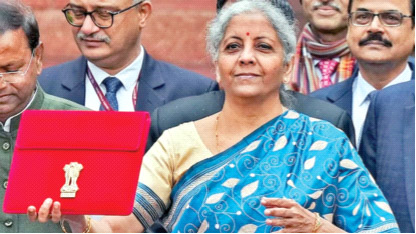
Finance Minister Nirmala Sitharaman is set to create history by becoming the first woman finance minister to present nine consecutive Union Budgets. As she prepares for this milestone, her upcoming Budget is being closely watched for signals on how the government plans to balance fiscal discipline with growth, job creation, and India’s long-term ambition of becoming a developed economy by 2047.
Industry leaders say Budget 2026 comes at a crucial juncture. While India remains one of the fastest-growing major economies, private investment has shown signs of caution, global trade faces uncertainty due to geopolitical tensions, and domestic consumption needs further support to remain resilient.
Income Tax Relief: Middle class at the centre of expectations
One of the strongest expectations from Budget 2026 is further income tax relief for individuals, especially the middle class. After last year’s move to make income up to Rs 12 lakh tax-free under the new tax regime, taxpayers are hopeful that the government will go a step further to boost disposable incomes.
According to sources quoted in media, the government is considering extending certain deductions currently available only under the old tax regime to the new regime. A key proposal under discussion is allowing a deduction of up to Rs 2 lakh on home loan interest under the new tax regime, a benefit that could encourage home ownership and revive housing demand.
Another proposal being discussed is a deduction of up to Rs 50,000 for medical insurance premiums. With healthcare costs rising sharply, such a move would provide much-needed relief to families and encourage wider insurance coverage.
Taxpayers are also seeking an increase in the standard deduction under the new tax regime, from the current Rs 75,000 to Rs 1 lakh. Industry experts believe that additional tax relief could help boost consumption, which in turn would support sectors such as retail, real estate, automobiles and consumer goods.
Infrastructure and Real Estate: Call for higher capex and faster clearances
Infrastructure remains one of the biggest focus areas for industry ahead of Budget 2026. Business leaders are urging the government to maintain or even increase capital expenditure, which has played a key role in supporting economic growth and employment over the past few years.
The real estate sector, in particular, is seeking long-pending structural reforms. Developers are calling for “industry” status for real estate, which would improve access to institutional funding and reduce borrowing costs. They are also seeking faster digitisation of land records and a simplified single-window clearance system to reduce project delays.
Pradeep Aggarwal, founder and chairman of Signature Global (India) Ltd, quoted in a report by News 18 said the real estate sector currently contributes around 7 per cent to India’s GDP and supports over 200 allied industries, including cement, steel and construction services. With the right policy support, he said, the sector could contribute up to 15 per cent of GDP by 2047.
Brokerage firm Axis Securities expects the government to consider increasing the interest deduction limit under Section 24 from Rs 2 lakh to Rs 5 lakh, especially for homebuyers in the affordable housing segment. Industry players also want clarity on tax incentives for developers to encourage the supply of affordable homes.
Capital Expenditure: Backbone of growth strategy
Industry leaders broadly agree that sustained government spending on infrastructure is critical at a time when private investment remains cautious. Roads, railways, ports, logistics parks and urban infrastructure are seen as key drivers of growth and job creation.
Notably, continued capex spending not only creates direct employment but also crowds in private investment by improving connectivity, lowering logistics costs and enhancing productivity. As global demand remains uncertain, domestic infrastructure spending is seen as India’s strongest growth lever.
Artificial Intelligence and technology
Artificial intelligence is expected to be a major theme in Budget 2026. Industry leaders believe the government must play a catalytic role in supporting AI research, adoption and talent development across sectors such as healthcare, manufacturing, education and governance.
The healthcare sector, in particular, is hopeful of strong policy support for AI-led diagnostics. Government-backed AI tools could help in early disease detection, improve access to diagnostics in rural areas, and reduce healthcare costs by assisting doctors through data-driven decision-making.
Technology leaders are seeking increased funding for AI research, tax incentives for companies investing in AI solutions, and policies that encourage collaboration between startups, academia and large enterprises.
Healthcare and Pharmaceuticals
The pharmaceutical and healthcare sectors are looking to Budget 2026 for measures that strengthen research and innovation. Industry leaders believe India must move beyond volume-based growth and focus on high-value, complex therapies and advanced medical technologies.
Satish Reddy, chairman of Dr Reddy’s Laboratories, said closer alignment between science, policy and industry is essential for India to emerge as a global innovation hub. With the pharmaceutical sector expected to play a major role in achieving India’s $500 billion industry goal by 2047, he stressed the need for structured funding frameworks to support long-term R&D.
The medical devices and MedTech sector is also seeking tax rationalisation and incentives to boost domestic manufacturing, reduce import dependence, and strengthen India’s healthcare supply chain.
MSMEs: Credit access and stability in focus
Micro, small and medium enterprises (MSMEs) are once again looking to the Union Budget for targeted support. Despite improvements in the credit ecosystem, MSMEs continue to face a large financing gap.
Akash Jain, CEO of AKME Fintrade Limited, said the total credit gap for MSMEs is estimated at nearly Rs 30 lakh crore, accounting for about one-fourth of total debt demand. He said enhanced refinance windows, partial credit guarantees and easier access to long-term funds could significantly improve credit availability.
MSME leaders are also seeking GST rationalisation, simpler compliance norms and clarity on TDS provisions to reduce operational burdens. Given global trade uncertainties, industry experts believe the government may adopt a cautious yet supportive approach towards MSMEs in Budget 2026.
Education: Aligning with jobs
Education stakeholders are urging the government to invest more in strengthening India’s higher education ecosystem. With a growing number of students choosing to study abroad, experts say improving quality, research funding and industry-academia collaboration is crucial.
Prof. V. Ramgopal Rao, group vice-chancellor of BITS Pilani, said simply expanding capacity will not solve the problem. He stressed the need to align education with rapidly changing job requirements and emerging technologies.
Fr. Nelson A. D’Silva, acting director of XLRI Delhi-NCR, echoed similar views, saying institutions must remain responsive to real-world industry needs to ensure students are job-ready.
Capital Markets
Equity investors are watching Budget 2026 closely for any changes to securities transaction tax (STT) and capital gains tax. With higher levies impacting post-tax returns, market participants are hoping the government will review the current tax structure to encourage long-term investment and deepen capital markets.
Retail sector
India’s retail sector is expecting continued policy support to strengthen consumption and investor confidence. Industry estimates suggest India’s retail market could double to $2 trillion by 2032, but sustained consumer-led growth will be key to achieving this target.
Shriram PM Monga, co-founder and principal consultant at SRED, said measures related to taxation, credit access, infrastructure and ease of doing business could help organised retail expand beyond major cities, creating jobs and boosting domestic demand.
As Budget 2026 approaches, expectations are high but tempered by realism. Industry leaders acknowledge that global uncertainty, geopolitical tensions and fiscal constraints may limit the government’s ability to announce sweeping reforms.
Still, most agree that a Budget focused on tax relief for individuals, sustained infrastructure spending, AI-driven growth and targeted support for MSMEs could provide the stability and confidence needed to keep India’s growth story on track.