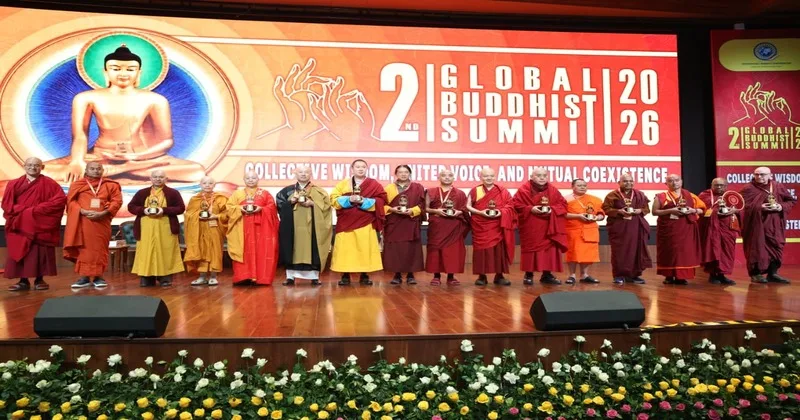
Rooted in the Indian Knowledge Tradition, this Global Buddhist Summit begins with a remembrance of the wisdom that flows from inner awakening to universal compassion. From the teachings of the Buddha, India has offered the world a path of prajna (wisdom), karuna (compassion), and madhyama pratipada (the middle way), guiding humanity toward harmony within and beyond. This ancient knowledge tradition does not divide the sacred and the worldly; it gently unites thought, conduct, and consciousness for the welfare of all beings. As we gather from across nations and cultures, we reaffirm a shared commitment to peace, dialogue, and the quiet strength of mindful living for a troubled world.
These principles are central to shared prosperity and a deeper human connection, as reflected in the 2nd Global Buddhist Summit organised by the International Buddhist Confederation with the support of the Ministry of Culture on 24-25 January at the Bharat Mandapan, New Delhi.
The theme of the submit “Collective Wisdom, United Voice, and Mutual Coexistence” was explained by the Secretary General, IBC Shartse Khensur Rinpoche Jangchup Choeden, in his welcome address. He said that the idea of this submit is to strengthen the role of Buddha Dhamma in nurturing old civilisation and promoting constructive international engagement.
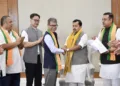
Union Minister for Culture and Tourism, Gajendra Singh Shekhawat, as the Chief Guest, noted that since Narendra Modi assumed office as Prime Minister, India has given importance to its civilizational legacy, the Buddhist heritage, both in terms of spiritual and cultural aspects.
Buddhabhoomi Bharat (Birth Place of Buddha Dhamma) is preserving, promoting, and projecting Buddhist values and heritage in a responsible manner . He also pointed out the significance of Buddha Dharma as a ‘civilizational bridge that binds Asia and the rest of the world together’ and mentioned the importance of cultural institutions, heritage conservation, and global cooperation in promoting Buddhist traditions and Culture. “Under Gyan Bharatam, the Government of India is undertaking one of the world’s largest initiatives for the digitisation of ancient manuscripts,” the Minister stated, emphasising that this landmark effort reflects India’s commitment to preserving and sharing its vast civilisational and spiritual knowledge with the world.
Shekhawat also encouraged delegates and citizens to visit the grand international exhibition “The Light & The Lotus: Relics of The Awakened One”, currently on display at the Rai Pithora Cultural Centre, New Delhi. Mentioning the Piprahwa Relics, repatriated to India after 127 years, he described them as living symbols of India’s ancient civilisation and timeless spiritual legacy.
The Guest of Honour, the Union Minister for Parliamentary Affairs and Minority Affairs, Kiren Rijiju, remarked that the teachings of Lord Buddha continue to show the path for peace and harmony. He stated “We all are interdependent. If I do something, it has a consequence, it has an effect; therefore, I cannot proclaim that whatever I do is for myself, there is a consequence.”
Recalling Prime Minister Narendra Modi’s statement in 2014, he noted that “if any global leader or any country, aspires to dominate, aspires to become a powerful nation, he must follow Buddha’s path. If you follow Buddha’s path, then you will always spread positivity around, otherwise in the quest to acquire power, you are actually damaging the surroundings. Some of the global leaders today talk about military power, economic authority. But if you follow Buddha’s middle path you will become powerful and more prosperous, in the process you will make others happy and others prosperous too. So it is so relevant today, in the interdependent political concept that we must aspire to rise but we must follow the concept that we rise together. Thus, all are dependent on each other, nothing is in isolation,” he explained.
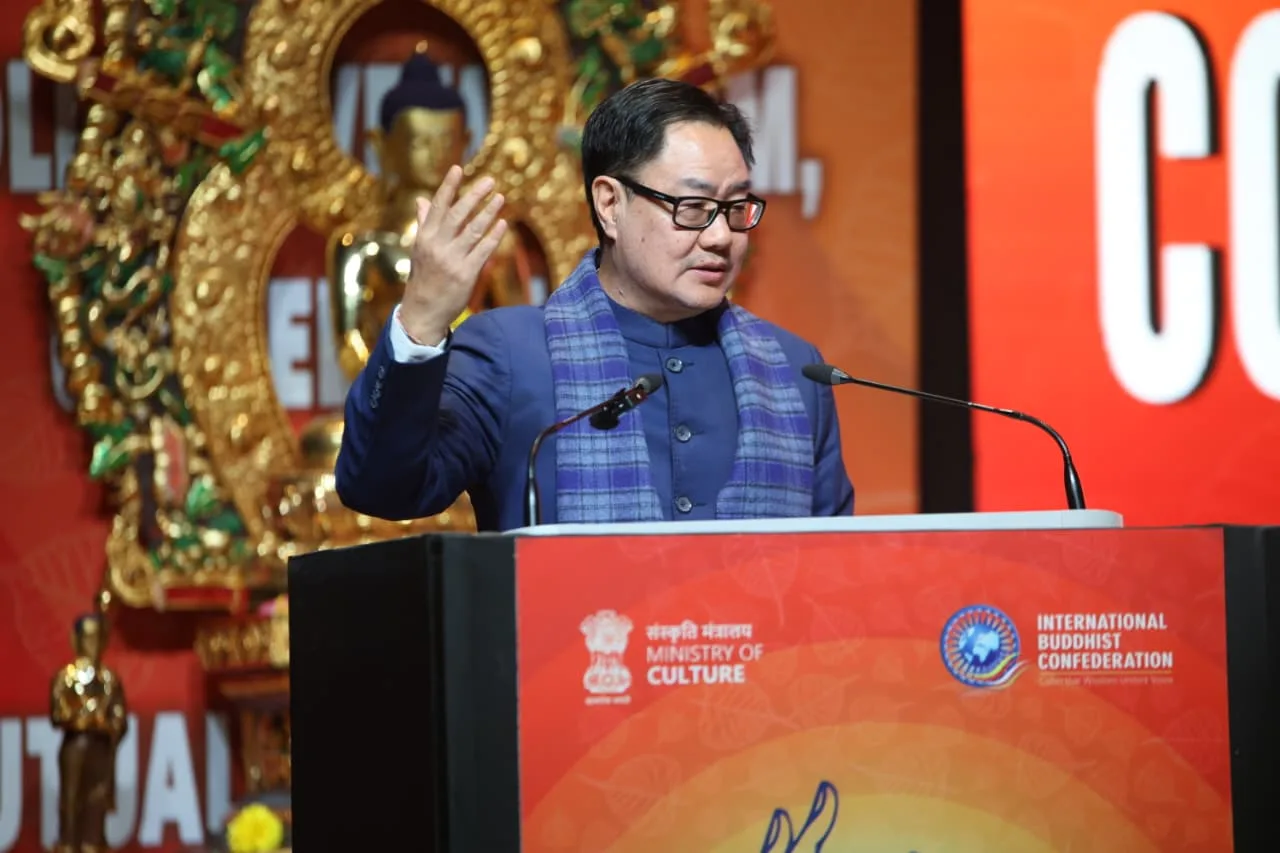
He further remarked that “Buddha Dhamma is not only for those who identify with it as Buddhists, but for everyone. It has an underlying inclusive and universal appeal.” India, he concluded, bears a special responsibility to preserve, share, and live its principles of vasudhaiv kutumbkam.
The Summit had participation from 40 countries, ranging from heads of Buddhist Sangha, senior government dignitaries, diplomats, business leaders and representatives of civil society organisations. Over 200 international participants took part in the deliberations, with nearly 900 delegates from India, representing academicians, research scholars and students of Buddhist studies from different academic institutions.
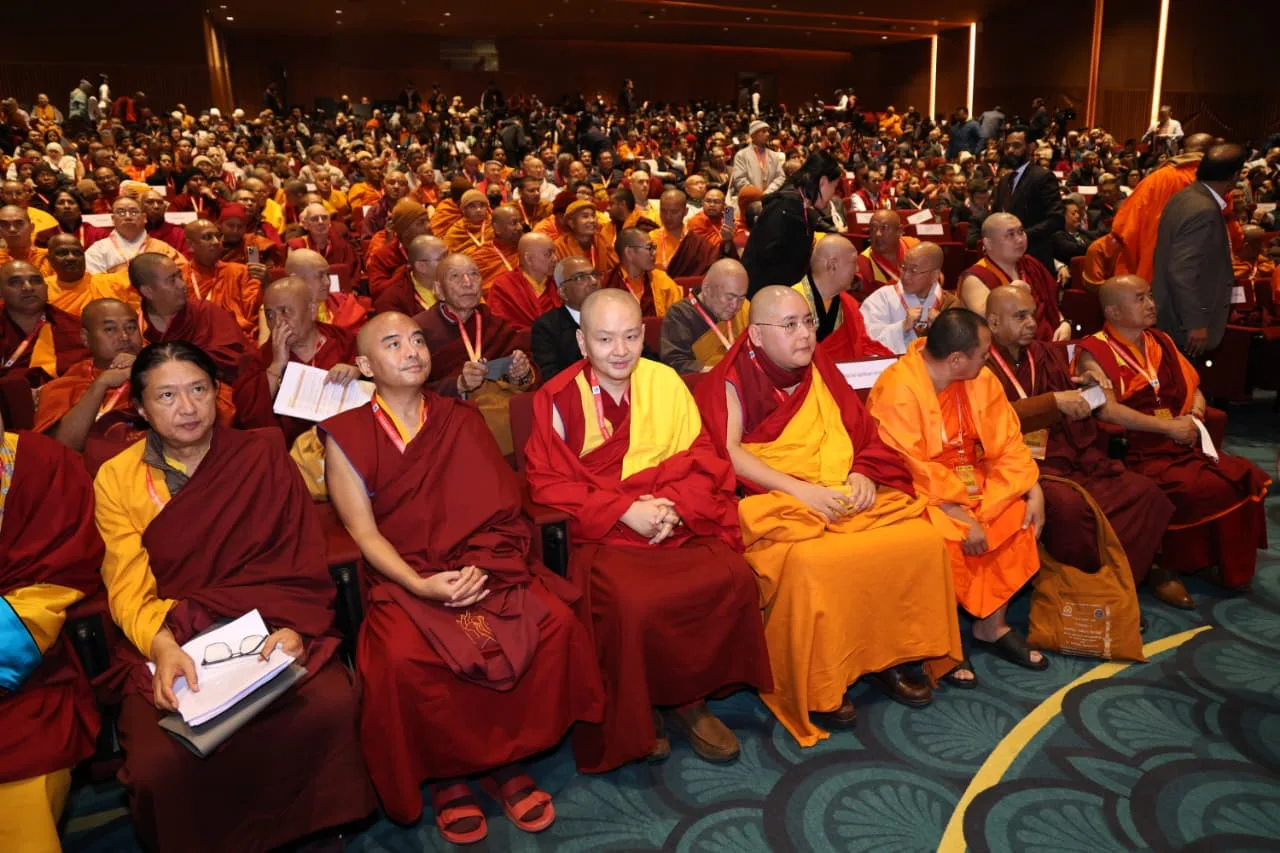
At the outset, renowned political leaders and venerable spiritual masters from Thailand, Myanmar, India, Russia , and Vietnam spoke on the potential of Buddha Dharma in creating Harmony in diverse societies. The presentations of dignitaries and senior monks during the sessions reflected similar ideas, emphasising the relevance of Buddha Dharma as a living tradition that connects spirituality, governance, and global citizenship.
At the Summit, amidst the countries mentioned above, for the first time, Buddhists from Israel, Turkey, Spain, Argentina, and Finland participated in the international event.
In conclusion, the Summit provided participants with an opportunity to reflect on Buddhist knowledge and how it can be applied in the contemporary era.
At the end of the Conference, IBC presented a Delhi Declaration, which was unanimously adopted.
The following day, participants visited Qila Rai Pithora Cultural Complex, a fort of Prithviraj Chauhan near Saket, to pay their respects and offer prayers to the Holy relics of the Buddha at the exposition, inaugurated by the Prime Minister on Jan 3, 2026. The delegates from overseas and India spent over 2 hours viewing the exhibition and were mesmerised by the historical background of the Piprawah relics and the background about how India made efforts to bring back the reliquaries of the Buddha which were taken away from India in 1898. These were brought back and united with the other part of the same reliquaries that were in the Calcutta Museum. They appreciated India’s efforts to not only preserve its ancient heritage but also ensure that they are repatriated home.
Another highlight was the visit of around 60 monks from different countries to watch the Republic Day parade on 26 January. The foreign monks were very happy to see a disciplined contingent of army regiments on Kartavya Path (Path of Duty) , India Gate . This Republic Day, the nation proudly showcases Swadeshi (Indigenous) military equipment, a testament to India’s growing self-reliance in defence technology. From advanced indigenous fighter jets and naval vessels to cutting-edge missile systems and armoured vehicles, these innovations reflect decades of dedicated research and technological excellence by Indian scientists and engineers. The display demonstrates the broader national mission of Atmanirbhar Bharat, where homegrown innovation ensures both security and global competitiveness. The parade is thus not just a celebration of military strength, but a tribute to India’s self-reliance and patriotic spirit.
“It was a thrilling experience,” said a Senior monk. As the parade ended and the group left the stand, three Ven. Nuns from Vietnam requested permission to stay on since Prime Minister Narendra Modi was walking past the sitting area, and they wanted to greet him. Though the rest of the group left, they were obliged by the IBC staff. Later, they expressed their delight at seeing the Prime Minister up close. Several photographs were taken to cherish the special moment so that they could share the experience with others on their return. “It was a once in a lifetime experience for me,” remarked the Ven Nun, later.
At the Bharat Mandapam event, four exhibitions were also organised. First was related to Visual panels displaying the Sacred Relic & Cultural Engagement of India.
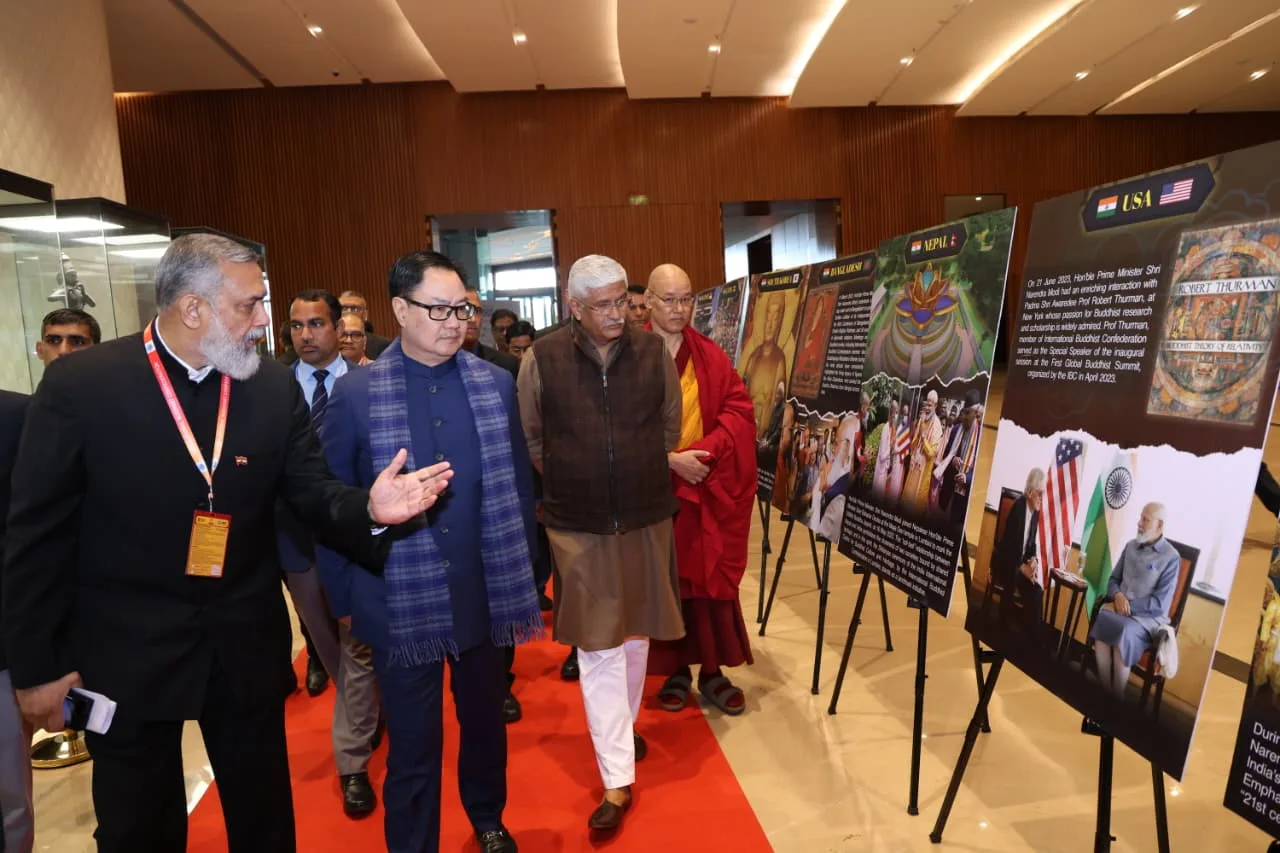
The second exhibition title- “Virasat se Vishwa: India’s Buddha Dhamma Outreach”. The exhibition traced India’s journey from civilizational heritage to global engagement, showcasing how the timeless teachings of the Buddha have been carried from their sacred origins to the global stage. Through curated visuals, it highlighted India’s engagement through the visits of Prime Minister Narendra Modi around the world. It showcased Buddha Dhamma as a living tradition in promoting continuity , dialogue and compassion, while reaffirming India’s role as the spiritual custodian and global bridge of Buddhist wisdom.
There was one introductory panel, followed by an infographic map and then 18 panels of one country each highlighting India’ Buddha Dhamma outreach through the Prime Minister’s travels. Countries covered were Sri Lanka, South Korea, Laos, the USA, Japan, Singapore, Nepal, Vietnam, Mongolia, Myanmar, Russia, Bhutan, Thailand, China, Malaysia, Bangladesh, Uganda, and Indonesia.