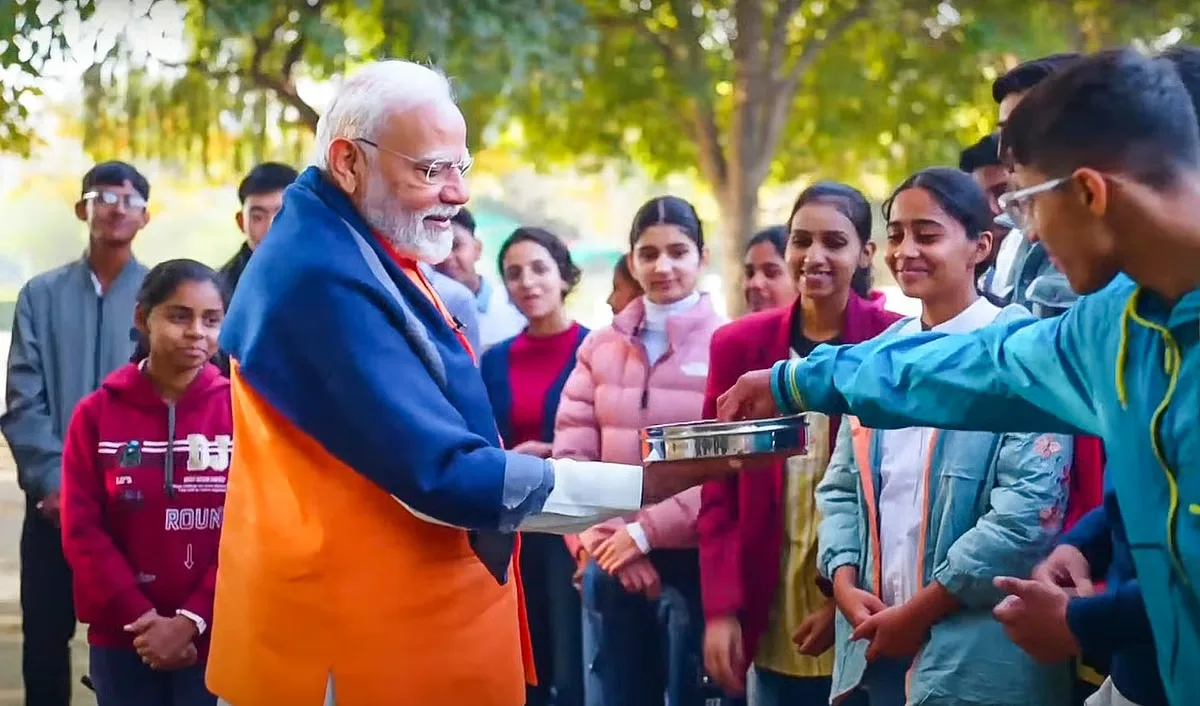
The ninth edition of Prime Minister Narendra Modi’s Pariksha Pe Charcha (PPC) in 2026 marked a significant evolution in one of India’s most visible education-focused public outreach initiatives. What began in 2018 as a structured interaction between the Prime Minister and a limited group of students in New Delhi has now grown into a truly nationwide dialogue, engaging students, parents, teachers and communities across the length and breadth of the country. With over 6.76 crore people participating through registrations, activities and associated engagements, PPC 2026 underscored its transformation from an annual event into a people-driven movement centred on stress-free learning and holistic development.
Pariksha Pe Charcha was conceptualised with a simple but powerful idea: examinations should not become a source of fear, anxiety or undue pressure for students. Over the years, the programme has steadily expanded its scope, both in terms of participation and thematic depth. PPC 2026 reflected this maturation by breaking away from the traditional single-venue format and embracing a pan-India structure that symbolically and practically connected students from different regions of the country.
For the first time, Prime Minister Modi interacted directly with students from multiple locations across India, including Coimbatore in Tamil Nadu, Raipur in Chhattisgarh, Dev Mogra in Gujarat and Guwahati in Assam. This geographic spread was not incidental. It was designed to represent India’s diversity and to convey the message that students from every corner of the nation share common challenges, aspirations and anxieties when it comes to education and examinations. By engaging with students across the south, east, west, north and central India, the programme visually and substantively reinforced its pan-Indian character.
Officials associated with the programme described this decentralised interaction as a natural progression of PPC’s philosophy. Instead of students travelling to the national capital, the Prime Minister’s interaction reached students where they live and study, reflecting a more inclusive and participatory approach. The format also allowed local educational ecosystems, schools, teachers, parents and administrators to become active stakeholders in the process.
The scale of participation in Pariksha Pe Charcha 2026 was unprecedented. More than 4.5 crore people formally registered for the programme, demonstrating its widespread appeal among students and education stakeholders. In addition, around 2.26 crore individuals actively participated in various activities linked to PPC, such as discussions, preparatory sessions, community events and Jan Andolan-style engagements. Together, these figures took the total participation to over 6.76 crore, highlighting the programme’s deepening penetration into Indian society.
Since its inception in 2018, Pariksha Pe Charcha has been organised annually, with Prime Minister Modi directly engaging with students, teachers and parents. The interactions typically focus on how students can approach board and entrance examinations with confidence, clarity and calmness. However, over the years, the conversations have expanded to include broader issues such as time management, goal setting, resilience, self-belief, discipline, curiosity and lifelong learning.
A distinctive feature of PPC has been its participatory selection process. Students from across the country are invited to take part in a nationwide competition, with winners earning the opportunity to attend the event and, in some cases, interact directly with the Prime Minister. This competitive yet inclusive process ensures representation from diverse socio-economic, regional and institutional backgrounds, making PPC a shared national experience rather than an elite interaction.
The evolution of Pariksha Pe Charcha became particularly evident in its recent editions. The eighth edition, held on February 10, 2025, at Sunder Nursery in New Delhi, introduced a new and innovative format that further broadened the programme’s scope. That edition featured 36 students drawn from a wide range of institutions, including government schools, Kendriya Vidyalayas, Sainik Schools, Eklavya Model Residential Schools, CBSE-affiliated schools and Jawahar Navodaya Vidyalayas. This diversity reflected a conscious effort to include voices from different educational systems and social contexts.
In addition to school students, participants in PPC 2025 included alumni of the PRERANA initiative and winners of national-level cultural and inspirational programmes such as Kala Utsav and Veer Gatha. Their inclusion highlighted the government’s emphasis on recognising talent, creativity and values alongside academic achievement.
Another major innovation in the 2025 edition was its thematic structure. Instead of a single, continuous interaction, the programme was organised across seven separate episodes, each focusing on a specific theme relevant to students’ lives. These themes included sports and discipline, mental health and emotional well-being, nutrition and physical fitness, technology and digital balance, financial awareness, creativity, and positivity. This format allowed for deeper engagement with each subject and reinforced the idea that education extends beyond textbooks and examination halls.
Pariksha Pe Charcha 2025 also achieved a historic milestone by entering the Guinness World Records. The edition attracted participation from students in more than 245 countries, teachers from 153 countries and parents from 149 countries, underscoring its global resonance, particularly among the Indian diaspora. The recognition highlighted how an initiative rooted in India’s education system had found relevance among education stakeholders worldwide.
Participation trends over the years reveal the programme’s remarkable growth. From just 22,000 participants in its inaugural edition in 2018, Pariksha Pe Charcha saw registrations rise to 3.56 crore in 2025. In addition, around 1.55 crore people participated in Jan Andolan activities linked to PPC that year, taking total engagement close to 5 crore. Guinness World Records officially recognised PPC 2025 for achieving 3.53 crore registrations, a testament to its expanding influence.
Against this backdrop, PPC 2026 represented not just continuity but consolidation and expansion. By crossing the 6.76 crore participation mark, the programme reaffirmed its status as one of the largest student-focused public engagement initiatives in the world. Education experts and policymakers have noted that such scale gives PPC a unique ability to shape narratives around examinations, mental health and learning practices at a national level.
Central to Pariksha Pe Charcha’s appeal has been Prime Minister Modi’s conversational style and emphasis on empathy. Rather than offering prescriptive advice, his interactions often draw on personal experiences, anecdotes and practical examples, encouraging students to view challenges as opportunities for growth. The focus on reducing exam-related stress, building self-confidence and nurturing individuality resonates strongly in a system often criticised for excessive academic pressure.
The broader vision driving PPC is to create an ecosystem where students feel supported by parents, teachers and society at large. By involving all these stakeholders, the programme seeks to shift the cultural mindset around examinations—from fear-driven performance to joyful learning and self-discovery. Officials have repeatedly emphasised that PPC is not an anti-exam campaign but an effort to humanise the examination process.
As Pariksha Pe Charcha 2026 unfolds across regions and platforms, it carries forward the message that education is as much about emotional well-being and character-building as it is about marks and ranks. With its pan-India outreach, record-breaking participation and evolving formats, PPC continues to redefine how a nation of learners engages with one of the most critical phases of student life.
Returning with renewed scale and ambition, Pariksha Pe Charcha 2026 aims to further entrench the idea of stress-free examinations and joyful learning in India’s educational culture. In doing so, it reinforces a simple yet transformative message: every student matters, every voice counts, and learning should be a journey of confidence rather than fear.