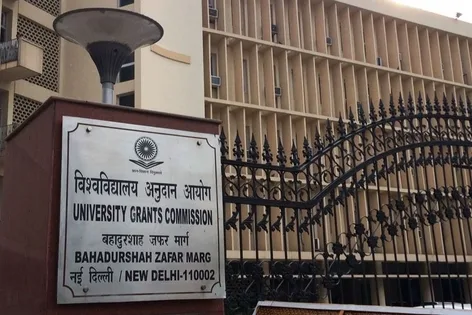
On January 13, 2026, the University Grants Commission (UGC) issued a notification introducing the University Grants Commission (Promotion of Equity in Higher Education Institutions) Regulations, 2026. Framed as a comprehensive overhaul of the earlier 2012 equity regulations, the new framework claims to strengthen inclusion and eradicate discrimination across India’s higher education ecosystem.
However, within hours of its publication, the notification triggered sharp outrage on social media, with critics alleging that the regulations could institutionalise ideological policing, create permanent categories of “oppressors” and “oppressed,” and turn campuses into spaces of continuous monitoring rather than free intellectual exchange.
At the heart of the controversy lie provisions mandating Equity Squads, Equity Ambassadors, round-the-clock helplines, compulsory undertakings, and external coordination with NGOs and authorities, measures that supporters describe as protective, but detractors see as intrusive.
Who does the regulation apply to and when did it come into force?
The regulations apply to all higher education institutions in India, including: Central, State, and Provincial universities, colleges, deemed-to-be universities.
They came into effect immediately upon publication in the Official Gazette on January 13, 2026, leaving institutions with little transition time to adapt to the sweeping changes.
According to the UGC, the primary objective is to eliminate discrimination based on: Religion, race, caste
gender, place of birth, disability.
The regulations place special emphasis on protecting Scheduled Castes (SCs), Scheduled Tribes (STs), Other Backward Classes (OBCs), Economically Weaker Sections (EWS), and Persons with Disabilities (PwDs).
The stated goal is to create a “level playing field” in higher education institutions and ensure dignity, equal access, and fair treatment for all stakeholders.
Why are the definitions in the regulations raising red flags?
One of the main sources of concern is the open-ended nature of key definitions.
1. “Discrimination” is defined as any unfair, differential, or biased treatment, explicit or implicit, that impairs equality or violates human dignity.
2. “Equity” is described as providing a “level playing field” for stakeholders to enjoy legitimate rights.
Many argue that such broad wording leaves excessive room for subjective interpretation. What qualifies as “implicit bias”? Who decides what constitutes a “level playing field”? In the absence of clear thresholds, these definitions could potentially be used selectively or arbitrarily.
The document also separately defines caste-based discrimination, focusing on discrimination against SCs, STs, and OBCs solely on the basis of caste or tribe.
The regulations introduce a three-tier institutional framework for enforcing equity.
1. Equal Opportunity Centre (EOC)
Every higher education institution must establish an Equal Opportunity Centre (EOC) as the central body responsible for equity-related matters.
Its responsibilities include:
1. Implementing policies for disadvantaged groups
2. Providing academic, financial, and social counselling
3. Monitoring campus diversity and dropout rates
4. Coordinating with civil society, NGOs, local media, police, district administration, and parents
5. Liaising with District and State Legal Services Authorities
6. Maintaining an online portal for discrimination complaints
7. Publishing bi-annual reports detailing complaints, demographics, and actions taken
Smaller colleges that lack sufficient faculty are required to rely on the affiliated university’s EOC, extending the reach of the system beyond individual campuses.
The mandate to coordinate with NGOs has drawn particular scrutiny, with critics warning of ideological infiltration into academic spaces.
2. Equity Committee
Each EOC will function through an Equity Committee, tasked with investigating complaints and supervising equity initiatives.
Its composition includes:
1. Head of Institution as Chairperson
2. Three senior faculty members
3. One non-teaching staff member
4. Two civil society representatives
5. Two student representatives (as special invitees)
6. EOC Coordinator as Member-Secretary
The regulations explicitly mandate representation from OBCs, SCs, STs, PwDs, and women, ensuring demographic diversity within the committee.
Members serve two-year terms, students one year, and the committee must meet at least twice annually.
3. Equity Squads and Equity Ambassadors
Perhaps the most debated aspect of the notification is the creation of Equity Squads, mobile units tasked with patrolling “vulnerable spots” on campus to prevent discrimination.
These squads report directly to the EOC Coordinator.
Additionally, every department, hostel, library, and facility must appoint at least one Equity Ambassador, described as a “torchbearer of equity,” responsible for:
1. Acting as a nodal point for EOC programmes
2. Reporting violations without delay
3. Promoting awareness of equity norms
Many argue that together, these mechanisms risk transforming campuses into mini surveillance zones, where peer monitoring replaces trust and debate.
What is the equity helpline and how will complaints be handled?
All institutions must operate a 24/7 Equity Helpline. If a college fails to do so, the affiliated university’s helpline must serve its stakeholders.
The complaint process follows a strict timeline:
1. Reporting: Complaints can be submitted online, via email, in writing, or through the helpline. Identity can remain confidential.
2. Initial Action: The Equity Committee must meet within 24 hours.
3. Investigation: A report must be submitted within 15 working days.
4. Institutional Action: The Head of Institution must act within seven working days.
5. Special Cases: If the complaint involves the Head, it escalates to a higher authority.
6. Criminal matters must be reported to the police immediately.
Is there an appeal mechanism?
Yes. Aggrieved parties may appeal to the UGC-appointed Ombudsperson within 30 days.
The Ombudsperson may appoint an amicus curiae, with costs borne by the institution. Appeals must be resolved within another 30 days.
The regulations require:
1. Mandatory undertakings by students, faculty, and staff pledging to promote equity
2. Prominent display of equity rules on websites
3. Orientation programmes involving parents, police, and district officials
4. Workshops, posters, and awareness campaigns
5. Engagement of professional counsellors
6. Whistleblower protection
Many argue that compulsory ideological declarations may amount to forced conformity, blurring the line between ethical conduct and belief enforcement.
What happens if institutions do not comply?
Non-compliance can lead to severe sanctions, including:
1. Exclusion from UGC schemes
2. Loss of degree-awarding powers
3. Removal from recognised institution lists under the UGC Act
4. Restrictions on online and ODL programmes
5. An enquiry committee will determine penalties on a case-by-case basis.
The UGC’s stated intent to eliminate discrimination is widely acknowledged as necessary. However, the scale, speed, and structure of the regulations raise deeper questions about how inclusion is enforced and at what cost to academic freedom.
At stake is not just equity policy, but the future character of India’s universities: whether they remain arenas of open thought or evolve into tightly monitored environments governed by regulatory vigilance rather than intellectual trust.
The debate is far from settled but the implications are profound.