India carved a clear strategic edge during Operation Sindoor against Pakistan and its state-sponsored terrorism. Unable to bear the brunt of massive failure and to whitewash its defeat across the geopolitical spectrum, Pakistan went for an urgent constitutional overhaul. Major changes were funneled even to the defence structure of Rawalpindi. These key amendments were inscribed into the constitution of Pakistan and the alteration of the military apparatus to further consolidated the iron fist of the military chief Asim Munir over the military and governance of Pakistan.
This dire constitutional change, in reality, reflects the insecurities of Pakistan and its de facto supreme ruler Asim Munir. It reinforced the fact that Pakistan failed against India during Operation Sindoor, said the Chief of Defence Staff General Anil Chauhan. In order to conceal the failures and its strategic loopholes encountered during Operation Sindoor, Pakistan swiftly went for a constitutional amendment and reorientation of the military structure of the country.
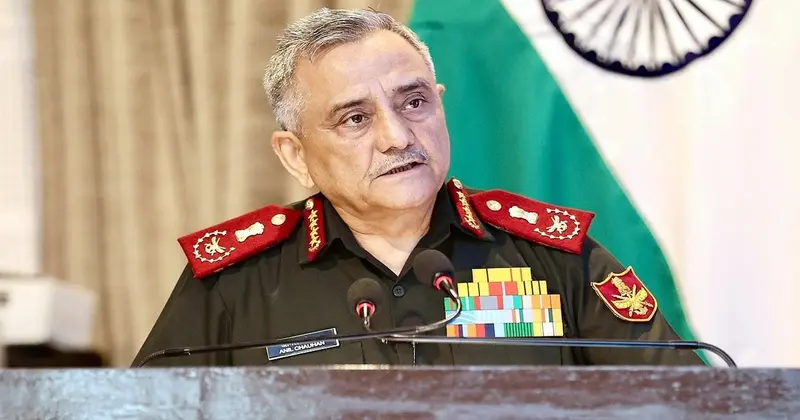
Speaking at the Pune Public Policy Festival, CDS General Anil Chauhan reiterated, “The changes which have been brought about in Pakistan, including the constitutional amendment done hurriedly, are actually an acknowledgement of the fact that everything didn’t go well for them in this operation. They found a lot of shortcomings and deficiencies”. He further asserted that the nature of changes brought in the defence set up of Pakistan echoes the message of power consolidation by Asim Munir and a “land-centric mindset” in warfare.
Post its failure in Operation Sindoor, to get rid of the insecurities regarding losing of power and control of the country, Pakistan, particularly its Army Chief Asim Munir went for a swift and series of constitutional and military amendments. The country made amendments to Article 243 of the Pakistan Constitution, which has brought in a significant overhaul in the defence hierarchy and organisation. General Chauhan explained that as per the latest constitutional amendments in Pakistan Joint Chief of Staff Committee that aimed at promoting jointness and coordination among the three services has been abolished. In its place, the post of Chief of Defence Forces(CDF) has been created.
As per these latest amendments, Asim Munir is the sole and ultimate authority for the Pakistan Army, Navy and the Air Force. This is a clear testament for power consolidation and an attemt to thwart the blame for being failed against India during Operation Sindoor. Additionally, Pakistan has also carved new forces called the National Strategy Command and the Army Rocket Forces Command. “From both conventional and strategic standpoints, this may strengthen their capabilities. What they have essentially done is concentrate power by creating these new structures”, said CDS Anil Chauhan, while asserting the fact that the latest changes in Rawalpindi with respect to the Pakistan military is a mere tactic of centralisation of power. As per the latest constitutional assertion, Asim Munir is also the sole control of the nuclear weapons and capabilities of Pakistan.
“Today, the Army Chief will be responsible for land operations, joint operations with the Navy and Air Force through the CDF, as well as strategic and nuclear matters. The creation of the Rocket Forces Command adds another important layer. This, in some ways, reflects a land-centric mindset”, CDS Chauhan further affirmed. The constitutional and the defence revamp in Pakistan is thus more about fulfilling the hegemonic ambitions of the military chief than about the technical overhaul or upgradation, as it continues to vouch for state-sponsored terrorism.