FARA files reveal Pak sought US help during Operation Sindoor
June 4, 2026
  • Read Ecopy
  • Circulation
  • Advertise
  • Careers
  • About Us
  • Contact Us
Android AppiPhone AppArattai
Organiser
  • ‌
  • Bharat
    • Assam
    • Bihar
    • Chhattisgarh
    • Jharkhand
    • Maharashtra
    • View All States
  • World
    • Asia
    • Europe
    • North America
    • South America
    • Africa
    • Australia
  • Editorial
  • International
  • Opinion
  • RSS @ 100
  • More
    • Op Sindoor
    • Analysis
    • Sports
    • Defence
    • Politics
    • Business
    • Economy
    • Culture
    • Special Report
    • Sci & Tech
    • Entertainment
    • G20
    • Azadi Ka Amrit Mahotsav
    • Vocal4Local
    • Web Stories
    • Education
    • Employment
    • Books
    • Interviews
    • Travel
    • Law
    • Health
    • Obituary
  • Subscribe
    • Subscribe Print Edition
    • Subscribe Ecopy
    • Read Ecopy
  • ‌
  • Bharat
    • Assam
    • Bihar
    • Chhattisgarh
    • Jharkhand
    • Maharashtra
    • View All States
  • World
    • Asia
    • Europe
    • North America
    • South America
    • Africa
    • Australia
  • Editorial
  • International
  • Opinion
  • RSS @ 100
  • More
    • Op Sindoor
    • Analysis
    • Sports
    • Defence
    • Politics
    • Business
    • Economy
    • Culture
    • Special Report
    • Sci & Tech
    • Entertainment
    • G20
    • Azadi Ka Amrit Mahotsav
    • Vocal4Local
    • Web Stories
    • Education
    • Employment
    • Books
    • Interviews
    • Travel
    • Law
    • Health
    • Obituary
  • Subscribe
    • Subscribe Print Edition
    • Subscribe Ecopy
    • Read Ecopy
Organiser
  • Home
  • Bharat
  • World
  • Operation Sindoor
  • Editorial
  • Analysis
  • Opinion
  • Culture
  • Defence
  • International Edition
  • RSS @ 100
  • Magazine
  • Read Ecopy
Home Bharat

FARA files expose Pakistan begging US help during Operation Sindoor, offering trade, minerals and costly lobbying

US Foreign Agents Registration Act (FARA) documents reveal that Operation Sindoor terrified Pakistan, forcing it to fall at the feet of America to seek refuge from a full-scale war with India. The filings show Islamabad begged Washington more than 50 times for help, offering sweeping trade and investment promises to US investors in return

Dr Vishnu AravindDr Vishnu Aravind
Jan 8, 2026, 11:30 am IST
in Bharat, USA, South Asia, Asia, International Edition
Follow on Google News
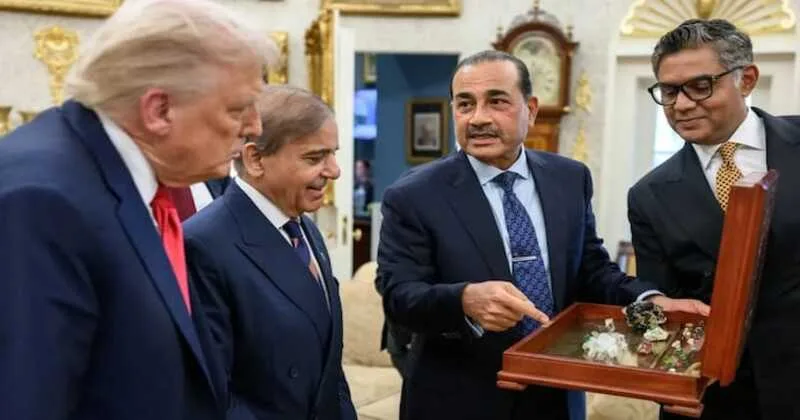
US President Donald Trump during a meeting with Pakistan Prime Minister Shehbaz Sharif and Field Marshal Asim Munir at the White House, in Washington, DC, USA

US President Donald Trump during a meeting with Pakistan Prime Minister Shehbaz Sharif and Field Marshal Asim Munir at the White House, in Washington, DC, USA

FacebookTwitterWhatsAppTelegramEmail

The Pakistani government made repeated appeals to the United States for help after suffering a major military and diplomatic setback during Operation Sindoor. According to documents released in the US, Pakistan, having faced decisive battlefield pressure, sought American intervention to halt the conflict by offering far-reaching economic and strategic concessions to US investors and policymakers.

US records indicate that during Operation Sindoor, Pakistani diplomats, defence officials, and their representatives contacted American officials, lawmakers, journalists, and policy influencers more than 50 times through emails, phone calls, and in-person meetings. These efforts, the documents suggest, were aimed at persuading Washington to step in and restrain India’s military response. In return, Pakistan made a series of high-value promises involving trade, investment, and strategic cooperation.

The disclosures come from filings submitted under US law by the lobbying firm Square Patton Boggs, which was acting on behalf of the Pakistani government.  Reports indicate that Pakistan spent close to Rs 50 crore during April and May on lobbying activities in the United States, making at least 60 formal approaches to American officials. These details emerged after the US government made several Foreign Agents Registration Act (FARA) documents public. The filings reveal that Pakistan, already closely linked to influential circles within the US establishment, sought both military and financial assistance amid the crisis.

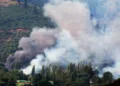
During Operation Sindoor, the Indian armed forces carried out a coordinated series of precision strikes on nine targets in Pakistan on the intervening night of May 6–7. Employing artificial intelligence-enabled targeting, precision-guided missiles, drones, and satellite surveillance, India struck terrorist infrastructure. Indian forces destroyed training camps and logistical hubs linked to terror outfits such as Jaish-e-Mohammad and Lashkar-e-Taiba in locations including Bahawalpur, Muridke, Muzaffarabad, and Kotli. Indian authorities stressed that the strikes were limited to terrorist targets and deliberately avoided civilian areas and Pakistani military installations.

Also Read: Karnataka: Three dead, five seriously injured in boiler accident at Belagavi sugar factory

In the aftermath of these strikes, Pakistan made sweeping offers to the United States in an effort to prevent a wider war. According to the documents, Islamabad promised preferential access for American exports, particularly in the energy and agricultural sectors, and pledged to dismantle existing trade barriers. Pakistan also assured special treatment for US investors under the Special Investment Facilitation Council (SIFC), a powerful body chaired jointly by the Pakistani Prime Minister and the Army Chief. In addition, Pakistan offered to involve US companies in the extraction and mining of strategic minerals such as copper, lithium, and cobalt, resources considered critical for advanced manufacturing and defence technologies. After four days of intense military confrontation, the Directors General of Military Operations (DGMOs) of India and Pakistan spoke via hotline on May 10 and agreed to a ceasefire.

Despite claims by Donald Trump that he had brokered an end to the conflict and proposed trade deals as part of the process, India has consistently rejected this assertion. New Delhi has maintained that there was no third-party mediation and has reiterated that any dialogue with Pakistan would be strictly bilateral and confined to issues of terrorism.

The disclosures are rooted in filings under the Foreign Agents Registration Act, a US law enacted in 1938 to ensure transparency in foreign lobbying and influence operations. FARA requires individuals and firms representing foreign governments to register with the US Department of Justice and submit detailed reports every six months. These reports must outline the funds received from foreign sources, activities undertaken, officials contacted, and expenditures incurred. The records are made publicly accessible through the US Department of Justice. According to the FARA filings, Pakistan attempted to arrange more than 60 high-level meetings with US officials, including senior members of the State Department, lawmakers on Capitol Hill, and officials within the Trump administration. The explicit objective, the documents state, was to persuade Washington to “prevent” Indian military action and to mediate in the conflict.

The filings by Square Patton Boggs show that Pakistani representatives reached out to several US lawmakers at the height of Operation Sindoor, seeking urgent American intervention. Following mounting criticism and public scrutiny, Pakistan reportedly expanded its lobbying network by hiring additional firms, including Seiden Law LLP and Javelin Advisors. Among those associated with these efforts were George Sorial and Keith Schiller. Schiller, a former New York Police Department detective and US Navy veteran, has had a long association with President Donald Trump. He joined Trump as a personal bodyguard in 1999 and later rose to become Director of Security at the Trump Organisation, a position he held from 2004 to 2017.

After Trump assumed the presidency, Schiller served in the White House as Deputy Assistant to the President and Director of Oval Office Operations, becoming one of Trump’s closest aides. He currently works as Managing Director at Javelin Advisors LLC, a lobbying and government relations firm founded in late 2024 by former Trump associates who are registered as foreign agents.

The documents further show that Pakistani officials and their lobbyists contacted a wide array of influential figures, including members of the US Congress, congressional chiefs of staff, officials in the Pentagon, the State Department, the White House, and major media organisations such as The Wall Street Journal and The New York Times. The FARA filings also reference a visit to the United States by Pakistan Army Chief Asim Munir. His meetings in Washington, arranged through lobbying intermediaries, align with information already in the public domain.

Taken together, the documents paint a picture of an intense and costly lobbying campaign by Pakistan aimed at leveraging US influence to offset military pressure from India. The disclosures have renewed debate over Pakistan’s long-standing reliance on external intervention during crises with India.

 

Topics: FARA FilingsPakistan US LobbyingUS Foreign Agents Registration ActPakistan Army Asim MunirTerror Infrastructure in Pakistanindia us relationsIndia Pakistan ConflictOperation Sindoor
ShareTweetSendShareSend
✮ Subscribe Organiser YouTube Channel. ✮
✮ Join Organiser's WhatsApp channel for Nationalist views beyond the news. ✮
Previous News

The 17 letters of Nehru on Somnath: How first PM opposed reconstruction of mandir & why it still sparks debate

Next News

Indus Waters Treaty in abeyance: How the hydropower push in Bharat is rewriting its water equation with Pakistan

Related News

Bangladesh’s reported JF-17 push has triggered fresh scrutiny after India’s Ops Sindoor exposed the vulnerabilities of Pakistani-Chinese defence systems and precision strike capabilities

Shadows of Operation Sindoor: Questions loom over Bangladesh’s JF-17 ambitions amid Sino-Pakistani tech vulnerabilities

Rajnath Singh releases book on Operation Sindoor; The publication chronicles unparalleled valour of the Indian soldiers

Operation Safed Sagar; a turning point in the history of military aviation

Operation Safed Sagar: How Kargil war shaped India’s precision strike doctrine

Happy customers are buying Indian mangoes in Seattle

From Gujarat Orchards to Seattle Shelves: How ‘Mango Diplomacy’ is sweetening India-US ties through Kesar Mangoes

US Ambassador to India Sergio Gor

US Envoy Sergio Gor hails “big things ahead” in India-US nuclear energy partnership

1 Year of Operation Sindoor | India’s Strategic Shift: A step in the right direction

Load More

Latest News

Ebola medical countermeasures that were sent by Bharat arrived at Africa’s Ebola Continental Supply Chain mechanism in Entebbe, Uganda bringing the total to just under 50MT

Ebola Crisis in Uganda: India delivers life-saving medical supplies to African nation

Cabinet approves Rs 9,585 crore scheme to replace old trucks and buses in Delhi-NCR

Delhi-NCR gets major pollution relief push as centre clears Rs 9,585 cr vehicle replacement scheme for trucks and buses

A representative image generated using AI

BHAVYA Scheme to transform India’s Manufacturing Landscape: DPIIT secretary calls for investment-ready industrial parks

Keralam: Madrasa Ustad Shemeer Asari sends Obscene video to Girls in WhatsApp Group, asks if they can do the same

Keralam: Madrasa Ustad Shemeer Asari sends Obscene video to Girls in WhatsApp Group, asks if they can do the same

Board outside the office of Karnataka Lokayukta

Karnataka government accused of shielding tainted officials as Lokayukta probes remain stalled

Ritabrata Banerjee Claims LoP Post as Revolt Rocks Mamata Banerjee's Party

TMC vs TMC in Bengal: Expelled leader Ritabrata Banerjee stakes claim to LoP post, deepening crisis in Mamata’s party

DRDO, IAF successfully flight-test indigenous RudraM-II air-to-surface missile

DRDO, IAF conduct successful RudraM-II Missile trials under extreme conditions, boosting India’s defence self-reliance

India receive the fourth squadron of the Russian-made S-400 air defence system

India receives fourth S-400 missile squadron from Russia, bolstering air defence

Union Minister Shivraj Singh Chouhan

Union Minister Shivraj Singh Chouhan pushes farmer-first reforms at national kharif campaign 2026 meet

Firhad Hakim Seeks Resignation as Kolkata Mayor Amid Growing Crisis in Mamata Banerjee's TMC

Another Shock for TMC? Mamata Banerjee’s trusted lieutenant Firhad Hakim seeks to quit as Mayor amid crisis

Load More
  • Privacy
  • Terms
  • Cookie Policy
  • Refund and Cancellation
  • Delivery and Shipping

© Bharat Prakashan (Delhi) Limited.
Tech-enabled by Ananthapuri Technologies

  • Home
  • Search Organiser
  • Bharat
    • Assam
    • Bihar
    • Chhattisgarh
    • Jharkhand
    • Maharashtra
    • View All States
  • World
    • Asia
    • Africa
    • North America
    • South America
    • Europe
    • Australia
  • Editorial
  • Operation Sindoor
  • Opinion
  • Analysis
  • Defence
  • Culture
  • Sports
  • Business
  • RSS @ 100
  • Entertainment
  • More ..
    • Sci & Tech
    • Vocal4Local
    • Special Report
    • Education
    • Employment
    • Books
    • Interviews
    • Travel
    • Health
    • Politics
    • Law
    • Economy
    • Obituary
  • Subscribe Magazine
  • Read Ecopy
  • Advertise
  • Circulation
  • Careers
  • About Us
  • Contact Us
  • Policies & Terms
    • Privacy Policy
    • Cookie Policy
    • Refund and Cancellation
    • Terms of Use

© Bharat Prakashan (Delhi) Limited.
Tech-enabled by Ananthapuri Technologies