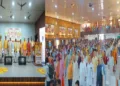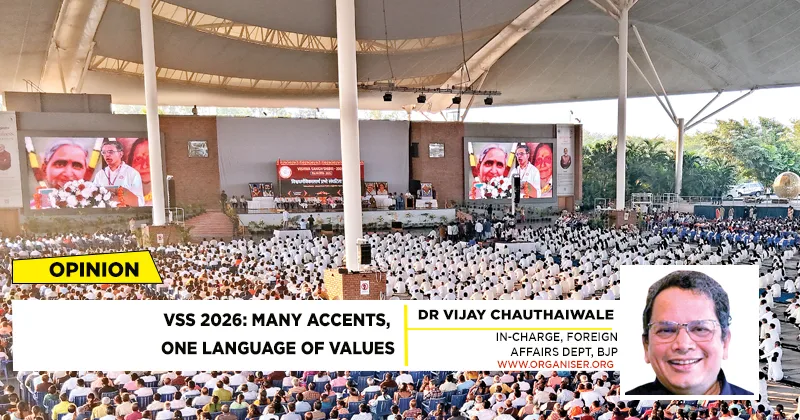
The Vishwa Sangh Shibir (VSS) takes place once every five years. It provides an opportunity for volunteers committed to Dharmic values from across the world to come together. The last VSS, scheduled in 2020, had to be cancelled due to the pandemic. This year also coincides with the centenary of a values-based movement that has inspired generations. Consequently, this gathering was infused with great enthusiasm, reflected in the number of attendees. Participation reached close to 2,000, representing five continents and 71 countries, with a wide diversity of age groups—the youngest being one year old and the eldest 91—along with Gen Z participation of over 300. True to long-standing tradition, everyone attended at their own expense. At the same time, enthusiasm was matched by punctuality and discipline. Every programme and each session started on time, whether it was the morning prayers at 6.30 am or the light entertainment after dinner. Parallel sessions for different categories of karyakartas, special activities for young children, and plenary sessions were planned so systematically that even professional event managers would feel an inferiority complex. On the sprawling Kanha Shanti Vanam campus on the outskirts of Hyderabad, everything moved smoothly.
Today, Hindus across the world stand at a crossroads. The challenges are both internal and external. Questions such as how to inculcate Hindu values in the second and third generations, how to keep them connected to Bharat, and how to face external attacks on Hinduism and Hindus are among the key concerns.
At the same time, in today’s world of conflicts, wars, psychological stress, and tensions within families, an increasing number of people are being drawn towards Dharmic values, traditions, culture, and practices such as Yoga and Ayurveda. Many of these topics were discussed threadbare, frankly, and without hesitation in both small and large group settings. For instance, during one of the Q&A sessions, a young woman asked, “Bharat is neither our Matrubhoomi nor our Karmabhoomi. Why and how should we remain connected with Bharat?” None of these queries, of course, remained unanswered.
At the same time, we heard several inspiring stories of how Gen Z is not only preserving Dharmic values but also striving to spread them within local communities—without encroaching upon others’ religions or faiths. They are creating their own ways of communicating universal Dharmic values in local cultural contexts. For example, we witnessed a dance performance in which a Gen-Z group from the African continent expressed these values through a traditional local dance, accompanied by songs in Swahili.
Women not only participated in large numbers, but were also equally involved in planning, coordinating, and executing the proceedings. For example, the chief instructor for the programme was a British woman in her mid-20s. It was also a delight to hear instructions delivered in British, American, or African accents, all while using the same terminology.
Of course, organising such a week-long event was no easy task. Hundreds of volunteers had been working day and night for several days. They arranged the pickup of incoming guests from various railway stations, the airport, and road transport points; ensured that participants received their welcome kits and the precise location of their accommodation as soon as they arrived at the venue; managed physical and digital infrastructure; provided healthcare facilities when required; and curated an informative exhibition. Everything reflected the enormous efforts of the volunteers to achieve perfection.
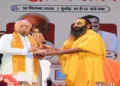
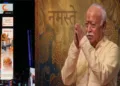
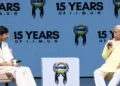
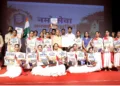
This grand gathering concluded with an equally grand programme, addressed by Sarsanghchalak Dr Mohan Bhagwat, Chairman of Bharat Biotech Krishna Ella, and the revered Daaji Patel. More than ten thousand people from neighbouring cities and towns also joined the concluding programme.
For Jyoti and me, it was also a nostalgic moment. We were able to meet many karyakartas from several countries after a long gap. When we were in the USA in the early 1990s, organised community work overseas was limited to only a few cities, but the intensity and commitment were the same. Most of those karyakartas were bachelors or newly married, and Prerita was the only child in our group. Our friendships have lasted for nearly 35 years.
It was a wonderful experience to walk down memory lane and share laughter. It was especially heartening to meet their highly accomplished children, who displayed remarkable enthusiasm, dedication, and commitment. Some of them have even postponed plans to take up promising jobs or to settle into personal life, dedicating two to three years of their precious time to Dharmic work.
We also met several elderly karyakartas, walking slowly—some with the help of a stick or even a wheelchair. Yet they did not miss a single programme, even in the early mornings. They were a source of inspiration then, and they remain so even now.
When one elderly volunteer in his late 80s expressed doubt about whether he would be able to attend the next VSS (likely in 2030), I extracted a promise from him and his wife that not only would they attend the next VSS, but that all of us would celebrate the 125-year milestone of the movement together and witness a Viksit Bharat in 2047.