A journey often reveals more than destinations; it exposes the lived reality of governance, development, and priorities. My recent pilgrimage to Baba Baidyanath Dham in Deoghar was not merely a spiritual experience—it became an unfiltered lens into the condition of infrastructure and administration in the heart of West Bengal.
The journey began from Odisha and moved through Digha, followed by an extensive road travel within West Bengal—via Bishnupur, Onda, Bankura, Raniganj—before entering Jamtara in Jharkhand and finally reaching Deoghar. While the devotion that pulled me towards one of the twelve Jyotirlingas of Lord Shiva was unwavering, the experience of travelling through West Bengal’s road network was deeply distressing.
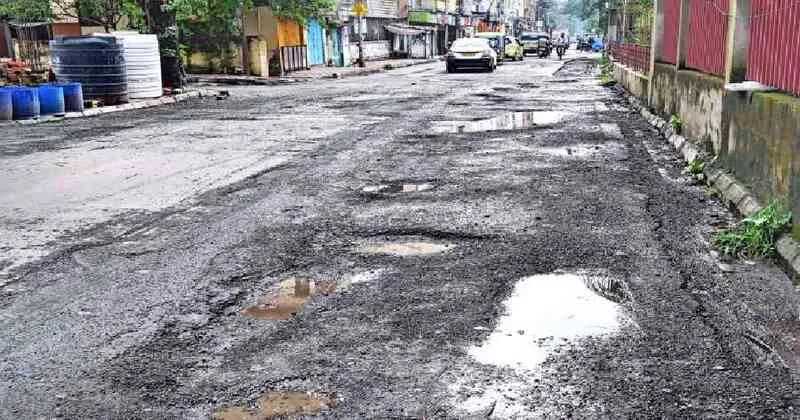
Long stretches within West Bengal are riddled with broken surfaces, poor drainage, inadequate lighting and near non-existent lane discipline. Only in a few isolated patches—hardly a kilometre here or there—did one encounter six-lane roads with proper markings and illumination. These brief glimpses of what could be only served to accentuate the neglect elsewhere.
Roads are not merely strips of asphalt; they are arteries of economic life. West Bengal, a state once synonymous with trade, enterprise and intellectual capital, today finds itself constrained by crumbling infrastructure. The irony is sharp: a state with ample industrial presence and strategic geographic importance struggles to provide basic road connectivity that meets national standards. Logistics slow down, travel becomes unsafe and opportunities quietly slip away.
The central government has, over the last decade, committed thousands of crores to national highway expansion and upgradation across the country. States with cooperative governance and execution capability have transformed dramatically—expressways, industrial corridors and seamless connectivity are now visible realities. Unfortunately, my journey through West Bengal suggests a worrying disconnect between central investment intent and state-level execution.
This brings into focus the larger issue of governance under the Mamata Banerjee government. The narrative of “development” often projected appears increasingly cosmetic—more whitewash than foundation. Infrastructure, which should be a non-negotiable priority, seems to have taken a back seat to political messaging. Roads that should empower farmers, traders, pilgrims and industries instead stand as symbols of administrative apathy.
Even more concerning is the socio-economic undercurrent visible across the region. There is a growing sentiment that the original people of Bengal—proud, culturally rich and historically entrepreneurial—are being deprived of meaningful development. At the same time, concerns over unchecked infiltration from across the Bangladesh border and the perceived political patronage surrounding it have created deep unease. Whether perception or reality, governance must address such issues transparently, because development without social trust is unsustainable.
West Bengal does not lack talent, culture or potential. From literature and cinema to industry and education, Bengal has given India some of its finest minds and institutions. What it lacks today is decisive governance that matches its legacy. Infrastructure is the most visible and measurable indicator of a government’s intent. Good roads reduce costs, save lives, attract investment and integrate regions. Bad roads do the opposite—they isolate, discourage and impoverish.
The concept of a “double-engine government”, where the same political alignment at the Centre and the State works in coordination, is no longer theoretical. It is visible in states that have rapidly modernized their infrastructure and improved ease of living. West Bengal’s current condition raises an unavoidable question: can meaningful transformation occur without such alignment and political will?
As the breeze of change begins to blow across the country, the people of Bengal stand at a crucial crossroads. Upcoming elections are not merely about political allegiance; they are about reclaiming dignity through development. The choice before the electorate is whether to settle for symbolism or demand substance—whether to accept narratives or insist on outcomes.
My journey through the heart of West Bengal was a pilgrimage in more ways than one. It reaffirmed faith at Deoghar, but it also challenged faith in governance along the way. One hopes that the culturally and socio-economically rich people of Bengal, who have always shaped India’s destiny, will once again rise to shape their own—by choosing development that is visible, durable and inclusive.