Challenges in the final phase of Naxalism
September 13, 2026
  • Read Ecopy
  • Circulation
  • Advertise
  • Careers
  • About Us
  • Contact Us
Android AppiPhone AppArattai
Organiser
  • ‌
  • Bharat
    • Assam
    • Bihar
    • Chhattisgarh
    • Jharkhand
    • Maharashtra
    • View All States
  • World
    • Asia
    • Europe
    • North America
    • South America
    • Africa
    • Australia
  • Editorial
  • International
  • Opinion
  • RSS @ 100
  • More
    • World Hindu Congress 2026
    • Op Sindoor
    • Analysis
    • Sports
    • Defence
    • Politics
    • Business
    • Economy
    • Culture
    • Special Report
    • Sci & Tech
    • Entertainment
    • G20
    • Azadi Ka Amrit Mahotsav
    • Vocal4Local
    • Web Stories
    • Education
    • Employment
    • Books
    • Interviews
    • Travel
    • Law
    • Health
    • Obituary
  • Subscribe
    • Subscribe Print Edition
    • Subscribe Ecopy
    • Read Ecopy
  • ‌
  • Bharat
    • Assam
    • Bihar
    • Chhattisgarh
    • Jharkhand
    • Maharashtra
    • View All States
  • World
    • Asia
    • Europe
    • North America
    • South America
    • Africa
    • Australia
  • Editorial
  • International
  • Opinion
  • RSS @ 100
  • More
    • World Hindu Congress 2026
    • Op Sindoor
    • Analysis
    • Sports
    • Defence
    • Politics
    • Business
    • Economy
    • Culture
    • Special Report
    • Sci & Tech
    • Entertainment
    • G20
    • Azadi Ka Amrit Mahotsav
    • Vocal4Local
    • Web Stories
    • Education
    • Employment
    • Books
    • Interviews
    • Travel
    • Law
    • Health
    • Obituary
  • Subscribe
    • Subscribe Print Edition
    • Subscribe Ecopy
    • Read Ecopy
Organiser
  • Home
  • Bharat
  • World
  • Operation Sindoor
  • Editorial
  • Analysis
  • Opinion
  • Culture
  • Defence
  • International Edition
  • RSS @ 100
  • Magazine
  • Read Ecopy
Home Bharat

Challenges in the final phase of Naxalism

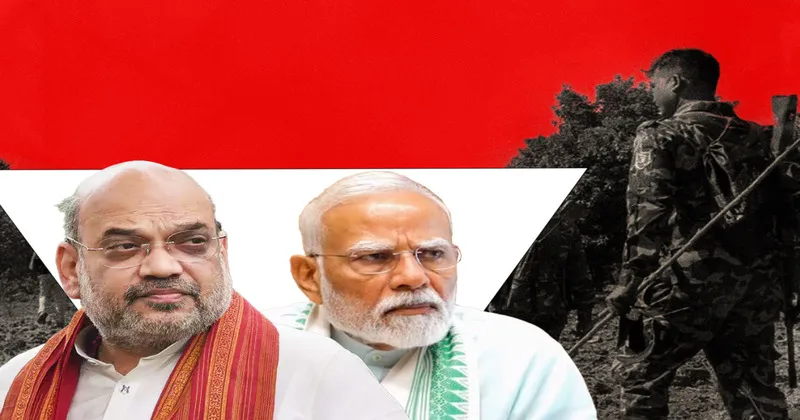
Union Home Minister Amit Shah has outlined a comprehensive national strategy to combat crime and terrorism during the recent Anti-Terrorism Conference 2025 held at New Delhi. The success of the police and para military in eliminating the Left-wing Extremism also proves that the security and intelligence agencies have attained a high degree of professionalism in the country

Lt Gen (Retd) MK DasLt Gen (Retd) MK Das
Jan 4, 2026, 01:00 pm IST
inBharat, Analysis, Opinion
Follow on Google News
The Government of India resolves to end naxalism in the country by March 2026

The Government of India resolves to end naxalism in the country by March 2026

Facebook
Twitter
WhatsAppTelegramEmail

It is very heartening to note that Naxalism has entered the end of its existence in India. PM Modi and HM Amit Shah had given a target of March 31, 2026 to end Naxalism in the country. The security forces have achieved tremendous success in neutralising a large strength of Naxal cadres. A huge number including key Naxal leaders have also surrendered before the authorities. A state like Madhya Pradesh has officially announced the end of Naxalism in the state. The Government of India and all the states afflicted with Naxalism deserve full credit for their determined fight against this violent extremism which has impacted the country since 1967. A major damage to Naxalism happened in the last decade under the close watch of PM Modi.

Naxalism is a form of insurgency against the state, similar to the armed struggle in India’s North East, with a secessionist agenda to disown the democratically elected government. The thought process of Naxalism was motivated by leftist ideologies; thus ‘Left Wing Extremism (LWE)’ is the official term used by the Ministry of Home Affairs. From 2004 onwards, the LWE in India took a serious turn and the Naxalites carried out a series of violent activities which shook the nation. By this time, the districts affected by LWE were in the states of West Bengal, Bihar, Jharkhand, Chhattisgarh, MP, Odisha, Telangana, Andhra Pradesh, Karnataka, Maharashtra and even parts of Uttar Pradesh and Tamil Nadu. In fact, the term Red Corridor indicated LWE affected region in India, stretching from Indo-Nepal border in the north to fringes of Tamil Nadu in the south. Such was the reach and influence of this Red Terror menace.

Therefore, this form of extremism in the last 49 years has developed roots in various parts of the country which are not necessarily part of the Red Corridor. The ecosystem of LWE has the external linkage, home-grown support system and the armed wing. While the armed cadre by and large has been neutralised, the ecosystem within the country that supports Naxalism including the Urban Naxals would also require deft handling by the government agencies. The external linkage of Naxalism has considerably weakened because of the strict measures initiated by the government. There is much better inter-state coordination in the fight against Naxalism. But to achieve complete success against Naxalism, some challenges still remain to be tackled.

The first challenge is to eliminate the armed cadre operating from remaining 11 districts in the country. In fact, most affected LWE districts have come down to just 6 districts, 4 in Chhattisgarh and one each in Jharkhand and Maharashtra. The security forces have to establish camps in the areas which have been liberated from the influence of LWE. The people in such areas have to be given confidence in the state administrative machinery. The local police and the para military forces have to provide close protection to the vulnerable population. The final phase of operations against the armed Naxals may be violent and the security forces have to be doubly prepared to deal with all the situations.

The next challenge is to recover large cache of arms, ammunition and explosives in the possession of Naxals and their Over Ground Workers (OGWs). It is a known fact that the armed cadre does not surrender with their high-quality weapons and ammunition. Invariably, they surrender with country made crude weapons and hide their main armoury. Many times, the quality weapons are sold to other extremist groups or unlawful elements at a premium. Here the intelligence agencies of the security forces have to step in quickly. The security forces may have to carry out intelligence-based search operations at a large scale.

Also Read: Switzerland Blast: Deadly explosion rips through luxury bar in Crans-Montana, leaving several dead & many injured

The next task would to establish effective administration in the districts which have come out of Naxalism. The people in these districts have to be provided all the amenities from scratch, from basic documentation to financial assistance. All these areas have to be provided health care, good connectivity and employment opportunities. In fact, the modified VB RAM G may be a game changer to provide employment in such areas. The states have to proactively engage with the people, bypassing the routine bureaucracy. The local administration may utilise the support of NGOs in such areas, after carefully vetting their credentials. Many of the NGOs have affiliation with the LWE or their ideology and they may exploit the opportunity to revive Naxalism once again. Thus, the local administration and the security agencies have to carefully monitor the assistance being rendered by the NGOs.

It is silencing the Urban Naxals and their well-established network that is going to be the major challenge before the government. The so-called Humans Rights lobby is going to be very active in the coming months. Unlike terrorism in Jammu & Kashmir and insurgency in India’s North East, LWE unfortunately has not been part of much national level discussion. Even though the LWE has been India’s biggest internal security threat, somehow it has remained a localised discourse. The government, therefore has to use all the tools available to highlight the challenges of such extremism.

Union Home Minister Amit Shah has outlined a comprehensive national strategy to combat crime and terrorism during the recent Anti-Terrorism Conference 2025 held at New Delhi. Towards that the inter-agency cooperation has to improve significantly. The success of the police and para military to eliminate LWE also proves that security and intelligence agencies have attained that high degree of professionalism. There are some issues which have to be addressed beyond the political differences between the centre and the states. From the national security perspective, the end of Naxalism in India is going to be a major milestone. It is no less significant than the abrogation of Article 370 in Jammu & Kashmir. Therefore, the country should remain united in the final chapter of the eradication of the LWE in India.

Topics: internal securityhome ministry of indiaExtremismIndiaLeft Wing Extremism (LWE)Home Minister Amit ShahNaxalism
Share
Tweet
SendShareSend
✮ Subscribe Organiser YouTube Channel. ✮
✮ Join Organiser's WhatsApp channel for Nationalist views beyond the news. ✮
Previous News

Telangana: IIGH round table focuses on public finance, welfare delivery

Next News

Karnataka: Unrest in Chikkamagaluru against illegal Bangladeshi migrants; Police action on whistleblowers criticised

Related News

Prime Minister Narendra Modi, along with Chinese President Xi Jinping, Russian President Vladimir Putin and other world leaders, poses for a picture at a joint tree plantation initiative during the BRICS Summit

BRICS Summit 2026: India as the voice of Global South, shared responsibilities & scripting inclusive world order

Chinese President Xi Jinping and Prime Minister Narendra Modi

BRICS Summit 2026: PM Modi hold talks with President Xi; Stresses border peace & tranquility as key to India-China ties

(From Left to Right): Russian President Vladimir Putin, PM Modi & Chinese President Xi Jinping

BRICS New Delhi Declaration | Key Takeaways: Cross-border payment, counter-terrorism to tech ties & supply resilience

BRICS Summit 2026: New Delhi Declaration to be issued today; India seals diplomatic win amid West Asia crisis

PM Modi holds series of bilateral meetings;(From Left to Right): Malaysia PM Anwar Ibrahim, Ethiopian PM Abiy Ahmed Ali and Iran President Masoud Pezeshkian

BRICS Summit: PM Modi flags maritime security, seafarers safety with Iran President; Holds series of bilateral talks

Speaking at the BRICS Business Forum, Putin took a sharp swipe at G7

BRICS Summit 2026: President Putin takes swipe at G7; BRICS drives 40% of Global GDP while west contributes only 18%

Load More

Latest News

Tiger Bright coffee from Koraput’s tribal farmers featured in BRICS Summit media kits in New Delhi

From Eastern Ghats to BRICS: Koraput Coffee puts Odisha’s tribal enterprise on global map

The RSS has spent a century building influence through organisation, social networks and ideological formation beyond the electoral arena

RSS at 100: How the Sangh built a century-long network of influence beyond Indian politics

India on a Platter: BRICS Dinner Menu Celebrates Regional Culinary Heritage

BRICS Dinner Menu: From Khandvi, mushroom kebabs to pulao global leaders get a taste of Bharat’s culinary heritage

Exterior of the Lokayukta Building

Karnataka Lokayukta records 1,248 cases in four years, 887 linked to bribery

RSS Akhil Bharatiya Karyakarini Sadasya Dr Manmohan Vaidya at a Pramukh Jan Samvad Sangosthi organised by Kashi Mahanagar on the occasion of the RSS Centenary Year,

Entire society must unite with a sense of oneness; This Is the spirit of Sangh Work: Dr Manmohan Vaidya

‘Samuel Could Never Do This’: Mother Rejects Blasphemy Allegations Against Son in Lahore

Pakistan Blasphemy Case: Mother of Christian man Samuel Arif claims false implication, seeks justice

Prime Minister Narendra Modi, along with Chinese President Xi Jinping, Russian President Vladimir Putin and other world leaders, poses for a picture at a joint tree plantation initiative during the BRICS Summit

BRICS Summit 2026: India as the voice of Global South, shared responsibilities & scripting inclusive world order

Chinese President Xi Jinping and Prime Minister Narendra Modi

BRICS Summit 2026: PM Modi hold talks with President Xi; Stresses border peace & tranquility as key to India-China ties

Tamil Nadu: Hindu Munnani flags TVK govt’s restrictions on Vinayaka pandals, barring women, children from processions

Lashkar-e-Toiba founder Hafiz Saeed. (File image)

J&K Terror Case: Hafiz Saeed gets second NBW; NIA says he operates from Pakistan

Load More
  • Privacy
  • Terms
  • Cookie Policy
  • Refund and Cancellation
  • Delivery and Shipping

© Bharat Prakashan (Delhi) Limited.
Tech-enabled by Ananthapuri Technologies

  • Home
  • Search Organiser
  • Bharat
    • Assam
    • Bihar
    • Chhattisgarh
    • Jharkhand
    • Maharashtra
    • View All States
  • World
    • Asia
    • Africa
    • North America
    • South America
    • Europe
    • Australia
  • Editorial
  • Operation Sindoor
  • Opinion
  • Analysis
  • Defence
  • Culture
  • Sports
  • Business
  • RSS @ 100
  • Entertainment
  • More ..
    • Sci & Tech
    • Vocal4Local
    • Special Report
    • Education
    • Employment
    • Books
    • Interviews
    • Travel
    • Health
    • Politics
    • Law
    • Economy
    • Obituary
  • Subscribe Magazine
  • Read Ecopy
  • Advertise
  • Circulation
  • Careers
  • About Us
  • Contact Us
  • Policies & Terms
    • Privacy Policy
    • Cookie Policy
    • Refund and Cancellation
    • Terms of Use

© Bharat Prakashan (Delhi) Limited.
Tech-enabled by Ananthapuri Technologies