States likely to gain Rs 17,000 crore under new Viksit Bharat-G RAM G Scheme: SBI Report
June 25, 2026
  • Read Ecopy
  • Circulation
  • Advertise
  • Careers
  • About Us
  • Contact Us
Android AppiPhone AppArattai
Organiser
  • ‌
  • Bharat
    • Assam
    • Bihar
    • Chhattisgarh
    • Jharkhand
    • Maharashtra
    • View All States
  • World
    • Asia
    • Europe
    • North America
    • South America
    • Africa
    • Australia
  • Editorial
  • International
  • Opinion
  • RSS @ 100
  • More
    • Op Sindoor
    • Analysis
    • Sports
    • Defence
    • Politics
    • Business
    • Economy
    • Culture
    • Special Report
    • Sci & Tech
    • Entertainment
    • G20
    • Azadi Ka Amrit Mahotsav
    • Vocal4Local
    • Web Stories
    • Education
    • Employment
    • Books
    • Interviews
    • Travel
    • Law
    • Health
    • Obituary
  • Subscribe
    • Subscribe Print Edition
    • Subscribe Ecopy
    • Read Ecopy
  • ‌
  • Bharat
    • Assam
    • Bihar
    • Chhattisgarh
    • Jharkhand
    • Maharashtra
    • View All States
  • World
    • Asia
    • Europe
    • North America
    • South America
    • Africa
    • Australia
  • Editorial
  • International
  • Opinion
  • RSS @ 100
  • More
    • Op Sindoor
    • Analysis
    • Sports
    • Defence
    • Politics
    • Business
    • Economy
    • Culture
    • Special Report
    • Sci & Tech
    • Entertainment
    • G20
    • Azadi Ka Amrit Mahotsav
    • Vocal4Local
    • Web Stories
    • Education
    • Employment
    • Books
    • Interviews
    • Travel
    • Law
    • Health
    • Obituary
  • Subscribe
    • Subscribe Print Edition
    • Subscribe Ecopy
    • Read Ecopy
Organiser
  • Home
  • Bharat
  • World
  • Operation Sindoor
  • Editorial
  • Analysis
  • Opinion
  • Culture
  • Defence
  • International Edition
  • RSS @ 100
  • Magazine
  • Read Ecopy
Home Bharat

States likely to gain Rs 17,000 crore under new Viksit Bharat-G RAM G Scheme: SBI Report

States are expected to gain nearly Rs 17,000 crore under the proposed VB-G RAM G allocation framework, compared to average fund transfers over the last seven years, according to a research report by the State Bank of India. The new model emphasises objective, need-based devolution while balancing equity with performance-driven efficiency

Shashank Kumar DwivediShashank Kumar Dwivedi
Dec 30, 2025, 06:30 pm IST
in Bharat
Follow on Google News
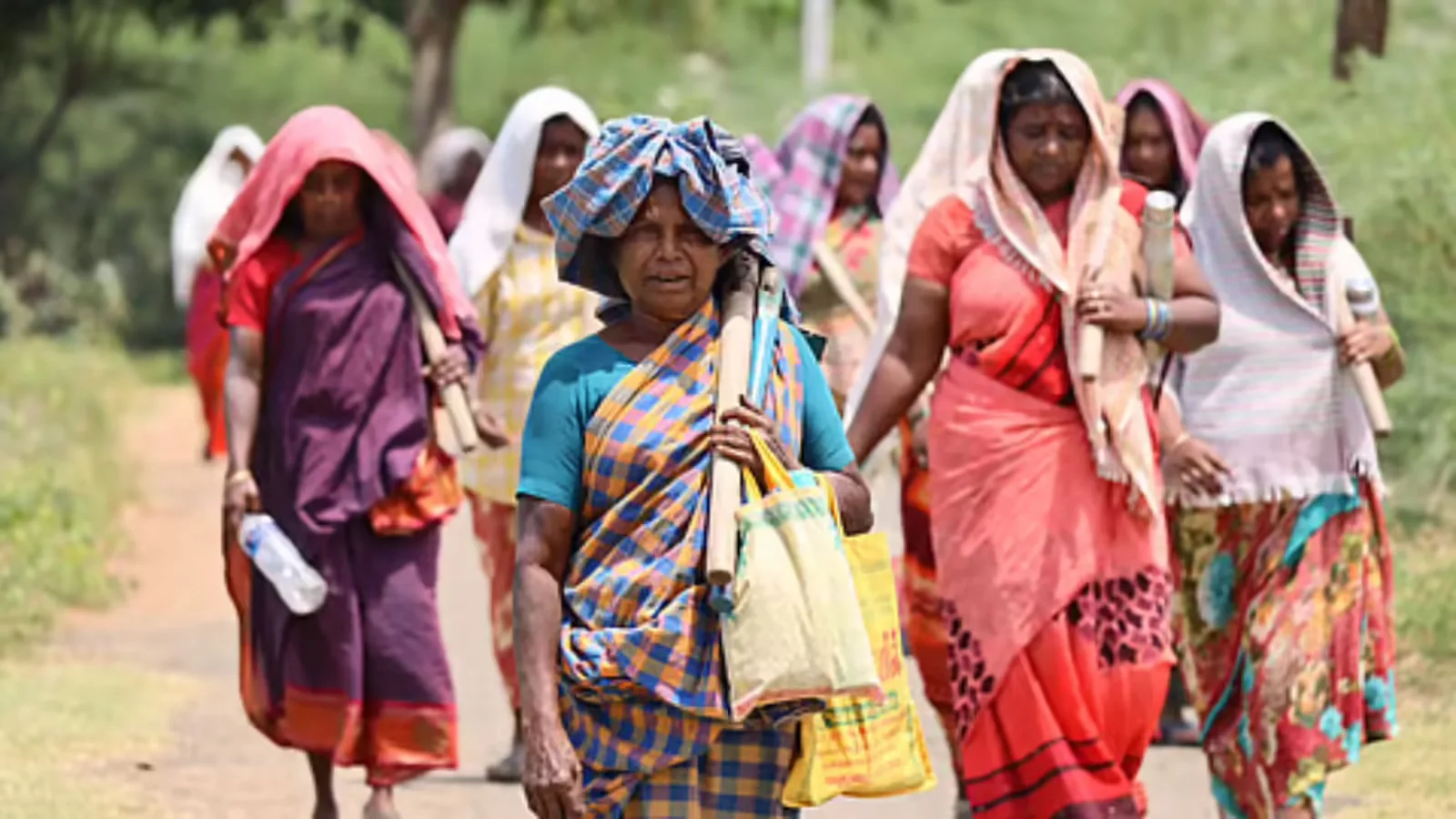
A representative image

A representative image

FacebookTwitterWhatsAppTelegramEmail

A new fund-sharing mechanism under the proposed VB-G RAM G framework could significantly enhance fiscal transfers to states, with a projected gain of around Rs 17,000 crore, a research report by the State Bank of India has said. The gain is estimated when compared to the average allocation received by states over the past seven years.

The report is based on a simulated, normative assessment model applied to the Centre’s share of funding, aimed at introducing greater objectivity and transparency in the allocation process. According to SBI, such a framework would make most states net beneficiaries while addressing long-standing concerns over uneven and discretionary fund distribution.

Seven criteria anchored in equity and efficiency

The proposed allocation framework rests on two foundational pillars, equity and efficiency. The SBI report identifies seven criteria, distributed across these twin principles, to assess how funds should be shared among states.

Equity-focused parameters are designed to ensure that states with higher structural challenges receive adequate fiscal support. These include factors such as dependence on rural labour markets, administrative spread, and the inherent need for public employment support. The objective is to provide sufficient fiscal space to states facing higher employment demand and socio-economic vulnerabilities.

The efficiency pillar, on the other hand, seeks to reward states that demonstrate effective utilisation of funds. This includes the ability to convert allocations into sustained employment generation, timely wage payments, and the creation of durable assets under employment schemes.

States net gainers under hypothetical model

Using a simulated scenario where only the Centre’s share is subjected to normative assessment, the report compares the outcome with actual allocations under MGNREGA between FY19 and FY25, excluding the pandemic-affected FY21.

“We estimate that states gain around Rs 17,000 crore when compared to the average allocation of the last seven years, indicating a scenario where most states would be net gainers based on the hypothetical weights and inter-se distribution,” said Soumya Kanti Ghosh, Group Chief Economic Advisor at SBI.

The analysis suggests that all states emerge as gainers under the proposed framework, barring two that experience only marginal losses. Even in these cases, the report notes that the impact is minimal and largely influenced by outlier allocation years.

The SBI report specifically cites Tamil Nadu to illustrate how exceptional allocation spikes can distort comparative outcomes. In FY24, Tamil Nadu witnessed a 29 percent increase in allocation compared to the average of FY22 and FY23.

If FY24 is excluded as an outlier, the projected loss for the state under the normative framework becomes negligible, the report said. This, according to SBI, strengthens the case for using multi-year averages and objective criteria rather than year-specific allocations influenced by short-term considerations.

Top Gainers: Uttar Pradesh and Maharashtra

Among the states, Uttar Pradesh and Maharashtra emerge as the biggest beneficiaries under the simulated VB-G RAM G framework. They are followed by Bihar, Chhattisgarh, and Gujarat, reflecting both scale and effective utilisation parameters built into the model.

The report notes that the distribution pattern supports both developed and less-developed states, countering the perception that objective criteria would disproportionately favour one category over the other.

A key takeaway from the SBI analysis is that objective, criteria-based allocation does not dilute the equity principle. Instead, it strengthens fiscal devolution by ensuring that need-based support is complemented by performance incentives.

The report argues that such a balanced approach would improve outcomes under employment guarantee schemes by encouraging states to focus not only on higher fund absorption but also on quality implementation, asset durability, and timely wage disbursement.

In addition to central transfers, the report highlights the importance of the states’ 40 percent contribution in enhancing outcomes. States that effectively mobilise their share and align implementation with efficiency benchmarks stand to maximise the benefits of the proposed framework.

SBI maintained that greater fiscal discipline, combined with transparent allocation norms, could improve trust between the Centre and states while reducing friction over fund releases.

The SBI report concludes that adopting a normative, objective framework such as VB-G RAM G could make fiscal devolution more predictable, equitable, and outcome-oriented. By moving away from ad hoc or historically skewed allocations, the proposed model has the potential to strengthen cooperative federalism while improving the effectiveness of rural employment spending.


Topics: Centre-state fund sharingMGNREGA allocationfiscal devolutionequity and efficiencySBI ReportVB–G RAM G
ShareTweetSendShareSend
✮ Subscribe Organiser YouTube Channel. ✮
✮ Join Organiser's WhatsApp channel for Nationalist views beyond the news. ✮
Previous News

Kajra Solar Power Plant in Bihar energises key transmission line

Next News

Telangana: “Assam Gathalu” book launched in Hyderabad, documents RSS role in terror-hit Assam in 1990s

Related News

Representative Image

Good Governance through VB–G RAM G: Reforming rural employment for transparency and impact

A representative image

RBI may slash repo rate by 0.25 percent in September: SBI warns of “Right time” for action

Babita Yadav of Mahoba, Uttar Pradesh is one of the beneficiaries of Jal Jeevan Mission (Photo: Subhi Vishwakarma)

Har Ghar Jal Milestone: 11.96 crore households connected since 2019 launch

SBI Report: Average income of middle class grows from Rs 4.4 to Rs 13 lakh in last ten years

ITR filing,Maharashtra,Gujarat,income tax returns,SBI Report

Charting India’s Economic Odyssey: Surging Tax Filings and the Dawn of Middle-Income Prosperity

Load More

Latest News

Y.D. Manjunath, Additional Excise Commissioner and brother-in-law of Karnataka PWD Minister Satish Jarkiholi

ED raids Karnataka Excise Dept officials: Rs 13.3 Cr seized, Minister Satish Jarkiholi’s brother-in-law under scanner

Former -DMK Minister EV Velu (File Photo)

Tamil Nadu: Anti-graft agency raids 13 locations linked to ex-DMK Minister EV Velu over alleged contract irregularities

Government introduces AIR SUVIDHA portal following WHO Ebola emergency for international travellers

The Emergency: India’s darkest chapter, the struggle for democracy and the ban on the RSS

Exposing Western Media’s Climate Hypocrisy: When Europe burns it’s just weather, When India heats up it’s a crisis

Rahul Gandhi’s 2018 Panama Papers Remark: Congress leader apologetic in MP High Court, but political fallout continues

UP Govt orders audit of various coaching centres that are illegally constructed

Lucknow Coaching Fire: UP CM Yogi Adityanath orders statewide fire safety audit, forms special teams across districts

India’s education debate needs clarity, not noise

Scuffle at the Tiruvananthapuram Municipal Corporation on June 25

Keralam: Nine BJP councillors injured as CPM protest demanding Mayor’s resignation turns violent at Thiruvananthapuram

India's textile ambitions are being woven through local manufacturing strengths, innovation, sustainability and an expanding global trade footprint

National Textile Export Roadmap 2030: India’s strategic push for a $100 billion global textile presence

Load More
  • Privacy
  • Terms
  • Cookie Policy
  • Refund and Cancellation
  • Delivery and Shipping

© Bharat Prakashan (Delhi) Limited.
Tech-enabled by Ananthapuri Technologies

  • Home
  • Search Organiser
  • Bharat
    • Assam
    • Bihar
    • Chhattisgarh
    • Jharkhand
    • Maharashtra
    • View All States
  • World
    • Asia
    • Africa
    • North America
    • South America
    • Europe
    • Australia
  • Editorial
  • Operation Sindoor
  • Opinion
  • Analysis
  • Defence
  • Culture
  • Sports
  • Business
  • RSS @ 100
  • Entertainment
  • More ..
    • Sci & Tech
    • Vocal4Local
    • Special Report
    • Education
    • Employment
    • Books
    • Interviews
    • Travel
    • Health
    • Politics
    • Law
    • Economy
    • Obituary
  • Subscribe Magazine
  • Read Ecopy
  • Advertise
  • Circulation
  • Careers
  • About Us
  • Contact Us
  • Policies & Terms
    • Privacy Policy
    • Cookie Policy
    • Refund and Cancellation
    • Terms of Use

© Bharat Prakashan (Delhi) Limited.
Tech-enabled by Ananthapuri Technologies